Signal Completes Cross-Platform Secure Backup Rollout with Release of Version 8.30 for iOS and Desktop

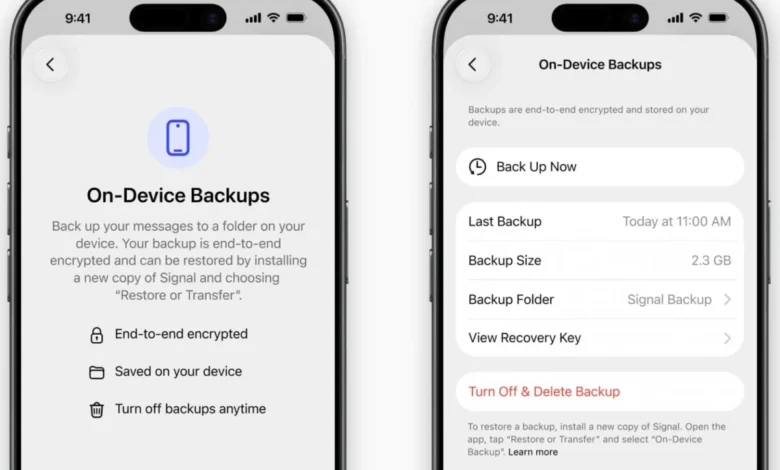
The rollout of Signal version 8.30 marks a significant milestone for the privacy-focused messaging application, bringing end-to-end encrypted backup support to iOS and desktop environments while unifying its backup architecture across all major operating systems. This release concludes the first phase of an ambitious multi-platform backup project that initially began on Android devices nearly a year prior. With the deployment of version 8.30, users on Linux, macOS, Windows, iOS, and Android can now leverage standardized, secure mechanisms to safeguard their chat histories and restore them seamlessly across disparate devices.
Evolution of Signal’s Backup Architecture
For years, Signal’s handling of chat backups was a frequent point of discussion among its user base. Unlike competitors such as WhatsApp and Telegram, which historically relied on cloud backups stored by third-party providers (like Google Drive and iCloud) without default end-to-end encryption for the backups themselves, Signal deliberately eschewed these convenient yet vulnerable pathways. The application long maintained that local backups on Android—while functional via manually managed files—were cumbersome, while iOS users lacked a native local backup solution altogether, often having to rely entirely on full device restores via iTunes or iCloud.
The paradigm shifted when Signal introduced secure cloud backups on Android. This paved the way for a dual-option system designed to accommodate varying user preferences for data storage and privacy: Signal-hosted cloud backups and on-device local backups.
Under the updated architecture featured in version 8.30, the backup system offers two distinct pathways:
- Signal-Hosted Backups: Tailored for users seeking cloud convenience, this option is subject to certain limitations on free tiers—specifically restricted to 45 days of media history and a 128 KB limit per message. Paid subscription plans expand this capacity significantly to 100 GB. Security-wise, these cloud backups are end-to-end encrypted using a recovery key. Additionally, they incorporate a supplemental key that rotates on a daily basis within a Trusted Execution Environment (TEE), providing an extra layer of forward secrecy.
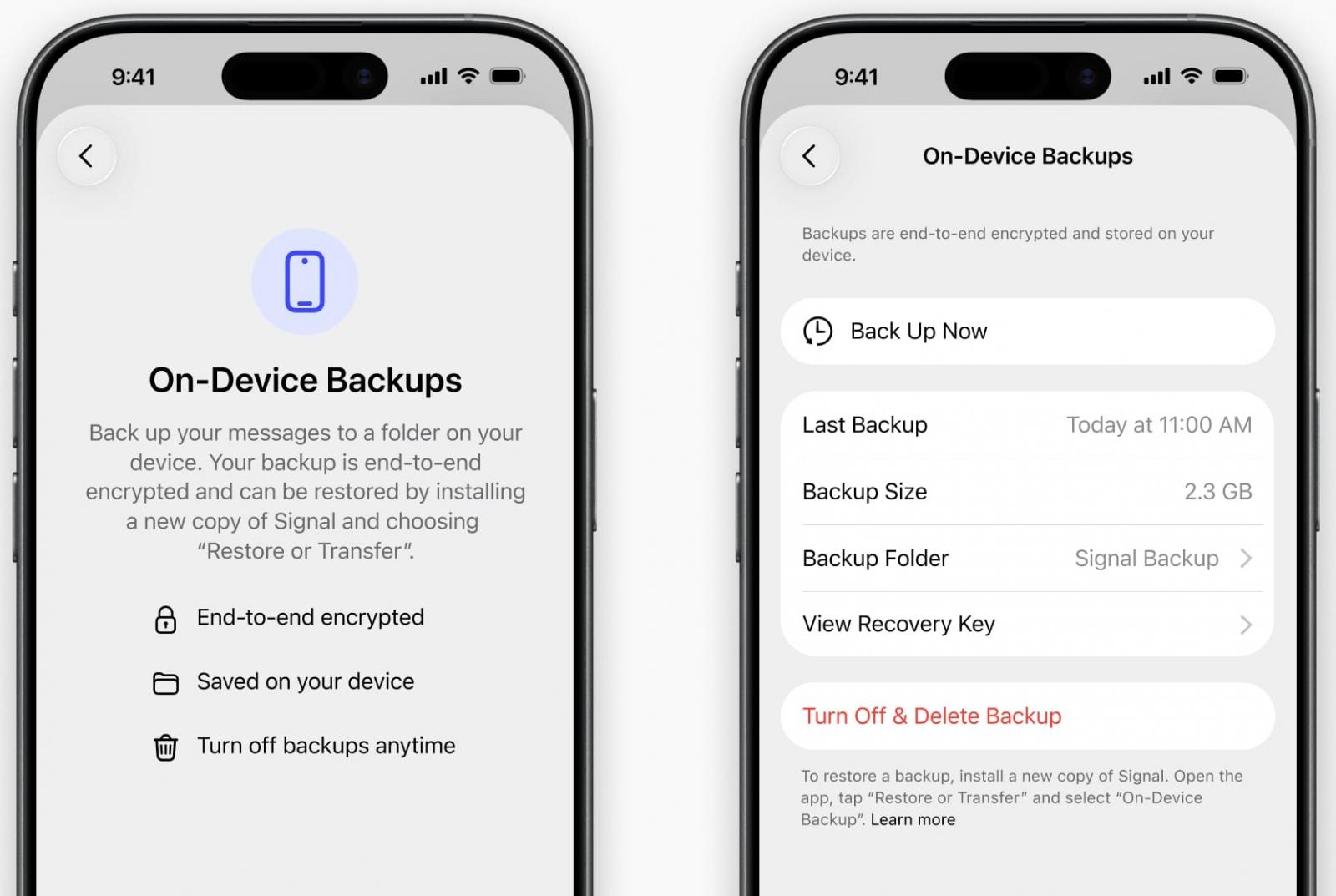
- On-Device Local Backups: Geared toward users who prefer absolute ownership of their data without relying on external cloud infrastructure, this option imposes no size restrictions.
Regardless of the chosen path, data integrity and confidentiality remain paramount. Both backup methods rely heavily on a secure recovery key. According to technical documentation provided by Signal, a single on-device backup recovery key possesses the cryptographic capability to decrypt all past backup files it has generated, regardless of where those files happen to be stored.
Security Implications and Adversarial Interest
While end-to-end encryption ensures that message contents remain unreadable to unauthorized third parties—including service providers and malicious interceptors—the introduction of backup recovery keys has inevitably shifted the threat landscape. Because these keys are the singular gateway to unlocking historical communications, they have quickly become prime targets for sophisticated adversaries.
Shortly after Signal introduced its initial backup capabilities, intelligence agencies and advanced persistent threat (APT) groups took notice. Security reports highlighted that threat actors, including state-sponsored Russian hacking collectives and federal investigative bodies, began incorporating Signal backup recovery keys into their targeting scopes. This development underscores a fundamental security paradox inherent in encrypted communications: as applications implement more user-friendly recovery mechanisms, the keys protecting those mechanisms inevitably become high-value objectives for adversaries seeking physical or remote device access.
In response, Signal’s engineering teams have continuously refined the cryptographic hygiene of the platform. By separating media storage from the core backup archive and ensuring that duplicate files are recorded only once, the platform minimizes the data footprint exposed during backups. Furthermore, the decision to exclude "disappearing messages" (specifically those set to vanish within 24 hours) from both backup modalities prevents stale, ephemeral data from lingering indefinitely in archived storage.
Cross-Platform Standardization and Performance Enhancements
Version 8.30 does more than simply port features to iOS and desktop operating systems; it completely revamps the underlying data structures. Android backups have been overhauled to utilize the exact same cross-platform format now deployed on Apple devices and personal computers. This unification ensures greater reliability when transferring chat histories between different operating systems.
Key performance and architectural improvements introduced in the 8.30 release include:
- Smart Device Linking: When users link a new device from their primary device, the secondary terminal now automatically retrieves older attachments that might otherwise be missing from the active chat view.
- Optimized Media Management: Media files are now stored separately from the primary backup archive. Duplicate files are deduplicated and stored only once across the directory, effectively eliminating redundant backing up and syncing cycles.
- Storage-Saving Options for Subscribers: Paying users gain a granular control mechanism allowing them to purge old media from local storage—retaining only lightweight thumbnails—while maintaining the ability to automatically fetch full-resolution files on-demand from hosted cloud backups.
- Direct iPhone-to-iPhone Transfers: The iOS client release facilitates direct peer-to-peer transfers between iPhones utilizing a local, end-to-end encrypted Wi-Fi Aware link. Signal notes that this direct local connection substantially improves both the speed and reliability of device migrations.
Strategic Roadmap and Future Outlook
The deployment of version 8.30 represents the formal conclusion of the first major phase of Signal’s comprehensive backups project. Over the past year, the non-profit organization behind the messaging app has systematically addressed one of the most persistent user experience hurdles in secure communications: migrating chat histories across device upgrades without compromising the rigorous cryptographic guarantees that define the platform.
With the cross-platform backup infrastructure now fully established across Android, iOS, Linux, macOS, and Windows, Signal’s engineering and cryptographic research teams are shifting their focus toward other core infrastructural priorities. While the organization has not yet detailed the specifics of its subsequent developmental phase, industry analysts anticipate continued refinement of metadata protection, scaling improvements for enterprise and power users, and ongoing hardening against evolving surveillance techniques targeting endpoint recovery keys.
As regulatory scrutiny surrounding encrypted messaging intensifies globally—with various legislative bodies continually debating the feasibility of backdoor access—Signal’s architecture remains a focal point for digital privacy advocates. By maintaining strict zero-knowledge standards where even the service provider cannot access user keys or message contents, the platform continues to set the benchmark for consumer-grade cryptographic security.
Related posts: