Dying in Plain Sight: How Border Surveillance Technology Fails Migrants in the California Wilderness

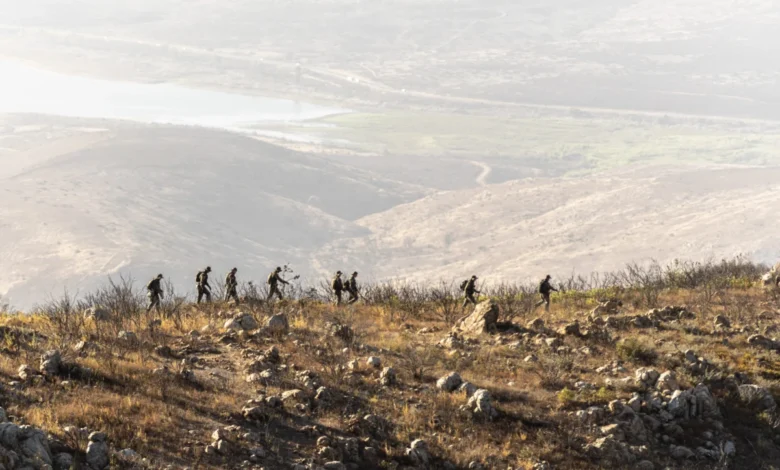
The rugged landscape of the Otay Mountain Wilderness in Southern California is among the most heavily monitored patches of land on Earth. Blanketed by an interconnected web of high-definition electro-optical and infrared cameras, underground movement sensors, radar, and artificial intelligence-enabled surveillance towers, the region represents a cornerstone of modern border security. Yet, beneath the gaze of million-dollar technology designed to track every movement, migrants continue to perish in plain sight.
An investigative analysis conducted by the Times of San Diego in collaboration with MIT Technology Review has revealed a disturbing reality: between 2022 and 2025, at least 138 migrant remains were discovered within the nominal operational range of border surveillance towers in California. Furthermore, topographic evaluations indicate that more than half of these individuals died in locations where cameras had a direct, unobstructed line of sight.
Among them was 30-year-old Graciela Gómez Hernández, whose tragic final hours underscore a profound humanitarian crisis at the intersection of advanced technology, border enforcement, and systemic isolation.

The Journey and Final Hours of Graciela Gómez Hernández
On September 14, 2025, Gómez Hernández left Tijuana, Mexico, embarking on a clandestine journey across the border into Southern California. Motivated by economic desperation after her husband stopped sending financial support for their three children and parents, she made the difficult decision to seek temporary employment in the United States. Her oldest son, age 11, had recently asked for a bicycle—a simple request her family could not afford.
Keeping her plan secret until the final hour, Gómez Hernández paid a smuggler roughly $1,150 for navigational instructions rather than a guided passage. She crossed the international boundary during the early afternoon, climbing over the border wall or slipping through a steep, unfenced terrain section.
As she navigated the dusty, sagebrush-covered hillsides of the Otay Mountain Wilderness, she maintained contact with her family via WhatsApp voice messages. Between 2:00 p.m. and 3:00 p.m., her communications took a dire turn. Struggling against the harsh afternoon heat and steep elevation gains, she whispered her final message to her mother: “I can’t do it anymore.”

Despite being just one mile away from the eastern edge of San Diego and surrounded by active border enforcement infrastructure—including circling helicopters, patrolling white Border Patrol trucks, and a General Dynamics surveillance tower positioned on a nearby hilltop—Gómez Hernández was entirely alone. Two weeks later, forensic search teams recovered her skeletal remains, which had largely decomposed into the earth.
A Network of Surveillance and Systematic Blind Spots
The technology overseeing the California borderlands has expanded exponentially over the past decade. According to documents and field observations compiled by the Electronic Frontier Foundation, more than 120 surveillance towers stand along the California border. Across the entire southwest border, the Government Accountability Office reported that Customs and Border Protection operates over 800 towers, with plans to scale the number to 2,300 by 2034 under a multi-billion-dollar initiative.
Manufacturers like Anduril Industries have deployed hundreds of autonomous surveillance towers equipped with artificial intelligence designed to independently classify and track human and vehicular movement over long ranges. Defense contractors and federal officials frequently champion these installations as force multipliers. In 2024, Anduril asserted that its towers directly contributed to saving lives and interdicting illicit contraband, while a Border Patrol sector chief remarked in mid-2026 that the agency is approaching near-total visibility of cross-border traffic.

However, the proliferation of high-tech hardware contrasts sharply with operational realities on the ground. Internal agency memos have previously revealed significant maintenance backlogs, with substantial percentages of older surveillance towers remaining non-operational or broken due to outdated parts. Even advanced AI-enabled towers face environmental limitations, including rugged topography, dense brush, and vulnerability to physical disruption.
Moreover, the sheer volume of alerts generated by automated systems often overwhelms available human resources. Border Patrol agents frequently prioritize intercepting large groups over tracking lone individuals, leaving solitary travelers like Gómez Hernández vulnerable to medical emergencies without immediate intervention.
Chronology of a Hidden Crisis
The chronology of migrant fatalities near surveillance installations highlights recurring patterns of exposure, dehydration, and delayed discovery:

- July 2023: Marcia Dutra, a 36-year-old Brazilian woman, likely died of heat exposure near a border fence. An AI-equipped surveillance tower stood 2,000 feet away, though hidden from the immediate slope where her body was eventually located after being reported by apprehended migrants.
- February 2024: Elvi Vasquez Bortolon, a 28-year-old Mexican man, succumbed to suspected hypothermia on a ridge near the border wall. He remained dead for over five days before a Border Patrol helicopter spotted his remains, despite a remote video tower standing approximately 1,400 feet away.
- August 2024: Ramón Montenegro, a 51-year-old Mexican man, died of potential heatstroke in the mountains near Dulzura. An AI surveillance tower sat 1,300 feet away on the opposite side of a hill.
- September/October 2025: Graciela Gómez Hernández crossed the border, sent her final distress messages on September 14, and was found deceased on October 4 after search groups provided GPS coordinates to federal authorities.
Humanitarian Perspectives and Policy Implications
Humanitarian organizations and search-and-rescue groups operating along the border argue that the psychological and physical impact of surveillance technology inadvertently increases mortality rates. Rather than preventing crossings entirely, comprehensive monitoring systems tend to funnel migrants away from traditional, accessible pathways and into more extreme, remote wilderness areas where rescue operations are exceptionally difficult.
Rafael Hernández Larraenza, leader of the search-and-rescue group Desert Angels, notes that individuals attempting to evade detection often rush through treacherous terrain without adequate hydration, pushing their bodies past physiological limits under intense environmental stress.
Bryce Peterson, a researcher with the advocacy group No More Deaths, emphasizes that proximity to high-resolution cameras does not equate to active rescue responses. When automated towers detect single crossers, agents frequently bypass individual tracking to focus on larger operational targets, leaving vulnerable migrants stranded without emergency aid.

Furthermore, immigration analysts from organizations like the RAND Corporation have observed that the primary utility of border surveillance towers often lies in deterrence rather than situational awareness. By projecting an omnipresent federal footprint, the towers alter migration routes without necessarily providing the immediate humanitarian intervention required to save lives in distress.
Conclusion and Ongoing Challenges
The death of Graciela Gómez Hernández reflects a systemic tragedy that persists despite billions of dollars invested in border infrastructure. While federal agencies continue to modernize and expand their technological capabilities—replacing legacy systems with advanced AI models—the physical risks faced by migrants traversing the southern border remain unabated.
Nearly a year after her remains were recovered and repatriated to Mexico for a formal funeral, a simple memorial cross stands in the Otay Mountain Wilderness near the spot where she perished. As migration patterns continue to evolve in response to persistent socioeconomic pressures in Latin America, humanitarian advocates warn that individuals will continue to risk their lives in the borderlands, caught between the imperatives of enforcement technology and the harsh realities of the wilderness.