Rebuilding a Professional Camera Arsenal from Scratch: A Strategic Assessment of Modern Mirrorless Ecosystems

The modern photographic equipment market presents a paradox for working professionals and dedicated enthusiasts alike. While hardware innovation has accelerated dramatically over the past decade, shifting industry priorities, closed proprietary lens mounts, and divergent corporate philosophies have complicated the investment decisions facing photographers. For veterans of the industry who accumulated diverse inventories across multiple brands for testing and evaluation, the prospect of starting over from absolute zero offers a unique lens through which to analyze the current landscape. If professional obligations were removed and photography remained purely a personal pursuit, evaluating current camera ecosystems requires a rigorous examination of ergonomics, post-production workflows, optical performance, and long-term hardware reliability.
The Evolution of the Camera Market and the Zero-Base Dilemma
Over the past fifteen years, the transition from digital single-lens reflex (DSLR) cameras to mirrorless systems has redefined the photographic industry. Early mirrorless iterations focused heavily on compact sizing, but contemporary full-frame and medium-format mirrorless bodies now match or exceed the durability, autofocus capabilities, and sensor performance of their legacy DSLR predecessors.
However, this technological leap has been accompanied by increased market fragmentation. Manufacturers have increasingly tailored their product roadmaps toward digital content creation, hybrid video-stills workflows, and computational photography. For traditional photographers, this shift has occasionally come at the expense of dedicated photographic tools, streamlined in-camera creative features, and open ecosystems that accommodate third-party optics and accessories. Consequently, reassessing a kit from the ground up forces a critical evaluation of which brands truly prioritize the craft of still imagery versus those optimized primarily for social media content generation.

Nikon: Ergonomic Excellence and Traditional Workflow Efficiency
When examining the current market for a dedicated photographic workflow, Nikon frequently emerges as a benchmark for reliability and mechanical design. Contrary to online discourse and social media hyperbole that periodically targets legacy optical brands, working professionals often cite Nikon as a top-tier choice for pure photography.
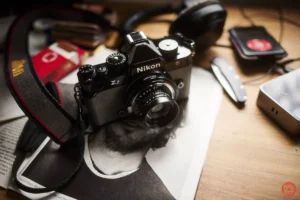
The primary strengths of the Nikon ecosystem lie in its robust physical ergonomics, weather sealing, and color science, which collectively minimize the time required in post-production software like Adobe Lightroom or Capture One. Cameras such as the retro-styled Nikon Zf and the high-resolution, fast-action Nikon Z8 demonstrate a commitment to serving traditional photographers. Furthermore, Nikon’s historical backward compatibility—allowing legacy F-mount lenses to adapt to newer Z-mount bodies via official adapters—provides a bridge for long-time users transitioning between eras of hardware.
Despite these advantages, certain limitations persist. Nikon has historically lagged behind competitors in implementing advanced, in-camera creative features designed to reduce digital manipulation, such as robust raw multiple-exposure modes and live composite shooting for long-term light accumulation. Nevertheless, for users prioritizing handling, optical sharpness, and efficient turnaround times, a Nikon-centric foundation remains highly defensible.
The Lumix and Leica Alliance: Full-Frame Versatility and Creative Longevity
An alternative path for a modernized, zero-base kit centers on the strategic partnership between Panasonic Lumix and Leica Camera through the L-Mount Alliance. Over recent years, Panasonic has steadily expanded its footprint in the full-frame mirrorless market, merging its legendary cinematic heritage with sophisticated photographic tools.

The L-mount ecosystem offers distinct advantages for photographers seeking advanced creative control. Panasonic bodies, such as the Lumix S1R II, incorporate sophisticated computational features including raw multiple-exposure capabilities and live composite modes directly into the camera firmware. This allows practitioners to achieve complex visual effects in-camera, reducing reliance on computer-based pixel manipulation. Paired with Leica’s legendary mechanical durability—exemplified by bodies like the Leica SL2-S—the combination delivers a resilient, versatile backup system.
Furthermore, the open nature of the L-Mount Alliance provides users with access to an expansive catalog of high-performance native and third-party lenses from brands like Sigma, offering cost-effective alternatives to proprietary glass without sacrificing optical fidelity. Panasonic’s deep-rooted legacy in professional video production also future-proofs the investment for creators who may eventually integrate moving images into their portfolios.
Industry Competitors: Why Canon, Sony, and Fujifilm Fall Short for Purists
Evaluating the broader market requires examining why other major manufacturers may not align with a streamlined, photography-first philosophy. Brands like Canon, Sony, and Fujifilm command massive market share, yet each presents specific friction points for traditional purists.
Canon’s current corporate strategy heavily emphasizes closed ecosystems and video-centric content creation. The brand has faced criticism from the professional community for restricting third-party autofocus lens development, limiting optical choices for consumers. Additionally, certain Canon models have omitted advanced photographic features found in previous generations, such as raw multiple-exposure capabilities, while optical roadmaps for specialized tools like tilt-shift lenses have experienced prolonged delays.

Sony, while a pioneer in sensor technology and autofocus tracking performance, has faced scrutiny regarding its design philosophy. The brand’s color science and default rendering profiles often lean toward neutral, highly malleable files intended for extensive digital manipulation in post-production. For photographers seeking an analog-like sensory experience or attempting to minimize screen time, heavy reliance on post-processing software can diminish the intrinsic joy of picture-making. Furthermore, historical decisions—such as the discontinuation of the PlayMemories camera application ecosystem over a decade ago—demonstrated a corporate shift away from user-customizable in-camera utility.
Fujifilm, long celebrated for its tactile, analog-inspired dials and film simulation modes, has also faced strategic reassessments by working professionals. While APS-C and medium-format systems like the GFX series hold distinct niches, the specific form factors in both SLR-style and rangefinder-style bodies do not always meet the rigorous ergonomic demands of high-volume professional work. For users seeking full-frame performance with advanced feature sets, alternatives like Lumix often provide a more comprehensive solution.
Market Implications and the Future of Photographic Hardware
The debate surrounding a zero-base camera kit highlights a broader transition within the imaging industry. As smartphones absorb the casual snapshot market, dedicated camera manufacturers are forced to specialize. Brands that alienate traditional photographers in pursuit of short-form video trends risk losing the loyalty of core enthusiasts who value the tactile, meditative process of photography.
Ultimately, rebuilding a camera kit from scratch underscores the reality that no single ecosystem is flawless. Whether choosing the robust operational efficiency of Nikon or the creative, open-platform versatility of the Lumix and Leica L-mount alliance, today’s photographers must weigh technical specifications against their personal philosophy of image creation. As the market continues to evolve, the most successful hardware investments will remain those that balance modern technological innovation with a respect for the traditional craft of photography.