Renault 4 E-Tech Electric Receives Retro Fabric Roof and Plein Sud Special Edition to Honor Its Heritage

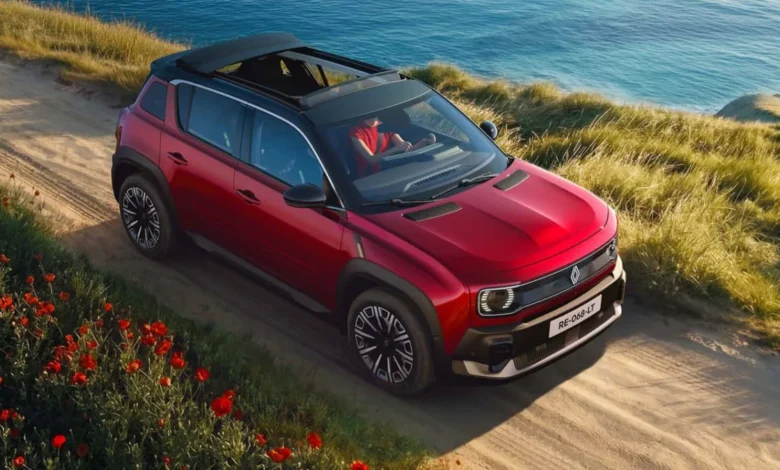
Renault has officially expanded the feature set of its highly anticipated Renault 4 E-Tech Electric, introducing a retractable fabric roof and a new special edition trim designed to evoke the spirit of the 1960s. This move signals a strategic effort by the French automaker to blend modern battery-electric technology with the nostalgic "lifestyle" appeal that defined the original Renault 4, which served as a versatile icon for decades. The new feature, available across most of the vehicle’s lineup, aims to position the Renault 4 E-Tech as a unique, open-air alternative in the increasingly crowded European B-segment electric vehicle market.
The centerpiece of this update is the introduction of the Plein Sud trim level. The name, which translates to "due south," is a direct homage to the historic Renault 4 Plein Air variant. Launched in 1968, the original Plein Air was a doorless, roofless version of the hatchback intended for coastal use and leisure. While the modern E-Tech version retains its doors and structural integrity to meet contemporary safety standards, the inclusion of a massive, power-operated canvas roof serves as a functional and aesthetic bridge to its predecessor.
Engineering and Design of the Retractable Canvas Roof
The new retractable fabric roof is not merely a cosmetic addition but a carefully engineered component designed to minimize the weight penalties often associated with convertible mechanisms. According to technical specifications released by Renault, the opening measures 36 inches (92 centimeters) in length and 31 inches (80 centimeters) in width. This creates a significant "open-air" experience for both the driver and the front-seat passenger.
To maintain vehicle efficiency—a critical metric for any electric vehicle—Renault has utilized high-strength plastic for the load-bearing parts of the roof mechanism. This choice helps keep the vehicle’s center of gravity low and prevents a significant reduction in the car’s driving range. The roof can be operated via a cabin-mounted button and offers the flexibility of being partially or fully retracted depending on driver preference.
However, the addition of the folding mechanism does involve a compromise in interior packaging. While the front passengers benefit from increased perceived headroom when the roof is open, the housing for the retracted fabric and the mechanical rails results in a reduction of approximately 1.5 inches (4 centimeters) of headroom for rear-seat occupants compared to the standard fixed-roof model. Renault has confirmed that the canvas roof will be available as an option on all versions of the Renault 4 E-Tech, with the exception of the entry-level trim, which remains focused on affordability and maximum utility.
The Plein Sud Edition: A Modern Tribute to the 1968 Plein Air
The Plein Sud special edition is specifically curated to capture the "joie de vivre" of the original 1960s motoring culture. In the late 1960s, the Renault 4 Plein Air was developed by Sinpar and marketed by Renault as a "fun car" for the beach. Though it saw limited production, it became a cult classic.
The 2025 Plein Sud edition attempts to replicate this ethos within the framework of a modern, road-legal electric crossover. Unlike the original, which lacked a tailgate and side protection, the Plein Sud is a fully featured vehicle equipped with the latest ADAS (Advanced Driver Assistance Systems) and connectivity features. It serves as the flagship for the "soft-top" experience, likely featuring unique exterior colors, interior upholstery patterns, and badging that distinguish it from the standard Techno or Iconic trims.
Enhancements in Safety and Thermal Management
Beyond the aesthetic and lifestyle upgrades, Renault is utilizing this update to introduce significant technical improvements to the entire Renault 4 E-Tech range. Every new model sold in the European market will now feature a revised driver monitoring system. This hardware and software suite is designed to detect signs of driver fatigue or distraction. In extreme cases, where the driver fails to respond to escalating alerts, the system is programmed to bring the vehicle to a controlled standstill automatically.
Furthermore, Renault has addressed one of the primary pain points for EV owners in colder climates: charging speeds in freezing temperatures. The updated Renault 4 E-Tech incorporates a new water-to-water heat exchanger. This system optimizes the thermal management of the battery pack, allowing it to reach ideal charging temperatures more rapidly when plugged into a DC fast charger during winter months. Initial data suggests this could significantly reduce the "cold-weather penalty" that typically plagues lithium-ion batteries, ensuring more consistent long-distance travel capabilities for European customers.
Historical Context and the Evolution of the Renault 4
To understand the significance of the E-Tech model, one must look at the chronology of the Renault 4 nameplate. Originally launched in 1961 as a response to the Citroën 2CV, the Renault 4 (or R4) was the world’s first mass-produced hatchback with a top-hinged tailgate. Over a production run that lasted until 1994, Renault sold over 8 million units globally.
The timeline of the nameplate’s revival highlights Renault’s broader "Renaulution" strategy:
- January 2021: Renault CEO Luca de Meo announces the "Renaulution" plan, emphasizing a return to iconic nameplates.
- October 2022: The 4Ever Trophy concept is unveiled at the Paris Motor Show, previewing the rugged, SUV-inspired design of the electric R4.
- October 2024: The production-ready Renault 4 E-Tech Electric makes its debut, showcasing the AmpR Small platform.
- Early 2025: Introduction of the fabric roof option and the Plein Sud special edition to further diversify the lineup.
The Renault 4 E-Tech is built on the AmpR Small platform, shared with the recently launched Renault 5 E-Tech. This modular architecture is designed specifically for B-segment electric cars, allowing for a flat floor, a long wheelbase, and maximized interior space despite a compact exterior footprint.
Market Implications and Competitive Landscape
The introduction of a soft-top EV is a calculated move by Renault to capture a niche but loyal segment of the market. Currently, very few electric vehicles offer a convertible or semi-convertible experience. The Fiat 500e Cabrio is perhaps the most direct competitor, though it is significantly smaller and offers less utility than the Renault 4, which leans into the crossover/SUV aesthetic.
By offering the fabric roof, Renault is leaning into the "emotional" side of car buying. Industry analysts suggest that as EV hardware becomes increasingly commoditized, manufacturers must differentiate their products through design and unique user experiences. The Renault 4’s combination of retro styling, a practical hatchback body, and the "Plein Sud" open-air option provides a distinct value proposition that appeals to both older buyers with nostalgic ties to the original and younger, style-conscious urban dwellers.
The inclusion of the water-to-water heat exchanger also reflects a growing trend in the EV industry: the prioritization of "real-world" usability over headline-grabbing peak performance figures. By improving cold-weather charging, Renault is positioning the R4 as a viable primary vehicle for households across Northern and Central Europe, rather than just a secondary city car.
Strategic Impact on the "Renaulution"
The Renault 4 E-Tech, alongside the Renault 5 and the upcoming Twingo EV, forms the core of Renault’s strategy to democratize electric mobility in Europe. The company aims to provide affordable, characterful EVs that can compete with an influx of low-cost alternatives from international markets.
The Plein Sud edition specifically targets the premium end of the B-segment, where higher margins can be achieved through "lifestyle" branding. This helps offset the high development costs of the AmpR Small platform and the transition to a fully electric lineup.
Conclusion
The Renault 4 E-Tech Electric Plein Sud and the wider availability of the retractable fabric roof represent a sophisticated blend of heritage and future-proofing. By addressing technical hurdles like cold-weather charging and safety regulations while simultaneously delivering a nostalgic, fun-to-drive product, Renault is reinforcing its position as a leader in the European electric transition.
As the first units featuring these updates prepare to hit European showrooms, the automotive industry will be watching closely to see if this "retro-modern" approach can translate into the same level of mass-market success enjoyed by the original "do-it-all" hatchback over sixty years ago. With its unashamedly happy aesthetic and improved technical suite, the Renault 4 E-Tech is well-equipped to navigate the complexities of the modern automotive landscape while keeping one eye firmly on its storied past.