Apollo Scooters Dares the Mass Market with the Launch of the Dash, Its Most Affordable Electric Scooter Yet

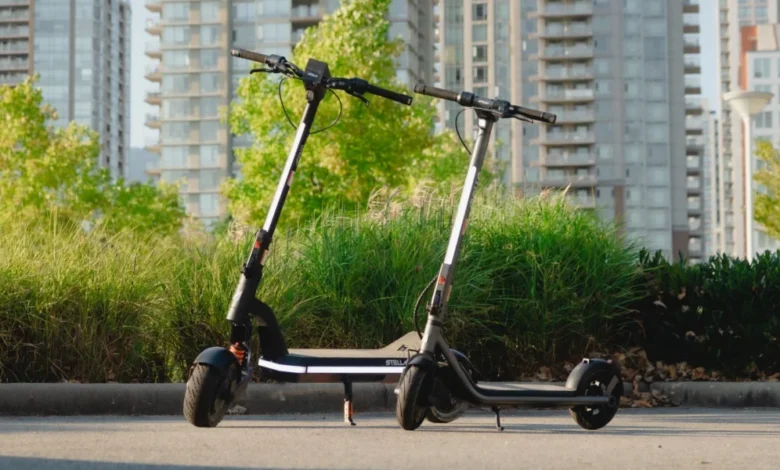
Known over the last several years for carving out a distinct and prestigious niche in the premium electric scooter market, Apollo is making a strategic pivot to capture a broader audience. The company has officially announced the Apollo Dash, its least expensive and most accessible model to date. Retailing at a standard manufacturer’s suggested retail price (MSRP) of $699, the Dash is making its commercial debut with an introductory Black Friday promotional price of $599, running through November 30. Rather than presenting the Dash as a stripped-down, budget-tier compromise, manufacturer representatives emphasize that the vehicle is engineered to scale down Apollo’s proprietary high-end technology into a more economically accessible package.
This calculated market entry places Apollo in direct competition with mass-market competitors like Segway, NIU, and Xiaomi, fundamentally shifting the brand’s trajectory from an exclusive high-end manufacturer to a broad-appeal mobility provider.
Engineering Specifications and Performance Capabilities

Despite carrying a price point lower than anything previously released by the brand, the Apollo Dash boasts a robust hardware configuration. At its core, the electric scooter utilizes a sturdy 48-volt electrical system, a architectural choice rarely found in the sub-$700 price bracket. This system powers a high-efficiency Bosch motor delivering a nominal output of 600 watts and a peak output of 1,200 watts. The setup allows the Dash to achieve a respectable top speed of 20 miles per hour (32 kilometers per hour), making it well-suited for urban and suburban commuting.
Powering the motor is a 480Wh battery pack, which is officially rated to deliver up to 25 miles (40 kilometers) of range when operated in Eco mode. A critical engineering advantage highlighted by Apollo engineers is the implementation of the 48V architecture itself. In lower-cost, 36V electric scooters, riders frequently experience a noticeable degradation in motor power and sluggish acceleration as the battery depletes. The higher voltage threshold of the Dash mitigates this issue, ensuring a consistent performance envelope even as the battery charge approaches lower levels.
Weighing in at 43 pounds (19.5 kilograms), the Dash strikes a manageable balance between structural durability and everyday portability, allowing riders to easily carry it up flights of stairs or load it into public transit vehicles and car trunks. However, achieving this specific weight and price target required strategic compromises. Most notably, the Dash features no mechanical suspension. Consequently, Apollo has established a strict maximum rider weight capacity of 220 pounds (100 kilograms). For heavier commuters or those navigating severely uneven terrain, cobblestone streets, or steep inclines, the company continues to recommend its more robust, albeit pricier, alternatives, such as the Apollo Go.
Feature Set and Rigorous Durability Testing

Even without a dedicated suspension system, the Apollo Dash comes remarkably well-equipped, integrating numerous features typically reserved for flagship models. Among these are an IP66 water-resistance rating, ensuring reliability during adverse weather conditions, and self-healing tubeless tires designed to minimize the risk of flat tires caused by glass, nails, or other road debris.
Furthermore, the scooter incorporates regenerative braking to capture kinetic energy during deceleration and feed it back into the battery pack. Safety and convenience features include built-in turn signals, Apollo’s signature Beam stem light for enhanced nighttime visibility, NFC unlocking capabilities, and native Apple Find My integration for seamless device tracking and anti-theft protection. All of these systems interface directly with the centralized Apollo smartphone application for custom ride profiling and diagnostics.
To ensure long-term reliability—a historical pain point for budget-conscious consumers entering the micromobility market—Apollo subjected the Dash’s frame to an exhaustive durability validation process equivalent to 10,000 kilometers (approximately 6,200 miles) of aggressive riding before approving the design for commercial production.
Complementing the laboratory stress tests, a rigorous pre-launch beta testing program was conducted. During this trial period, beta testers accumulated a combined 1,002 miles across 144 separate rides without recording a single tire puncture or mechanical failure. According to telemetry data released by the company, beta riders averaged 19 miles (30 kilometers) per excursion while consistently finishing their journeys with an average of 29 percent battery capacity remaining, validating the real-world efficiency of the 480Wh power source.

Market Context and Strategic Positioning
The introduction of the Apollo Dash addresses a significant trend identified in the company’s internal consumer analytics. Market research indicates that roughly 52 percent of current Apollo buyers previously owned entry-level electric scooters manufactured by dominant mass-market brands like Segway, NIU, and Xiaomi. Historically, however, transitioning from those entry-level platforms to an Apollo vehicle required a financial commitment exceeding the $1,000 threshold.
By launching the Dash at $599 (and $699 thereafter), Apollo is actively lowering the barrier of entry to its proprietary ecosystem. This pricing strategy targets existing urban commuters who have outgrown their basic scooters and are seeking superior build quality, advanced software integration, and higher safety standards without incurring a four-figure expense.
Concurrently, this move alters the competitive landscape of the micromobility sector. While legacy brands have long dominated the sub-$700 market segment with utilitarian products, the arrival of the Apollo Dash injects high-end engineering, advanced anti-theft tech, and high-voltage performance standards into a price category where such specifications are exceptionally rare.

Broader Industry Implications and Future Outlook
The launch of the Apollo Dash reflects a broader maturation within the electric scooter industry. As consumer adoption shifts from recreational novelty to essential urban transportation, manufacturers face mounting pressure to bridge the gap between premium performance and financial accessibility. Companies that fail to democratize advanced technologies risk losing customers to brands that can successfully scale down robust engineering safely.
By prioritizing rigorous pre-release testing and retaining critical high-end features—such as the 48V electrical architecture, Apple Find My integration, and self-healing tires—Apollo is attempting to avoid the reliability pitfalls that frequently plague low-cost alternatives. If the Dash successfully captures the market share currently held by entry-level competitors, it could establish a new benchmark for what consumers expect from a mid-tier urban mobility device.
Industry analysts will be closely monitoring adoption rates as the Black Friday promotional window closes on November 30. For consumers evaluating their options ahead of the winter commuting season, the Dash represents a calculated compromise: trading the plush ride of a full-suspension system for high-voltage power, comprehensive safety features, and a price point that makes premium engineering more attainable than ever before. For those requiring enhanced capability, Apollo’s broader catalogue of upmarket models remains available under parallel early Black Friday promotions.