OpenAI Prepares Major PR Offensive and Rebranding Strategy for Data Centers Ahead of U.S. Midterms and 2028 Presidential Race

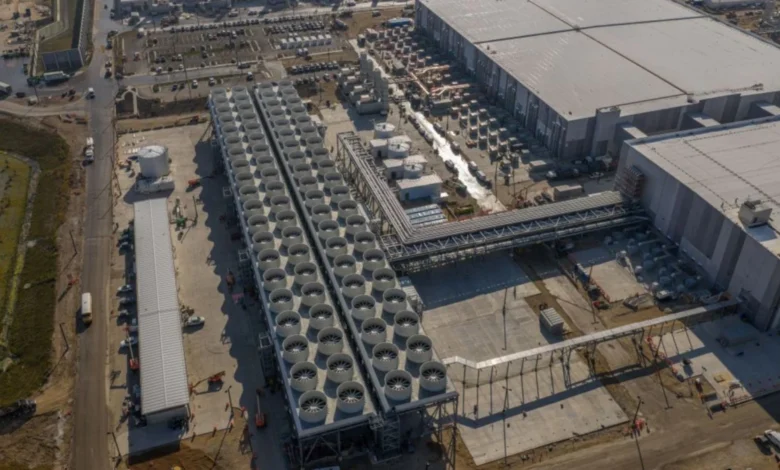
As artificial intelligence continues its rapid integration into daily life, global infrastructure, and political discourse, the technology sector is facing mounting scrutiny from policymakers, environmental groups, and the American public. In response to these escalating challenges, artificial intelligence pioneer OpenAI is reportedly preparing a sweeping public relations and policy campaign designed to reshape public perception and sway national policy. According to recent reports, the comprehensive strategy includes a unique branding proposal to rename traditional data centers as “AI Compute Campuses,” signaling an intentional shift in how the massive facilities are perceived by local communities and federal legislators alike.
The initiative is strategically timed to unfold alongside the November 3 U.S. midterm elections, serving as a foundational stepping stone for a much larger, coordinated effort to influence the political and regulatory debate surrounding artificial intelligence leading up to the 2028 presidential race. Chris Lehane, OpenAI’s chief global affairs officer, recently characterized the upcoming midterm elections as “a bit of a movie trailer for what you’re going to see in 2028.” With artificial intelligence poised to become a central platform issue for future presidential candidates, tech companies are actively working to establish favorable narratives before legislative bodies enact stringent oversight.
The Rising Stakes of AI Infrastructure and Public Relations
The proposed rebranding of data centers from industrial-sounding facilities to “AI Compute Campuses” highlights a growing challenge for Silicon Valley: public relations concerning physical infrastructure. Modern generative AI models require unprecedented amounts of computational power, which translates directly into the rapid construction of massive data center hubs across the United States. These facilities, however, have increasingly faced fierce opposition from local residents and environmental advocates.
Data centers are notoriously resource-intensive. They consume vast quantities of electricity—frequently straining local power grids and forcing utility companies to keep aging fossil-fuel plants operational or delay transitions to renewable energy. Furthermore, the colossal cooling systems required to maintain optimal operating temperatures for thousands of high-performance servers demand millions of gallons of water daily, raising severe sustainability concerns in drought-prone regions.
By attempting to rebrand these facilities as “campuses,” OpenAI appears to be adopting a linguistic framework reminiscent of major technology headquarters, such as university-like environments associated with innovation, education, and community integration rather than industrial powerhouses. Whether this terminology will successfully mitigate local pushback and environmental concerns remains to be seen, but it underscores the company’s aggressive approach to narrative control.
Chronology of Political and Regulatory Engagement
To understand the weight of OpenAI’s current strategy, it is essential to examine the chronology of how artificial intelligence policy has evolved within the United States federal landscape.
- Late 2022 to 2023: The public release of generative AI models, most notably OpenAI’s ChatGPT, sparks an unprecedented global adoption wave. Lawmakers are caught off guard by the technology’s capabilities, leading to immediate congressional hearings focused on safety, misinformation, and copyright law.
- 2023 Executive Order: In October 2023, the White House issues a sweeping Executive Order on Artificial Intelligence, establishing new standards for AI safety and security, requiring developers of the most powerful systems to share safety test results with the federal government, and invoking the Defense Production Act.
- Throughout 2024 and 2025: As AI integration deepens, local zoning boards become battlegrounds over data center construction. Energy grid operators sound the alarm regarding projected electricity demands. Concurrently, labor unions and economists express mounting concern over automation displacing white-collar and creative jobs.
- Late 2026 (Current Context): With the U.S. midterm elections approaching on November 3, artificial intelligence transitions from a niche technological topic to a mainstream kitchen-table issue. OpenAI and other major tech entities ramp up lobbying efforts, political donations, and public awareness campaigns to shape the legislative frameworks that will govern the industry for the remainder of the decade.
- The Horizon (2028 Presidential Race): Industry insiders anticipate that artificial intelligence policy, energy infrastructure demands, and economic displacement will form central pillars of the 2028 presidential debates, prompting early positioning by tech firms today.
Economic Anxiety, Job Security, and Environmental Pressures
The primary drivers behind OpenAI’s anticipated public relations blitz are the legitimate and widespread anxieties felt by American workers and communities. As artificial intelligence systems become more capable of complex reasoning, coding, writing, and administrative tasks, the specter of labor displacement looms large.
While proponents argue that AI will foster a new industrial revolution by increasing productivity and creating entirely new job categories, skeptics and labor organizations point to the immediate risks of workforce reduction. Middle-class administrative jobs, entry-level legal and financial analysis roles, and creative industries are already experiencing disruptions. During an election cycle, these economic uncertainties easily translate into populist political sentiment, making tech companies prime targets for regulatory crackdowns, antitrust investigations, and proposed taxation on automated labor.
Compounding these economic anxieties are environmental realities. Major technology corporations have set ambitious net-zero carbon emission targets, yet the exponential growth of generative AI threatens to derail these goals. Recent corporate sustainability reports from leading tech giants reveal significant increases in carbon emissions driven almost entirely by the energy demands of data center expansion. As communities near proposed data center sites organize grassroots opposition groups—questioning utility rate hikes and environmental degradation—tech companies realize that public goodwill is evaporating.
Industry and Political Reactions
The broader tech industry and Washington insiders are closely monitoring OpenAI’s proactive stance. Competitors in the artificial intelligence space, including major cloud providers and enterprise software developers, face identical infrastructural and regulatory headwinds. While few have formally announced similar branding overhauls for their hardware installations, many are expanding their lobbying apparatuses in Washington, D.C., and state capitals.
Political analysts note that the strategy of rebranding technical infrastructure is a classic public relations maneuver long utilized by energy, telecommunications, and manufacturing sectors. However, adapting it for artificial intelligence represents a novel intersection of digital technology and physical urban planning.
Lawmakers on both sides of the aisle have expressed mixed reactions to the growing footprint of AI. Some legislators advocate for stringent federal oversight, mandatory environmental impact assessments for new data centers, and federal guidelines on labor displacement. Conversely, other policymakers caution that overly aggressive regulation could stifle American technological leadership, allowing geopolitical rivals like China to capture global dominance in artificial intelligence infrastructure.
Fact-Based Analysis of Implications
OpenAI’s reported PR campaign and data center rebranding effort carry significant implications for the future of technology regulation in the United States.
First, it demonstrates that leading AI laboratories no longer view themselves merely as software developers, but as critical infrastructure providers deeply entangled in national energy markets, municipal zoning disputes, and federal economic policy. The success or failure of the “AI Compute Campuses” narrative will likely influence whether local communities welcome or actively block the expansion of the physical backbone required for future AI models.
Second, by framing the upcoming midterm elections as a preview of the 2028 presidential race, OpenAI is signaling to policymakers that the political cost of ignoring or aggressively restricting AI innovation will be high. By engaging early in political narratives, the company aims to foster a bipartisan consensus around the necessity of computational expansion, framing robust AI infrastructure as a matter of national security and economic competitiveness.
Ultimately, whether the public and lawmakers embrace the terminology of “Compute Campuses” will depend less on semantic branding and more on tangible corporate responsibility. As energy grid strains, water usage debates, and labor market shifts continue to dominate headlines, OpenAI and its industry peers will need to pair strategic public relations campaigns with substantive, enforceable solutions to the very real infrastructural and societal challenges brought on by the artificial intelligence revolution.