The landscape of the smart home industry is experiencing significant shifts, marked by leadership changes at tech giants, the impending milestone anniversaries of foundational technologies, and a renewed focus on interoperability and security. These developments collectively prompt a critical examination of the smart home’s maturity, its enduring challenges, and its future trajectory, particularly as Amazon’s head of devices, David Limp, prepares to retire amidst a broader executive exodus from the company.
A Pivotal Moment for Amazon’s Devices Division and Alexa’s Future
David Limp’s announcement of his retirement from Amazon marks a significant turning point for the company’s devices and services division. Limp, a long-serving and influential executive, has been instrumental in shaping Amazon’s hardware strategy for over a decade, overseeing the development and launch of key products such as the Kindle e-readers, Fire tablets, and most notably, the Amazon Echo and its integrated voice assistant, Alexa. His departure is part of a broader wave of executive turnovers that has seen several high-profile leaders exit Amazon in the past year, signaling a period of strategic re-evaluation and potential restructuring within the e-commerce and cloud computing giant.
Limp’s legacy is inextricably linked to the rise of ambient computing, a vision he championed through Alexa. Under his leadership, Amazon poured billions into research and development, establishing Alexa as a household name and a primary interface for smart home control. The company’s aggressive strategy included significant acquisitions like Ring (smart doorbells and security cameras) and Eero (mesh Wi-Fi systems), aimed at building a comprehensive smart home ecosystem. While the proposed acquisition of iRobot (maker of Roomba vacuum cleaners) faced regulatory hurdles, it underscored Amazon’s ambition to integrate smart technology into every facet of daily life.
As Alexa and the Amazon Echo approach their tenth anniversary next year, Limp’s exit raises pertinent questions about the future direction of Amazon’s smart home initiatives. Will his successor continue the aggressive expansion, or will there be a shift in focus? The smart speaker market has matured, and competition from Google Assistant and Apple HomeKit remains fierce. Alexa’s early dominance has been challenged, and the platform, despite its widespread adoption, has faced criticism regarding its perceived lack of significant innovation in recent years and its ongoing struggle to move beyond basic command-and-control functions to truly intelligent, proactive assistance. The incoming leadership will face the challenge of reinvigorating Alexa, defining its next decade of evolution, and ensuring its relevance in an increasingly crowded and complex smart home landscape.
The Smart Home at a Crossroads: Ten Years of Progress and Persistent Hurdles
The upcoming tenth anniversary of Alexa and the Amazon Echo provides a timely opportunity to assess the state of the smart home market. When the Amazon Echo first launched in November 2014, it revolutionized consumer interaction with technology, democratizing voice control and introducing the concept of ambient intelligence into millions of homes. What began as a simple speaker capable of playing music and answering basic queries quickly evolved into a central hub for controlling a myriad of smart devices, from lights and thermostats to security cameras and door locks.
However, a decade later, the smart home market presents a mixed picture of innovation and persistent challenges. While adoption rates have steadily climbed, and the convenience offered by smart devices is undeniable, the promise of a truly seamless, intuitive, and universally interoperable smart home remains largely unfulfilled for the average consumer. Two recent product examples perfectly illustrate the industry’s ongoing struggle to balance innovation with practicality and affordability:
Firstly, the review of the Mill composting system, created by Nest co-founder Matt Rodgers, highlights a potential pitfall of smart home innovation: over-engineering mundane tasks. The Mill system, designed to dehydrate and de-odorize food waste, leverages smart technology to optimize its process. While admirable in its environmental intent, such a product often comes with a premium price tag, making it inaccessible to the mass market and raising questions about whether some "smart" solutions are truly addressing widespread problems or simply creating niche, high-cost appliances. Critics argue that these products sometimes represent "solutions looking for a problem," further complicating rather than simplifying daily life for many consumers. The cost-benefit analysis for such a device, especially when simpler, non-smart composting methods exist, underscores the challenge of convincing consumers to invest heavily in smart appliances that perform tasks they might not perceive as needing technological intervention.
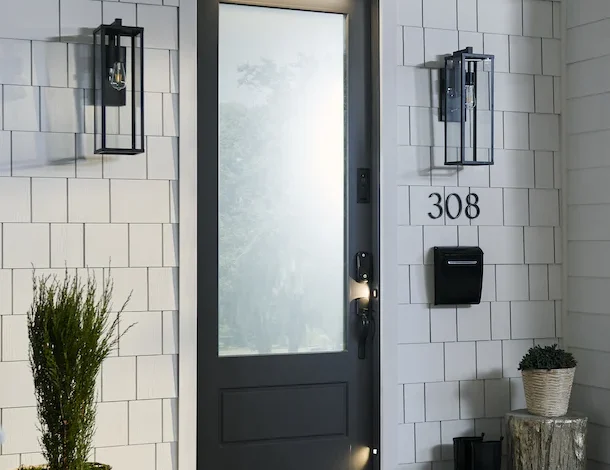
Secondly, the news that Masonite is now selling its expensive smart door, the M-Pwr Smart Door, at Home Depot further exemplifies the high-end segment of the smart home market. This integrated system boasts features like built-in lighting, a video doorbell, and smart lock functionality, all powered and connected within the door itself. While such an innovation offers a sleek, integrated aesthetic and enhanced security, its premium price point—reportedly thousands of dollars—positions it firmly in the luxury market, primarily targeting custom home builders or high-end renovations. This exclusivity contrasts sharply with the broader goal of making smart home technology accessible to everyone. The gap between affordable smart plugs and light bulbs, and high-ticket items like smart doors, highlights the disparate access points and economic barriers that continue to fragment the smart home experience, preventing truly widespread, holistic adoption.
Strengthening the Foundation: Cybersecurity and Interoperability Efforts
Amidst these market dynamics, critical efforts are underway to address fundamental issues of smart home security and interoperability, which are often cited as major impediments to broader consumer trust and adoption.
FCC’s Proposed IoT Cybersecurity Labeling Program
A significant positive development is the Federal Communications Commission’s (FCC) release of its Notice of Proposed Rule Making (NPRM) for an IoT cybersecurity labeling program. This initiative stems from growing concerns over the pervasive security vulnerabilities in internet-connected devices, which range from smart cameras and thermostats to industrial sensors. Insecure IoT devices have been implicated in various cyberattacks, including large-scale DDoS attacks leveraging compromised devices, and have raised serious privacy concerns regarding data collection and potential breaches. The current lack of standardized security practices across manufacturers has left consumers ill-equipped to make informed purchasing decisions regarding the security posture of their smart devices.
The FCC’s proposal aims to establish a voluntary labeling program that would provide consumers with clear, easy-to-understand information about the cybersecurity features of smart products. Similar to energy efficiency labels, this "cybersecurity label" would signify that a device meets certain baseline security standards. While the exact criteria are still under discussion, they are expected to include requirements for regular software updates, secure data encryption, robust authentication mechanisms, and secure boot processes. The 30-day comment period following the NPRM allows industry stakeholders, consumer advocacy groups, and the public to provide feedback, which will shape the final rules.
The implications of such a program are substantial. For consumers, it promises increased transparency and the ability to make more informed choices, fostering greater trust in smart home technology. For manufacturers, it could create a competitive advantage for those who prioritize security, while also providing clearer guidelines for product development. This initiative aligns with similar efforts in other regions, such as the UK’s Product Security and Telecommunications Infrastructure (PSTI) Act and Singapore’s Cybersecurity Labeling Scheme, indicating a global movement towards establishing baseline security for IoT.
Microsoft’s Discovery of Industrial Control System Vulnerabilities
Further underscoring the universal importance of cybersecurity, Microsoft recently disclosed the discovery of a new set of vulnerabilities affecting industrial control equipment. These vulnerabilities, if exploited, could potentially be used to shut down critical infrastructure such as power plants and water treatment facilities. This finding highlights the severe risks associated with the increasing integration of internet-connected operational technology (OT) in essential services. Unlike consumer smart home devices, compromises in industrial systems can have catastrophic consequences, impacting national security and public safety on a massive scale. The complexity of these systems, often running legacy software and hardware, makes them particularly challenging to secure. Microsoft’s proactive disclosure and collaboration with vendors to patch these vulnerabilities are crucial, but they serve as a stark reminder that cybersecurity is not just a consumer convenience but a critical imperative across all connected domains.

Strengthening the Foundation: Z-Wave, Matter, and Local Control
Beyond security, the smart home industry is also grappling with the challenge of interoperability – the ability for devices from different manufacturers to communicate seamlessly. Efforts to address this include the emergence of new players in established protocols and the push for unified standards like Matter.
Trident IoT and the Z-Wave Ecosystem
The Z-Wave protocol, a wireless mesh network technology specifically designed for smart home devices, has long been a cornerstone of reliable home automation, known for its robust signal and low power consumption. Historically, Silicon Labs has been the primary provider of Z-Wave chips, maintaining tight control over the ecosystem. The recent news of Trident IoT emerging as a secondary source of Z-Wave chips represents a significant development for the protocol’s future.
In an interview, Mariusz Malkowski, founder and CTO of Trident IoT, shed light on the company’s vision and its impact on the Z-Wave community. Trident IoT’s establishment aims to foster greater competition, improve supply chain resilience, and accelerate innovation within the Z-Wave ecosystem. For years, relying on a single chip provider presented potential risks related to supply disruptions and limited competitive pricing. Trident IoT’s entry diversifies the market, potentially leading to more affordable chips and faster development cycles for Z-Wave-enabled products.
Malkowski detailed Trident IoT’s plans, which extend beyond merely manufacturing Z-Wave chips. The company intends to focus on building or integrating other smart home radio protocols—such as Zigbee, Wi-Fi, and Bluetooth—into its devices, recognizing that a truly interoperable smart home will likely involve a mix of technologies. Crucially, Trident IoT will also act as a Z-Wave certification house, playing a vital role in ensuring that new Z-Wave products meet the protocol’s rigorous standards for performance and security. This move ensures quality control and maintains the reliability for which Z-Wave is known, even with increased competition.
A key topic of discussion was the interplay between Z-Wave and the emerging Matter standard. Matter, backed by major industry players like Apple, Google, Amazon, and Samsung, aims to provide a unified, open-source application layer that allows smart home devices to communicate regardless of their underlying wireless protocol. Malkowski explained how Z-Wave devices will work with Matter, emphasizing the importance of "bridging" solutions. These bridges will enable Z-Wave devices to expose their functionality to the Matter ecosystem, allowing users to control them through Matter-compatible hubs and apps, thereby extending Matter’s reach to a vast installed base of Z-Wave products. This approach ensures that investments in existing Z-Wave devices remain valuable while paving the way for a more unified smart home experience.
Looking to the future, Malkowski outlined plans for Z-Wave Long Range (Z-Wave LR), an enhancement designed to significantly increase the range and scalability of Z-Wave networks, making it suitable for larger homes, multi-dwelling units, and even light commercial applications. Furthermore, planned security upgrades, building upon the robust Z-Wave S2 framework, will continue to fortify the protocol against emerging cyber threats, aligning with the broader industry push for enhanced IoT security.
The Homey Pro Hub and the Appeal of Local Control
The review of the Homey Pro smart home hub further highlights a growing trend among smart home enthusiasts: the desire for local control. The Homey Pro is an advanced, high-performance hub designed to integrate a vast array of smart devices across different protocols (Wi-Fi, Zigbee, Z-Wave, Bluetooth, 433MHz, Infrared). While it carries a premium price tag, its primary appeal lies in its emphasis on local control.
Local control means that smart devices can communicate and operate within the home network without necessarily routing commands and data through cloud servers on the internet. This offers several significant advantages: enhanced privacy (less data leaving the home), improved reliability (systems continue to function even if the internet connection drops), faster response times (no latency from cloud communication), and greater independence from manufacturers’ cloud services (reducing the risk of devices becoming obsolete if a company shuts down its servers). For sophisticated users, the ability to control devices locally provides a greater sense of ownership and resilience. The review’s caveat, "check device support," is crucial, however, as even comprehensive hubs like the Homey Pro cannot guarantee compatibility with every single smart device on the market, underscoring the ongoing challenge of fragmentation.
Practical Applications and Listener Engagement
Amidst these high-level industry discussions, the practical realities of smart home implementation often come down to fundamental choices. A listener’s question about what light bulb a woodworker should use in a lamp he’s trying to build illustrates this perfectly. For a woodworker crafting a custom lamp, the choice of bulb involves balancing aesthetic, functional, and smart capabilities. Considerations include:
- Type of Bulb: Traditional incandescent (less efficient, often desired for aesthetic warmth), LED (energy-efficient, long-lasting, versatile), or smart LED.
- Brightness (Lumens): Appropriate light output for the intended use (task lighting, ambient lighting).
- Color Temperature (Kelvin): Warm white (2700K-3000K) for a cozy ambiance, cool white (4000K-5000K) for task-oriented lighting.
- Dimming Capabilities: Whether the bulb needs to be dimmable and if it requires a compatible smart dimmer switch or if it’s a smart bulb with built-in dimming.
- Smart Features: If integrating into a smart home, choosing a Wi-Fi, Zigbee, or Z-Wave enabled smart bulb allows for voice control, scheduling, and scene creation.
- Safety: Ensuring the bulb’s wattage and heat output are compatible with the lamp’s design and materials.
For a custom project, a smart bulb with tunable white capabilities (allowing adjustment of color temperature) or even full RGB color could offer versatility, allowing the woodworker to showcase their craftsmanship under different lighting conditions or integrate the lamp seamlessly into their existing smart home setup.
Conclusion: The Evolving Smart Home Ecosystem
The smart home ecosystem, as it approaches significant milestones like Alexa’s tenth anniversary, is clearly in a state of dynamic evolution. The departure of key leaders like David Limp from Amazon signals a period of introspection and potential strategic recalibration for foundational platforms. While innovation continues to push boundaries with products like advanced composting systems and integrated smart doors, the industry must contend with questions of affordability, practicality, and widespread applicability.
Crucially, the focus on underlying infrastructure – particularly cybersecurity and interoperability – is intensifying. The FCC’s proposed IoT cybersecurity labeling program promises a future of greater transparency and consumer confidence, while Microsoft’s discoveries of industrial vulnerabilities underscore the critical importance of robust security across all connected systems. The resurgence of Z-Wave through new players like Trident IoT, coupled with its strategic integration with the Matter standard, suggests a future where device compatibility is less of a barrier, and local control offers enhanced privacy and reliability.
Ultimately, the smart home is not a static concept but a continuous journey of refinement. It is balancing the allure of cutting-edge technology with the fundamental needs of users for simplicity, security, and seamless functionality. As AI capabilities advance and standardization efforts gain traction, the next decade promises to bring us closer to the truly intelligent, intuitive, and trustworthy connected home that has long been envisioned. The current confluence of leadership changes, technological advancements, and regulatory initiatives marks a critical juncture, setting the stage for the smart home’s continued, albeit complex, maturation.