Tesla Redesigns Referral Program to Focus on Full Self-Driving Subscriptions Rather Than Vehicle Sales

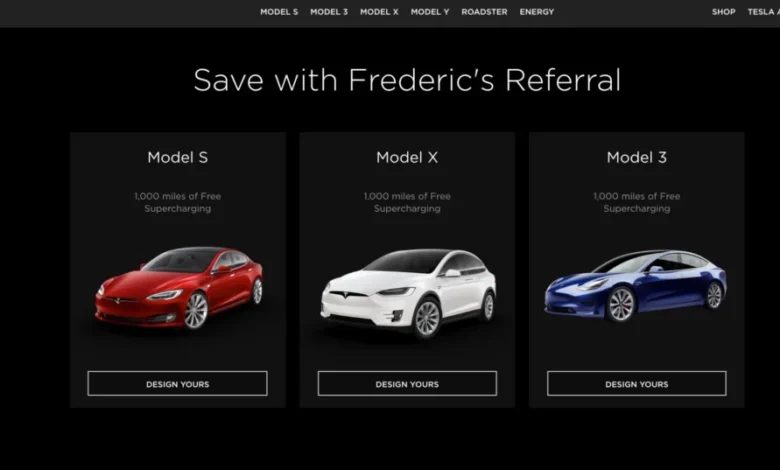
Tesla has quietly restructured its long-running referral program in the United States, shifting its primary incentive model away from driving new vehicle sales and targeting software subscriptions instead. Under the newly updated terms, the automaker has eliminated vehicle-purchase discounts for buyers and referrers, replacing them with rewards tied directly to its Full Self-Driving (Supervised) software suite.
The update marks a historic pivot for a company that has historically relied on customer-to-customer vehicle referrals to stimulate automotive deliveries. Instead of offering cash discounts or account credits for hardware purchases, the updated program utilizes Tesla’s software ecosystem as its core currency, signaling a broader corporate realignment toward software-as-a-service (SaaS) revenue generation.
Mechanically, the new referral structure is straightforward yet restrictive. Existing owners who subscribe to FSD (Supervised) on a monthly basis or who purchased the software outright prior to Tesla discontinuing lifetime sales can share a unique referral link via the Tesla mobile app (version 4.62.0 or later). When a referred owner utilizes the link and transitions from a trial period to a paid FSD subscription, the referrer receives either one free month of the software service or a $99 Tesla account credit. Conversely, the referred customer is awarded a complimentary one-month trial of the autonomous driving suite.
However, eligibility requirements for both parties are stringent. Referrers must be active paying subscribers or legacy outright owners, explicitly excluding those who received FSD through one-year promotional grants. For the recipient, the criteria are even more narrow: the individual must own a registered Tesla vehicle equipped with compatible hardware, must not have paid for FSD within the preceding 12 months, and must not have purchased the feature outright. Furthermore, recent vehicle buyers who received a complimentary FSD trial upon delivery are barred from utilizing a referral link until a full 12 months have elapsed since the conclusion of their initial trial.
To prevent exploitation, Tesla has capped the incentive program at 12 rewards per calendar year per account. This limits the maximum annual benefit an individual referrer can accumulate to either one year of complimentary FSD service or $1,188 in Tesla credits. The program terms also dictate that any earned credits expire 12 months from the date of issuance and cannot be redeemed for cash.

The complete elimination of vehicle-related rewards represents a dramatic departure from previous iterations of Tesla’s customer acquisition strategy. Previously, the Refer and Earn initiative incentivized vehicle transactions, offering direct financial discounts to buyers and account credits to referrers. When Tesla temporarily reinstated the program in August 2024, buyers could receive $1,000 off the purchase price of a new Model S, Model X, Model Y, or Model 3, while referrers pocketed $500 in credit.
Under the revised framework, hardware purchases have been stripped from the incentive schedule entirely. References to the Model 3, Model Y, and Cybertruck now appear exclusively under loyalty classifications for existing owners purchasing an additional vehicle, while the flagship Model S and Model X are omitted from the documentation altogether. Buyer incentives are now restricted strictly to solar panel installations. Meanwhile, referrer benefits are limited to solar products, qualified demo drive completions—capped at 30 over an account’s lifetime—and the newly introduced FSD referral mechanism.
This quiet transition went unannounced by Tesla corporate communications. The updated support documentation carries a modification timestamp of February 24, 2026, leaving the exact deployment date ambiguous to the public.
The structural overhaul of the referral scheme follows a significant strategic shift in how Tesla monetizes its advanced driver-assistance systems. On February 14, 2026, Tesla officially halted the outright sale of FSD, transitioning the product exclusively to a monthly subscription model priced at $99 in the United States.
The emphasis on recurring software revenue is intrinsically linked to corporate performance metrics. In its third-quarter shareholder letter, Tesla disclosed a milestone figure of 1.74 million active FSD subscriptions, representing a 67% year-over-year increase. This metric encompasses historical upfront purchasers alongside active monthly subscribers, while explicitly excluding vehicles operating on complimentary promotional trials.
This specific performance indicator holds heightened significance due to its integration into executive compensation structures. The active FSD subscription count serves as a primary benchmark within CEO Elon Musk’s 2025 Performance Award, which outlines a target milestone of 10 million active subscriptions. This financial incentive catalyzed Tesla’s decision to begin publicly disclosing its subscriber count in January 2026.

By tying referral rewards directly to paid FSD conversions rather than vehicle deliveries, Tesla has engineered a customer acquisition funnel designed specifically to accelerate growth toward the 10-million-subscriber target. While free promotional months do not count toward the official active subscriber tally, every subsequent conversion to a paid monthly subscription directly expands the metric required to unlock executive performance thresholds.
Industry analysts note that the redesigned program offers substantial financial efficiency for the automaker. Traditional referral structures required substantial capital outlays, such as direct price reductions of $1,000 per vehicle sale. In contrast, the current model leverages digital software inventory that incurs virtually no marginal delivery cost for the company.
By distributing software access that is already embedded within the vehicle’s onboard computer, Tesla incurs minimal expense while securing a guaranteed recurring revenue stream of $99 per month from newly converted subscribers. Because program participants must already own a registered Tesla vehicle, the initiative does not expand the physical fleet size. Instead, it functions as a targeted monetization campaign aimed at converting a largely untapped segment of the existing vehicle population.
With a cumulative global fleet estimated at approximately 8.9 million vehicles by the close of 2025, and only 1.74 million active FSD subscriptions accounted for by late 2026, market observers suggest a vast potential pool of prospective software subscribers remains within the current customer base. However, achieving the ultimate corporate milestone of 10 million subscribers will require sustained conversion momentum over the coming years.
By phasing out incentives tied strictly to automotive hardware sales and reallocating resources toward software adoption, Tesla’s revised referral initiative provides clear insight into the company’s evolving corporate priorities. As vehicle volume growth stabilizes across mature automotive markets, the firm’s strategic focus has increasingly pivoted toward software monetization and recurring digital service revenues as the primary drivers of long-term enterprise valuation.