DoorDash Unveils DoorDash Air and Rethinks the Logistics of Autonomous Drone Delivery

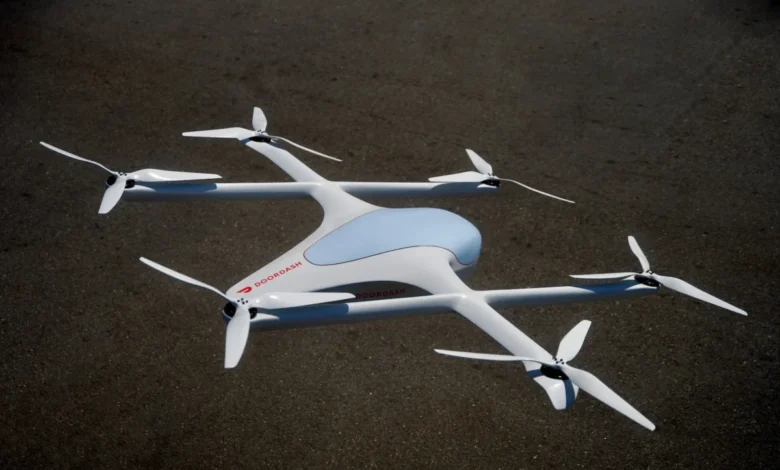
When DoorDash set out to build a drone delivery business, it began with the granular, often overlooked logistics of ground-level operations before ever looking toward the skies. While the industry has long been captivated by the novelty of flying hardware, DoorDash’s approach represents a fundamental shift in philosophy: the aircraft is the final piece of the puzzle, not the foundation. This “systems-first” strategy was on full display this Wednesday at the company’s annual Dash Forward 2026 event, where the delivery giant finally unveiled its proprietary six-propeller drone and the sophisticated software ecosystem powering it.
The Evolution of Delivery Infrastructure
For years, the promise of drone delivery was hampered by a singular focus on flight time and battery capacity. DoorDash, leveraging its experience as a logistics heavyweight, realized that the bottleneck was not the flight path, but the kitchen-to-door handoff. DoorDash Labs, the same R&D division that pioneered the sidewalk delivery robot known as Dot, spent significant time designing the infrastructure required to bridge the gap between human kitchen staff and automated flight.
This involved rethinking everything from restaurant-grade loading systems to specialized, lightweight packaging capable of withstanding the unique aerodynamic stresses of drone travel. By focusing on these elements first, DoorDash ensured that when the drone eventually arrived, it would be a seamless addition to an existing operational flow rather than an external disruption.
A Unified Autonomous Delivery Platform
The brain behind this operation is the Autonomous Delivery Platform (ADP). Developed by the same engineering team that built Dot, the ADP acts as a centralized command center that harmonizes disparate delivery methods. Whether a customer’s order is being carried by a human “Dasher” on a bicycle, a sidewalk robot, or a new DoorDash Air drone, the ADP manages the routing, safety, and efficiency metrics in real-time.
The software is far more than a simple dispatch tool. It utilizes complex predictive modeling to analyze weather patterns, altitude-specific flight regulations, and ground traffic density. By integrating these variables, the ADP intelligently determines which orders are suitable for air transport. For example, a heavy family-sized dinner may remain on the ground, while a smaller, time-sensitive coffee order might be routed to the air for faster transit. This granular decision-making process is designed to maximize the longevity of the drone fleet while ensuring that delivery speed is optimized without compromising safety.
Chronology of a Strategic Pivot
The trajectory of DoorDash Air did not happen overnight. The company’s journey into the skies can be tracked through a series of calculated regulatory and developmental milestones:
- Early Development (2023–2024): DoorDash Labs begins exploring autonomous ground robotics, establishing the foundational code for the Autonomous Delivery Platform.
- Expansion of R&D (2025): The company officially unveils “Dot,” its sidewalk delivery bot, gaining critical experience in managing autonomous fleets in urban environments.
- Regulatory Milestone (July 2026): DoorDash receives the coveted Part 135 air carrier certification from the U.S. Federal Aviation Administration (FAA). This certification serves as the legal bedrock for operating a commercial drone delivery service in the United States.
- Public Unveiling (September 2026): At the Dash Forward 2026 event, DoorDash introduces its proprietary six-propeller aircraft, officially launching the DoorDash Air brand.
Data-Driven Design
Perhaps the most compelling aspect of DoorDash’s entry into the drone market is its reliance on historical data rather than pure aerospace engineering. With 13 years of operating a marketplace that includes more than 500,000 restaurants, DoorDash possesses an unparalleled dataset regarding consumer ordering habits.
Harrison Shih, who heads up the DoorDash Air initiative, emphasized that the company’s design process was inverted compared to traditional aerospace firms. "We didn’t start with a drone and ask what would fit," Shih stated. "We started with what people order and how local businesses actually operate, then built the entire system from there."

By analyzing the average weight of orders, the frequency of specific cuisine types, and the typical delivery distance, DoorDash sized its aircraft to fit the vast majority of its existing order volume. This data-backed approach minimizes the "empty weight" of the fleet, ensuring that the drones are not over-engineered for the task at hand, which in turn reduces energy consumption and maintenance costs.
Operational Mechanics and Early Pilots
The DoorDash Air drone itself is a study in functional design. It features six slow-spinning propellers, which are significantly quieter than traditional multi-rotor drones—a key factor for gaining approval in residential neighborhoods. The aircraft is equipped with an integrated winch system, allowing it to lower packages gently to the ground while remaining at a safe hovering altitude. This eliminates the need for the drone to land entirely, which speeds up the delivery process and reduces the risk of collisions with ground obstacles.
Initial pilot programs are scheduled to begin in Northern California. The pilot will feature partnerships with major chains such as Chipotle and Popeyes, alongside local favorites like Momo N Curry. These locations were selected for their specific geographic characteristics, which provide the ADP with a controlled environment to test the limits of its routing software.
Implications for the Logistics Sector
The entry of a major player like DoorDash into the drone space signals a maturation of the autonomous delivery market. For the past decade, the industry has been characterized by small, venture-backed startups attempting to solve the “last mile” problem in isolation. DoorDash brings a unique advantage: an existing, massive customer base and a network of merchant relationships.
From an economic perspective, the primary implication is the potential for a significant reduction in the marginal cost of delivery. Human-driven deliveries are subject to labor costs, traffic congestion, and fuel fluctuations. Autonomous drones, once the regulatory and safety frameworks are fully established, offer a path toward a lower-cost, high-frequency delivery model.
However, the industry faces significant hurdles. Public perception regarding noise pollution, privacy, and safety remains a point of contention in many suburban municipalities. Furthermore, the FAA’s Part 135 certification is stringent, requiring rigorous safety data and continuous monitoring. DoorDash’s success will ultimately depend on its ability to prove that its system can navigate these complexities without incident.
The Future of the "Systems-First" Model
Looking forward, the success of DoorDash Air may redefine what it means to be a "delivery company." If DoorDash can successfully integrate air, land, and human delivery channels into a single, seamless platform, it could effectively create a tiered delivery network that is impossible for traditional logistics companies to replicate.
The software-centric approach adopted by the company suggests that the "drone" is merely a commodity. The true value lies in the data-processing capability of the ADP and the company’s ability to predict, coordinate, and execute deliveries at scale. As other companies look to follow suit, they will likely find that the barrier to entry is no longer the ability to build a flying machine, but the ability to manage the vast, messy, and highly complex logistical ecosystem of local commerce.
For now, the industry will be watching the Northern California pilots closely. If the data from these test runs confirms the efficiency gains projected by the company, DoorDash is poised to shift the delivery landscape, turning the sky into a legitimate, high-volume, and cost-effective extension of its already sprawling ground operation. The era of the drone has finally arrived, but it has arrived on the terms of those who already know how to deliver a meal.