Crusoe Energy Systems Terminates Partnership with Boom Supersonic in Major Pivot for AI Data Center Infrastructure

The landscape of artificial intelligence infrastructure experienced a significant realignment this week as Denver-based Crusoe Energy Systems, a burgeoning titan in the data center sector, officially terminated its agreement to utilize stationary natural gas turbines developed by aerospace firm Boom Supersonic. The move marks a sudden conclusion to a high-profile industrial partnership that was intended to integrate aviation-grade engine technology into the rapidly expanding world of high-performance computing.
The dissolution of this agreement, which was originally valued at $1.25 billion, represents a notable shift in the strategic procurement of energy assets for Crusoe. The company, which successfully closed a massive $3.9 billion funding round earlier this month to accelerate the development of modular AI data centers, is now signaling a broader, more diversified approach to powering the massive electrical loads required by modern generative AI models.
A Chronology of the Partnership and Split
The relationship between Crusoe and Boom Supersonic was rooted in the convergence of two disparate industries: aerospace engineering and computational infrastructure.
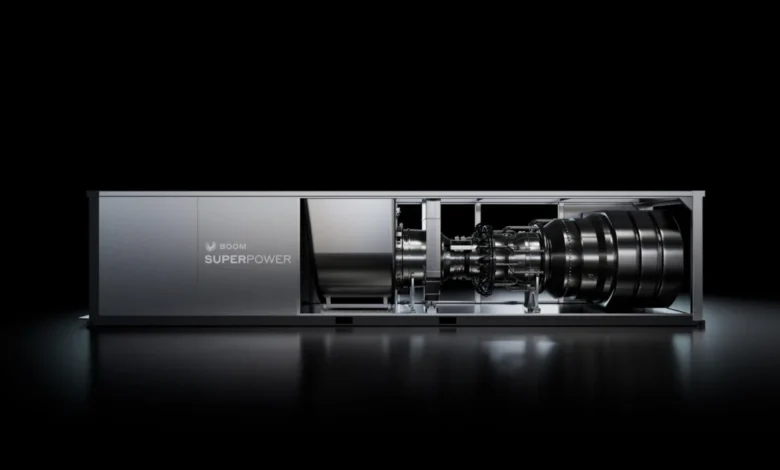
In late 2025, Boom Supersonic announced a strategic pivot, leveraging its expertise in the "Symphony" engine—the power plant designed for its Overture supersonic passenger jet—to enter the energy market. By repurposing roughly 80% of the Symphony’s architecture, Boom created the "Superpower" turbine, a 42-megawatt stationary unit designed to provide high-efficiency power for industrial applications.
Crusoe, founded in 2018 by Cully Cavness and Chase Lochmiller, initially built its reputation by capturing stranded natural gas at oil fields to power bitcoin mining operations. Having successfully transitioned into a primary builder of AI data centers—notably serving clients like OpenAI and Oracle—Crusoe saw the Superpower turbine as a vital tool to meet the energy-hungry demands of their Abilene, Texas, campuses and beyond. The deal was set to see the first deliveries of 29 units begin in 2027.
However, the momentum behind this deal stalled in September 2026. Blake Scholl, CEO of Boom Supersonic, confirmed the termination via social media, noting that while the companies had worked closely to shape the technology, the partnership was no longer aligned with the strategic needs of either party.
Technical and Operational Context
The fundamental premise of the partnership was to provide "on-site" power generation, which has become a critical necessity for the data center industry. As the demand for computing power for large language models (LLMs) skyrockets, traditional grid capacity has struggled to keep pace. By using natural gas-fired turbines, data center operators can create "behind-the-meter" power, bypassing the delays and congestion associated with local utility grids.
Boom Supersonic’s Superpower turbine was marketed as a high-density solution. By utilizing the lightweight, high-output design of a supersonic jet engine, the turbines promised a smaller physical footprint and faster deployment times compared to traditional power plants.
For Crusoe, the necessity of this specific technology has been reconsidered. While the company maintains that it intends to continue utilizing turbines as part of its energy mix, it has clarified that those turbines will not be supplied by Boom Supersonic. This indicates that Crusoe may be moving toward more standardized, mass-market power generation solutions that offer better economies of scale or operational flexibility than the bespoke, aviation-derived hardware offered by Boom.
Official Statements and Industry Reactions
The public fallout has been handled with corporate diplomacy, though the divergence in business focus is clear.

In a statement posted to X (formerly Twitter), Blake Scholl emphasized the continued viability of the Superpower product line. "Boom will be delivering about 250MW of Superpowers next year to other sites, and we’re targeting 1GW in 2028," Scholl noted. He further expressed gratitude for the collaborative development phase, stating, "We’re grateful for the help Crusoe gave us in shaping Superpower and continue cheering for their successes."
Conversely, Crusoe spokesperson Andrew Schmitt provided a measured clarification of the company’s current stance. "We build AI factories from the power up," Schmitt stated. "As our portfolio grows, we stay flexible, choosing the energy solutions that are right for each site as its needs evolve—including turbines, along with wind, solar, batteries and the grid. While Boom has been a great partner, the partnership isn’t the right fit today."
The discrepancy between initial plans—which included using the turbines for the massive Abilene expansion—and the current reality highlights the volatile nature of the data center supply chain, where rapid technological shifts and capital expenditure adjustments are becoming the norm.
Broader Implications for AI Infrastructure
The termination of this contract carries significant implications for both firms and the wider energy-tech sector.
For Boom Supersonic:
The pivot to stationary power was intended to provide a steady revenue stream to subsidize the immense research and development costs of the Overture supersonic jet. Losing a launch customer that had committed over a billion dollars in capital is a setback. However, Scholl’s insistence that other customers are in the pipeline suggests that the stationary power business remains a pillar of their long-term strategy. The company’s ability to deliver 250MW of power by next year will be a critical test of whether the technology can successfully transition from the hangar to the field.
For Crusoe and the Data Center Industry:
Crusoe’s decision underscores the "power-first" mentality that now dominates the AI infrastructure race. With the company’s recent $3.9 billion capital injection, they are positioned as a primary player in the race to build data centers. Their decision to move away from Boom suggests that they are prioritizing standardized, reliable, and perhaps more cost-effective energy solutions over the cutting-edge, experimental nature of jet-engine-derived power.
Industry analysts observe that this trend reflects a wider move toward "energy agnosticism." Large data center developers are increasingly diversifying their power portfolios to include a mix of grid energy, renewables, and localized fossil-fuel-based generation. The flexibility to swap vendors—as Crusoe is doing by shifting away from Boom—is now a competitive advantage, allowing them to optimize for local regulations, site-specific climate conditions, and grid infrastructure maturity.
The Road Ahead
As the AI boom continues to demand unprecedented levels of electricity, the intersection of energy production and computing will remain a primary battleground for venture capital.
Crusoe’s current energy strategy, which includes a mix of grid connections for its primary Abilene facilities and backup generation for redundancy, reflects a cautious but aggressive approach. The 900-megawatt facility currently under development for Microsoft remains a key barometer for their operational success. Whether they choose to implement large-scale standard industrial turbines or explore other energy technologies like hydrogen or advanced battery storage, the industry will be watching closely.
For Boom Supersonic, the mission remains fixed on the skies. If they can successfully scale their power business without the anchor of the Crusoe contract, they may prove that the expertise gained from building the world’s fastest passenger jet has tangible, lucrative applications on the ground.
Ultimately, the parting of ways between these two Denver companies serves as a case study in the maturation of the AI infrastructure market. What began as an experimental synergy between two high-growth tech firms has evolved into a cold, pragmatic calculation of supply chain efficiency, cost-to-power ratios, and long-term scalability. As the dust settles, both companies remain well-capitalized and focused on their core missions: Crusoe on building the physical backbone of the AI era, and Boom on defining the future of high-speed travel.
Related posts: