Volkswagen’s North American Electric Vehicle Strategy Faces Major Setbacks Amid Plant Delays and Tariff Pressures

Volkswagen’s ambitious electrification blueprint for the North American market has encountered another substantial roadblock. PowerCo Canada, the battery subsidiary of the German automotive giant, officially announced this week that the construction and subsequent production timeline for its highly anticipated Ontario battery manufacturing plant will be postponed by two years. Operations at the facility, initially targeted to begin earlier, are now slated to commence in 2029.
This latest operational delay compounds a growing list of hurdles for Volkswagen as it attempts to navigate a rapidly shifting global automotive landscape. The recalibration of the Ontario facility underscores the intense financial pressures, regulatory hurdles, and shifting consumer demand patterns currently challenging legacy automakers. As vehicle manufacturers worldwide reevaluate their capital expenditures to align with a slower-than-anticipated transition to all-electric fleets, Volkswagen finds itself particularly vulnerable due to its heavy reliance on cross-border supply chains and a deteriorating trade environment.
A Cascade of Delays and Product Realignments
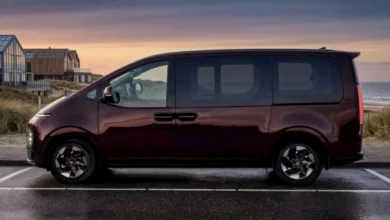
The postponement of the Ontario battery plant follows closely on the heels of another strategic retreat concerning Volkswagen’s product portfolio in North America. Earlier adjustments revealed that the Volkswagen ID. Buzz, the all-electric reimagining of the iconic microbus, would skip its planned release cycle as a 2027 model. According to company timelines, an upgraded iteration of the electric van will instead return to the lineup as a 2028 model year vehicle, with deliveries anticipated to kick off in the first half of the coming year.
Compounding these vehicle rollouts is a broader strategic retreat at manufacturing hubs within the United States and Mexico. Volkswagen’s assembly facility in Chattanooga, Tennessee, which previously manufactured the all-electric ID.4 crossover, has shifted its operational focus entirely. To better align with current market realities—characterized by resilient consumer demand for internal combustion engines and hybrid vehicles—the Chattanooga plant has discontinued the local production of the ID.4. Factory capacity has instead been reallocated to ramp up production of higher-margin, gas-powered sport utility vehicles, specifically the Volkswagen Atlas and Atlas Cross Sport.
This retreat highlights a broader theme across the automotive sector: automakers are increasingly pivoting away from rigid, all-in EV timelines to protect profit margins and meet steady consumer preferences for legacy powertrains amid cooling growth rates in battery-electric adoption.
The Macroeconomic and Geopolitical Pressure Cooker
At the heart of Volkswagen’s North American headwinds are escalating geopolitical tensions and aggressive trade policies. The resurgence of protectionist trade measures, including sweeping 25% tariffs championed by U.S. President Donald Trump, has severely disrupted the financial viability of cross-border manufacturing operations.
The ID. Buzz, even prior to the imposition of steep import duties, occupied a challenging niche in the North American marketplace. Criticized by industry analysts for carrying a premium price tag while offering relatively modest driving range specifications relative to its cost, the addition of a 25% tariff effectively prices the vehicle out of a competitive segment.
Simultaneously, Volkswagen’s manufacturing footprint in Mexico, which includes two major assembly facilities, faces severe exposure to U.S. tariff threats. Because these plants have historically served as export hubs for vehicles destined for the lucrative United States consumer market, any sustained trade barrier dismantles the cost-efficiency model that underpinned Volkswagen’s regional supply chain strategy.
These North American challenges do not exist in a vacuum. Volkswagen is simultaneously confronting severe structural headwinds in its domestic European market and its critical overseas stronghold in China. In Europe, the automaker has been squeezed by high domestic energy costs, intense regulatory compliance burdens, and fierce competition from local and international rivals. The financial strain became so acute last year that Volkswagen took the unprecedented step of closing a manufacturing plant in Dresden, Germany—marking the first factory closure in the company’s storied 88-year history. Additionally, reports indicate that corporate leadership is pursuing aggressive cost-cutting measures, including plans to slash tens of thousands of managerial and administrative jobs over the coming years to preserve operational liquidity.
In China, long Volkswagen’s most profitable market, the company has seen its dominant market share steadily eroded by agile domestic electric vehicle manufacturers capable of rapid software deployment and aggressive pricing strategies.
Strategic Pivots and Technological Partnerships
Faced with contracting margins, fierce global competition, and a fractured trade environment, Volkswagen’s executive leadership is attempting to engineer a turnaround through strategic localization, aggressive cost rationalization, and high-stakes technological alliances.
Rather than abandoning its long-term electrification goals, the company is attempting to restructure its foundational architecture. A cornerstone of this strategy involves localizing supply chains closer to end-consumer markets, thereby insulating future production lines from cross-border tariff volatility. While the Ontario battery facility and North American EV rollouts have been pushed further into the future, the overarching objective remains the deployment of regionally produced, software-defined electric vehicles.
To bridge its technological gap—particularly in vehicle software and digital architectures—Volkswagen has leaned heavily into external partnerships. Most notably, the automaker formed a multi-billion-dollar joint venture with American EV startup Rivian. This collaboration is designed to leverage Rivian’s advanced electrical architecture and software-defined vehicle (SDV) platforms, aiming to dramatically reduce the time and cost required to bring competitive, digitally integrated vehicles to market under initiatives such as Project Trinity.
Concurrently, in the Chinese market, Volkswagen has established a strategic partnership with local EV innovator Xpeng. This alliance is tailored to help Volkswagen adapt to the unique technological demands of the Chinese consumer, particularly in the realm of advanced driver-assistance systems (ADAS), artificial intelligence, and smart-cabin connectivity. By tapping into Xpeng’s development ecosystem, Volkswagen hopes to reverse its sliding fortunes in Asia’s largest auto market.
Outlook and Long-Term Implications
The decision by PowerCo Canada to delay its Ontario battery plant until 2029 is emblematic of a broader reality check currently sweeping the global automotive industry. The transition from internal combustion engines to battery-electric mobility is proving to be far more capital-intensive, geopolitically vulnerable, and logistically complex than initial projections suggested.
For Volkswagen, the immediate future will require a delicate balancing act. The company must successfully fund and execute painful structural reorganizations at home while preserving enough capital to eventually realize its localized North American EV ambitions. As trade policies remain volatile and consumer adoption rates fluctuate, the success of Volkswagen’s pivot will hinge on its ability to leverage strategic partnerships, streamline vehicle software development, and remain adaptable in an increasingly fragmented global trade environment. For now, however, the path forward for the world’s second-largest automaker has proven considerably bumpier than planned.
Related posts: