Tesla brings Cybercab to China for static showcase despite strict regulatory hurdles and local competition

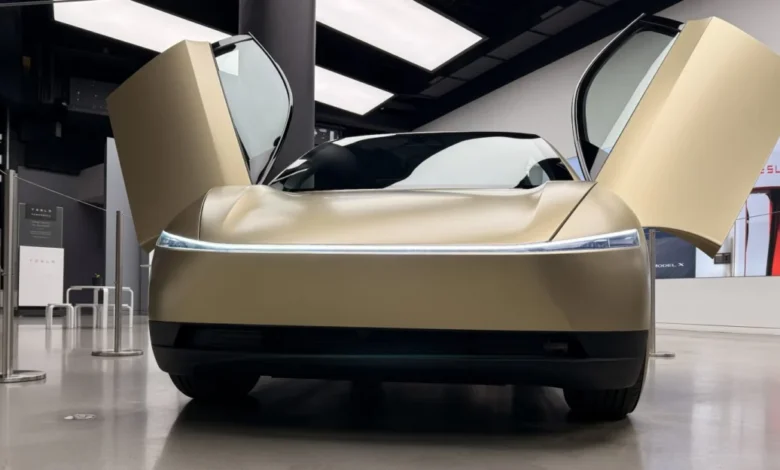
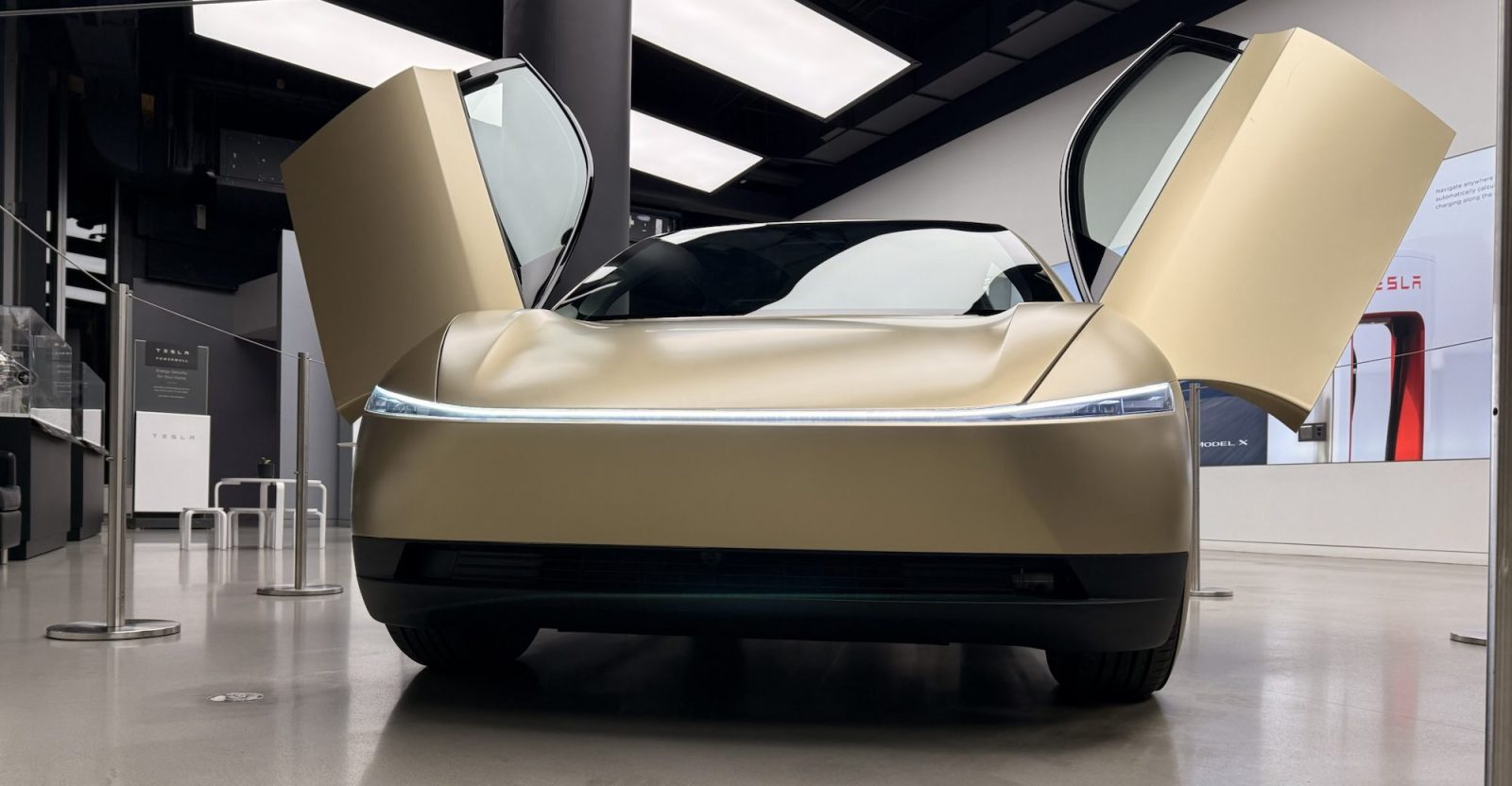
Tesla has officially brought its highly anticipated, steering-wheel-free Cybercab to China for its inaugural public exhibition, though the electric vehicle giant has explicitly stated that the futuristic prototype is strictly for display purposes and will not be commercialized in the region. Beginning mid-September, the autonomous two-seater is scheduled to make appearances at high-profile Tesla experience centers in Beijing and Shanghai, allowing local consumers and tech enthusiasts a rare glimpse into the company’s vision of urban mobility.
However, this promotional tour highlights a stark contrast between Tesla’s ambitious design concepts and the realities of global automotive regulations. While the vehicle draws considerable crowds eager to inspect its minimalist interior and lack of manual controls, the company faces an uphill battle in the Chinese market. China currently maintains some of the world’s most stringent regulatory frameworks regarding autonomous vehicle registration, while simultaneously fostering a fiercely competitive domestic market where rival robotaxi operators have already scaled commercial, driverless fleets to mainstream adoption.
Event Details and Exhibition Schedule
The public showcase represents the first time the Tesla Cybercab has been physically transported to mainland China. According to official schedules released by Tesla China, the static display opened on September 17 and is slated to run through the end of the month across two major metropolitan hubs.
In Beijing, the Cybercab is stationed at Tesla’s flagship experience store located in the Huamao commercial district, where it will remain accessible for public viewing through September 27. Simultaneously, a second exhibition unit is being hosted in Shanghai at the HKRI Taikoo Hui shopping complex, occupying the LG1 north hall until September 21.
Despite the high level of public interest, Tesla China has maintained an exceptionally cautious stance regarding the intent of the exhibition. In a formal statement issued at the onset of the tour, the company emphasized that the showcase is designed strictly to highlight "product design and technological concepts." Tesla explicitly clarified that the exhibition "does not involve the sale of the Cybercab in the Chinese market or any arrangement for driverless ride-hailing commercial operations." Industry analysts note that this blunt disclaimer is necessary to manage consumer expectations, given that the vehicle lacks foundational hardware required for legal operation on public roads in the country.
Regulatory Barriers and Design Limitations
The primary obstacle preventing the commercialization of the Cybercab in China—as well as in many international jurisdictions—lies in its radical departure from traditional automotive engineering. The vehicle is designed entirely without a steering wheel, accelerator pedals, or brake pedals.
Under current Chinese motor vehicle safety standards, automobiles intended for consumer registration and private ownership must be equipped with redundant manual controls to allow a human driver to take over in the event of system failures. Without a steering wheel or pedals, the Cybercab cannot be legally registered, licensed, or sold to individual buyers in China, mirroring similar regulatory hurdles the vehicle faces in the United States and the European Union.
Beyond private ownership, the deployment of the Cybercab as a commercial robotaxi faces an equally daunting regulatory barrier: the approval of unsupervised, fully autonomous public transport. Tesla’s driverless software ecosystem in China remains in its nascent stages. Although the company introduced a limited, supervised iteration of its Full Self-Driving (FSD) software suite to Chinese consumers in early 2025 to mixed reviews, it has not yet secured the necessary regulatory clearances from municipal and national transportation authorities to operate driverless, safety-driver-free commercial ridesharing services.
The Competitive Landscape in China’s Autonomous Vehicle Sector
Tesla’s exhibition of a non-functional, non-saleable prototype occurs against the backdrop of an aggressively mature domestic autonomous driving market. While foreign automakers navigate preliminary testing phases and regulatory approvals, Chinese technology firms have successfully transitioned from experimental trials to widespread commercial deployment.

Domestic robotaxi pioneers—most notably Baidu’s Apollo Go, Pony.ai, and WeRide—have been operating commercial, paid driverless services across multiple Tier-1 and Tier-2 Chinese cities for several years. These homegrown operators have accumulated tens of millions of kilometers of autonomous driving data in complex urban environments characterized by dense traffic, unpredictable pedestrian behavior, and intricate roadway layouts.
In major tech hubs such as Wuhan, Beijing, and Shenzhen, residents routinely book fully autonomous, driverless taxis via smartphone applications for daily commutes. Consequently, market observers point out that Tesla’s introduction of the Cybercab as a static mall exhibit appears more aligned with a marketing strategy aimed at driving showroom foot traffic—potentially boosting sales of established production models like the Model Y and Model 3—rather than signaling an imminent commercial rollout of autonomous ride-hailing services in the region.
Comparative Global Strategy: U.S. Versus China
Tesla’s approach to autonomous vehicle deployment highlights a diverging strategy between its domestic market and international territories. In the United States, the company has sought to circumvent complex, patchwork state-by-state regulations by initially focusing rollout plans on more receptive, deregulated jurisdictions such as Texas and Florida.
Even within the United States, however, scaling the Cybercab to mass production and widespread commercial deployment remains a long-term objective requiring substantial technological refinement and regulatory collaboration. In contrast, China’s centralized regulatory apparatus enforces stringent, standardized safety protocols for autonomous systems, requiring extensive local data collection and government-supervised validation before any driverless commercial operation can commence.
Because Tesla has historically faced restrictions regarding the cross-border transfer of driving data—requiring foreign automakers to store FSD-related telemetry locally within China and partner with domestic cloud providers like Baidu for mapping services—the timeline for integrating its autonomous neural networks with local regulatory requirements remains protracted.

Broader Industry Implications and Future Outlook
The arrival of the Cybercab in Beijing and Shanghai serves as a symbolic milestone for Tesla’s global product design tour, even if its practical application in the world’s largest electric vehicle market is currently blocked by legal and technological constraints.
For industry analysts, the exhibition underscores the growing disparity between hardware innovation and regulatory readiness. While automotive designers can conceptualize steering-wheel-less cabins designed exclusively for autonomy, the realization of such concepts depends heavily on regional policy adaptations, robust safety validation, and the ability to compete with deeply entrenched local tech giants that already dominate the autonomous transport landscape.
As Tesla continues to display the Cybercab through late September, the company faces mounting pressure to demonstrate tangible progress in its autonomous software capabilities if it hopes to bridge the gap between static exhibitions and active commercial participation in China’s fast-evolving mobility market.