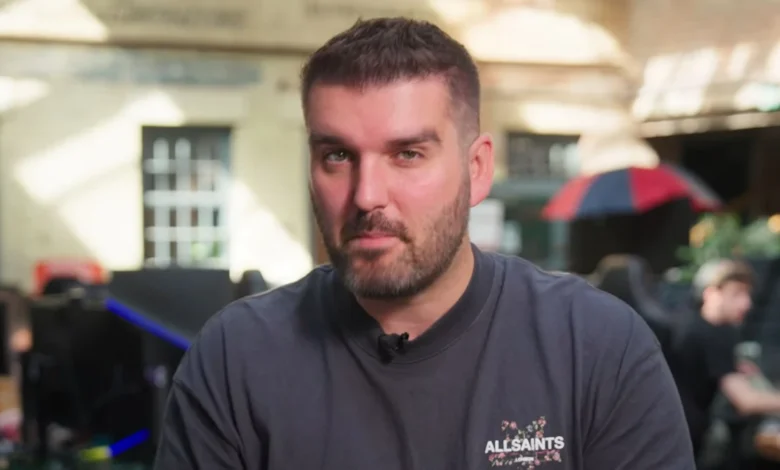
The video game industry is once again reckoning with its deeply ingrained and controversial labor practices following candid remarks made by Joe Brammer, the Chief Executive Officer of Bulkhead. Speaking on a recent episode of The Game Business Show, Brammer openly defended his studio’s policy of incorporating mandatory crunch periods into its development cycles. Furthermore, he revealed that Bulkhead actively screens prospective employees’ social media profiles to filter out candidates who publicly criticize mandatory overtime.
The remarks have ignited a fierce debate across social media and professional game development circles, reopening deep-seated wounds regarding labor exploitation, management accountability, and burnout within the multi-billion-dollar interactive entertainment sector. While Brammer defends the practice as a necessary component of working for an ambitious independent studio—pointing to the runaway commercial success of their latest title, Wardogs—critics and industry peers have condemned the approach as an archaic and destructive symptom of poor project management.
The Rise of Wardogs and the Return of Mandatory Overtime
The controversy surrounds the explosive launch of Wardogs, a tactical multiplayer shooter developed by Bulkhead. The title achieved a remarkable commercial milestone by crossing two million copies sold within its opening weekend. This triumph is particularly striking given that the project was previously abandoned by Chinese tech conglomerate Tencent, leaving the independent developer to finish and publish the game under immense pressure.
However, the human cost behind the game’s hurried path to release has cast a shadow over its financial success. Appearing alongside host Christopher Dring, Brammer did not shy away from admitting that extreme overtime is an expected norm at Bulkhead. Rather than masking the reality of grueling work schedules, the CEO positioned it as a foundational pillar of the company’s corporate identity.
According to Brammer, the studio actively searches candidate histories on digital platforms for anti-crunch commentary. If an applicant frequently posts messages arguing that crunch should be eliminated from the industry entirely, Bulkhead routinely disqualifies them from consideration.
"We check people’s socials, and if you’re constantly tweeting anti-crunch messaging… we know that and go, ‘Look, you’re not going to be happy here, so we’re not going to go with you,’" Brammer stated during the interview. He elaborated that the studio aims to cultivate an environment explicitly known for intense labor, asserting that developers who genuinely care about their craft will feel valued, while those who resist will perceive the workplace as draconian.
A History of Labor Exploitation in Game Development
Brammer’s comments arrive at a sensitive time for the global video game industry. For decades, traditional production models have relied heavily on "crunch time"—unpaid, high-stress periods where employees work 60- to 80-hour weeks to meet rigid publishing deadlines.
The human toll of this corporate culture has been well-documented by journalists, labor organizers, and affected developers. Major AAA studios, including CD Projekt Red, Rockstar Games, BioWare, and Naughty Dog, have faced intense public scrutiny for forcing employees to endure brutal hours. In many instances, these practices have led to severe physical and mental exhaustion, strained familial relationships, high turnover rates, and systemic burnout.
In response to sustained advocacy, unionization efforts, and critical media coverage, various sectors of the game development community have spent recent years striving to reform these conditions. Many modern studios have transitioned toward sustainable production pipelines, agile management methodologies, and strict work-life balance initiatives designed to prove that exceptional games can be built without sacrificing the health and well-being of the workforce.
Bulkhead’s open embrace of crunch directly challenges this progressive movement. To illustrate the severity of the studio’s working conditions during the game’s launch window, Brammer previously shared media on social platform X showing studio tours that included a room furnished with air mattresses. These beds were utilized by exhausted staff members working overnight shifts to salvage Wardogs‘ struggling server infrastructure during its chaotic opening days.
Industry Backlash and Professional Condemnation
The fallout from Brammer’s interview was swift, with industry professionals taking to platforms like Bluesky to express outrage, disbelief, and disappointment. Many prominent developers and consultants argued that mandatory overtime is not a badge of honor, but rather a direct indictment of ineffective leadership and planning.
Michael Howe, a developer at Studio Gobo, did not mince words in his online critique. "Imagine being proud of your attitude towards crunch and calling it ‘hard work.’ Crunch is a result of bad planning and poor management," Howe wrote. "This [interview] stinks of lies and excuses to drag devs through the grinder, may this kind of lead never find me."
Nazih Fares, an industry producer and consultant, succinctly summarized the structural issues underlying Brammer’s management philosophy by writing, "Tell me you need a producer without saying you need a producer." This sentiment reflects a widespread consensus among project management professionals who maintain that over-reliance on crunch indicates a failure to accurately scope projects, allocate resources, and establish realistic timelines.
Other industry commentators pointed to a growing body of academic and economic research demonstrating that prolonged crunch periods frequently lead to diminishing returns. Fatigue-driven development often results in buggy software, technical debt, and decreased employee productivity, which ultimately harms long-term profitability rather than enhancing it.
Management Justifications and Mitigation Efforts
During the podcast, Brammer attempted to contextualize Bulkhead’s operational strategy by noting that the studio attempts to offset the hardships of crunch through financial incentives. He argued that if a company explicitly demands grueling labor from its workforce, it has a moral and financial obligation to provide tangible compensation.
"If we’re going to be a company that says ‘We do crunch,’ then you have to get something for it," Brammer explained, referencing bonuses and perks distributed to portions of the development team.
Furthermore, the CEO claimed that leadership has begun pushing back against external pressures to protect the team from further exhaustion. Following the intense push to launch Wardogs, stakeholders and fans began demanding expedited console ports. According to Brammer, management intervened by refusing to accelerate the timeline, acknowledging that the team had already sacrificed significant portions of their personal and family lives over the preceding three months.
"For the last three months, Wardogs has been more important than a lot of [our team’s] family lives. But now, Bulkhead and I have to acknowledge that it needs to go the other way," Brammer said. Despite these concessions, critics argue that corporate benevolence after the fact does not excuse the systemic normalization of exploitative labor practices.
Broader Implications for Independent Game Development
The controversy surrounding Bulkhead and Wardogs highlights a widening ideological divide within the modern video game industry. On one side are independent and traditional studios that view high-pressure, all-hands-on-deck crunch as an unavoidable rite of passage necessary to survive in a hyper-competitive marketplace. On the other side is an increasingly vocal coalition of workers, labor advocates, and progressive studio leads who argue that sustainable development models are both ethically mandatory and commercially viable.
As Wardogs continues to enjoy commercial success, the industry faces an ongoing identity crisis. The debate raises critical questions about consumer responsibility, corporate ethics, and whether financial triumph can—or should—justify the human costs incurred behind closed doors. For now, Bulkhead’s transparent stance has positioned the studio at the center of a much larger, global conversation regarding the future of labor standards in interactive entertainment.
Related posts: