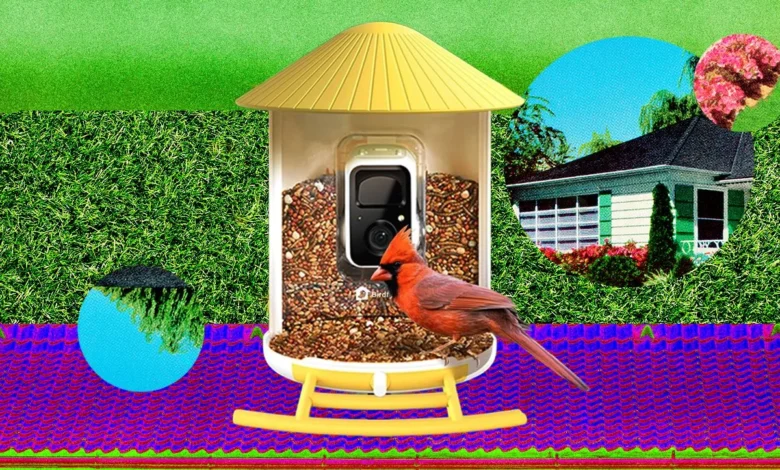
The rise of the smart home has extended into the backyard, transforming the traditional pastime of birdwatching into a high-tech, data-driven hobby. Smart bird feeders, characterized by their integrated camera systems, solar charging capabilities, and artificial intelligence, have surged in popularity over the past several years. These devices promise to turn every backyard visitor into a high-definition photograph, notifying users in real-time when a goldfinch, woodpecker, or blue jay stops by for a meal. However, with entry prices often exceeding $100 and ongoing subscription costs for premium features, consumers are increasingly questioning whether these gadgets offer genuine value or if they are merely high-priced novelties prone to failure.
After two years of rigorous, real-world testing in varying weather conditions—including snow, extreme summer heat, and heavy rain—it is clear that the market is divided between high-performing tools and poorly executed hardware. Testing involved dozens of models, each observed for a minimum of four weeks to evaluate app interface usability, notification accuracy, AI identification reliability, and structural durability. To verify the accuracy of AI-driven species identification, results were cross-referenced with the Cornell Lab of Ornithology’s All About Birds database and Google Lens.
Evolution of the Smart Feeder Market
The smart bird feeder industry has matured significantly since the first models hit the market in 2022. Early iterations were often plagued by "wonky" AI that struggled to distinguish between common species or misidentified local birds as exotic varieties. Today, the technology has advanced to include features such as dual-lens cameras, 4K resolution, and even infrared night vision for nocturnal wildlife observation.
The business model for these devices has also standardized. Most manufacturers now subsidize the hardware costs by gating advanced features behind monthly or annual subscriptions. These paywalls typically restrict access to cloud storage, extended video recording durations, and, in some cases, the AI species recognition engine itself. Consequently, the "true" cost of ownership is often higher than the sticker price on the box.
Top Performers: Reliability and Quality
For the average backyard birder, the Netvue Birdfy Lite remains the most balanced choice. Having been tested since its inception, the device has seen substantial firmware improvements. Its current market position is supported by a robust, user-friendly application and a durable, 50-ounce seed reservoir. While the 1080p camera may not compete with 4K-capable premium models, the Birdfy Lite offers a 155-degree field of view that is superior to many competitors, ensuring that users capture the entire bird rather than just a partial view.
For those prioritizing visual fidelity, the Camojojo Hibird Pro represents the current benchmark for image quality. Utilizing a 4K Ultra HD camera, it provides sharp, detailed footage that is significantly clearer than standard 1080p units. It distinguishes itself by supporting both 2.4-GHz and 5-GHz Wi-Fi bands, addressing a common pain point for users with modern, high-speed home networks. However, this model is notably heavy, requiring secure, professional-grade pole mounting to remain stable when the 1.5-liter hopper is filled to capacity.
Design Innovation and Niche Solutions
The Kiwibit Bird Feeder 2 has emerged as a leader in industrial design. Its modular approach, which allows for the removal of the seed reservoir without disassembling the entire unit, makes it exceptionally easy to maintain. Unlike many smart feeders that rely on fragile external solar panels, the Kiwibit 2 incorporates its solar array into the roof of the unit, which proved highly effective at maintaining battery levels even during periods of overcast weather. While the initial investment is higher and discounts are rare, the inclusion of features like a three-minute recording capability for bird activity makes it a compelling option for enthusiasts.
For the specialized niche of hummingbird observation, the Birdbuddy Pro Smart Solar Hummingbird Feeder stands out. Hummingbird feeders are notoriously difficult to clean, often requiring complex disassembly. Birdbuddy has addressed this by creating a user-friendly, screw-off base that holds 1.75 cups of nectar, a capacity deemed appropriate for maintaining freshness. The accompanying app also includes "fun" features, such as digital holiday cards and, for some, a humorous "dress-up" tool, though the core utility lies in its reliable 2K video capture and straightforward maintenance.
The Problem of Connectivity and AI Accuracy
Despite the technological advancements, the industry faces persistent challenges. Many units, including the Birdfy Nest Duo and the Kiwibit 2, are limited to 2.4-GHz Wi-Fi. While this frequency is better for long-range transmission through walls, it is also highly prone to interference in crowded suburban environments. Furthermore, even the most sophisticated AI still frequently struggles with regional identification. A bird common in the West Coast may be misidentified as an East Coast species, demonstrating that the underlying data sets for these AI models still require further refinement.

The issue of "missed captures" remains a primary point of frustration for users. During comparative testing, it was not uncommon to observe a bird visit a feeder while the device remained idle, failing to trigger the sensor. This lack of reliability can be particularly discouraging when rare or interesting species visit, only for the event to go unrecorded.
Durability and Squirrel Interference
Squirrels remain the ultimate test of any outdoor feeder’s durability. Many smart feeders, particularly those with wood-based aesthetics, are not truly "squirrel-proof." While some manufacturers offer metal chew-guards, the reality is that persistent rodents can damage plastic, wood, and mounting hardware alike. The "5-7-9 rule"—placing feeders at least 5 feet high, 7 feet from structures, and 9 feet from jump points—is a necessary strategy regardless of how "smart" a feeder claims to be.
Industry Implications and Recommendations
As the market continues to expand, potential buyers should be wary of brands that obscure subscription requirements. Several low-cost models found on major retail platforms suffer from poor app integration, forcing users into restrictive subscriptions just to access basic features. Consumers should look for transparency regarding subscription models, the inclusion of solar-charging capabilities, and the availability of pole-mounting hardware.
For those looking to enter the market, the key is to weigh the desire for high-definition "postcards" against the ongoing costs and technical maintenance required. Smart bird feeders are an impressive application of technology that has brought the wonders of ornithology to thousands of backyards, but they require the same patience and maintenance as any outdoor tool.
Summary of Testing Findings
- Best Overall: Netvue Birdfy Lite (Reliability and value)
- Best Photo Quality: Camojojo Hibird Pro (4K clarity and dual-band Wi-Fi)
- Best Design: Kiwibit Bird Feeder 2 (Easy maintenance and robust build)
- Best Hummingbird Feeder: Birdbuddy Pro (Intuitive maintenance and app experience)
- Best Smart Birdhouse: Birdfy Nest Duo (Dual-camera insights)
As the technology matures, it is expected that manufacturers will shift toward better integration with smart home ecosystems and more accurate, locally trained AI models. For now, consumers should prioritize build quality and the transparency of the manufacturer’s business model to ensure their investment provides long-term enjoyment rather than short-term frustration.
Frequently Asked Questions
What is the significance of Wi-Fi frequency?
Most smart feeders use 2.4 GHz because it penetrates walls and trees better than 5 GHz, which is crucial for outdoor devices. However, 2.4 GHz is a more crowded frequency, which can lead to lag. A device with dual-band support offers the best of both worlds.
Why are subscriptions so common?
Cloud storage, AI processing, and ongoing app maintenance are expensive for developers. Subscriptions allow companies to cover these recurring costs. Always check if a model offers a "lifetime" AI option, as this can be more economical in the long run.
How do I handle squirrels?
Baffles and proper siting are more effective than any "squirrel-proof" marketing label on the feeder itself. If you cannot place the feeder according to the 5-7-9 rule, expect that squirrels will find a way to access the seed.
Are these feeders worth the price?
If you are an avid birdwatcher who values the ability to identify species, share high-quality photos, and track visitor patterns, the investment in a top-tier model is justified. For the casual observer, the ongoing costs may outweigh the benefits of the automated features.