Tesla Confirms Long-Awaited Next-Generation Roadster Debut for October 1 in Waco Texas

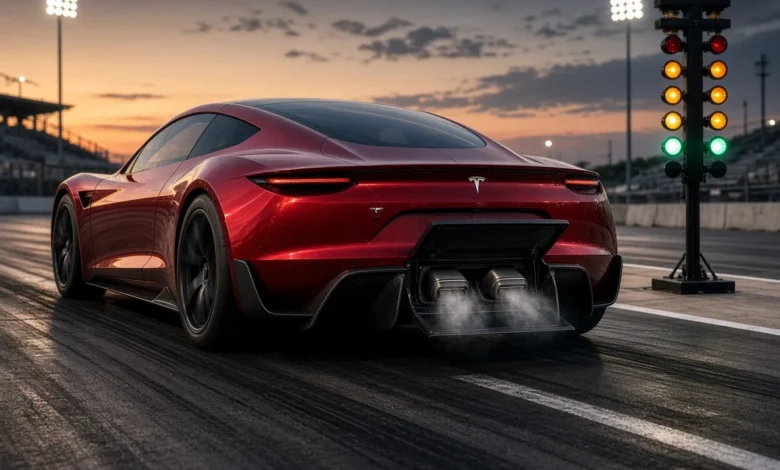
The automotive world is bracing for a defining moment in electric vehicle performance as Tesla officially signals the arrival of its next-generation Roadster. In a social media post that electrified the industry, Tesla shared a stark, atmospheric image on the platform X this Saturday, depicting a sleek, shadowed vehicle silhouette illuminated against what appears to be an aerospace launch pad. The image, captioned with the evocative phrase “Go for launch,” features the date “10.01” emblazoned across the bottom. This teaser, coupled with a synchronized countdown clock on the company’s official reservation portal, confirms that the long-anticipated unveiling is scheduled for Thursday, October 1, 2026.
While the initial announcement left the specific location of the event shrouded in mystery, subsequent disclosures have clarified the logistical footprint of the reveal. According to formal invitations sent to reservation holders and circulated online, the event is slated to take place in Waco, Texas. This location is approximately 90 minutes north of Tesla’s global headquarters in Austin. While Tesla has yet to designate an official venue, the choice of Waco is highly strategic; it is situated in close proximity to the SpaceX rocket testing facility in McGregor, Texas. Industry analysts have long suggested that this site would serve as the backdrop for a demonstration of the vehicle’s controversial and highly anticipated “thruster package.”
A Chronology of Delays and Anticipation
The journey toward the Roadster’s debut has been defined by a mix of technological ambition and persistent scheduling turbulence. First unveiled as a surprise "one more thing" during the 2017 Tesla Semi event, the second-generation Roadster was positioned by CEO Elon Musk as a "hardcore smackdown" to gasoline-powered supercars. At the time of that initial reveal, the projected specifications were staggering: a 0 to 60 mph acceleration time of less than two seconds, a top speed exceeding 250 mph, and an unprecedented 620 miles of range enabled by a 200 kWh battery pack.
The intervening nine years have been marked by a series of shifted deadlines that have tested the patience of early adopters. Musk, often leaning into the speculative nature of development, has frequently revised timelines. During a shareholder meeting in November 2025, Musk humorously remarked that he would target an April 2026 demo date, noting that the choice provided him with "deniability" should the deadline slip. Slip it did, moving through a series of incremental delays from late April to a vague "month or so," and eventually to August, before the final confirmation of the October 1 date was secured.
This cycle of delays has not diminished market interest, however. The $50,000 reservation fee for the base model and the $250,000 requirement for the exclusive Founders Series have remained locked in since 2017, reflecting a significant capital commitment from a dedicated customer base that has been waiting nearly a decade for the vehicle to materialize.
The SpaceX Thruster Package: A Paradigm Shift
Central to the upcoming event is the much-discussed SpaceX-developed thruster package. Internally codenamed "A71"—a deliberate homage to the legendary Lockheed SR-71 Blackbird reconnaissance aircraft—the system represents an unprecedented integration of aerospace engineering into consumer automotive technology.
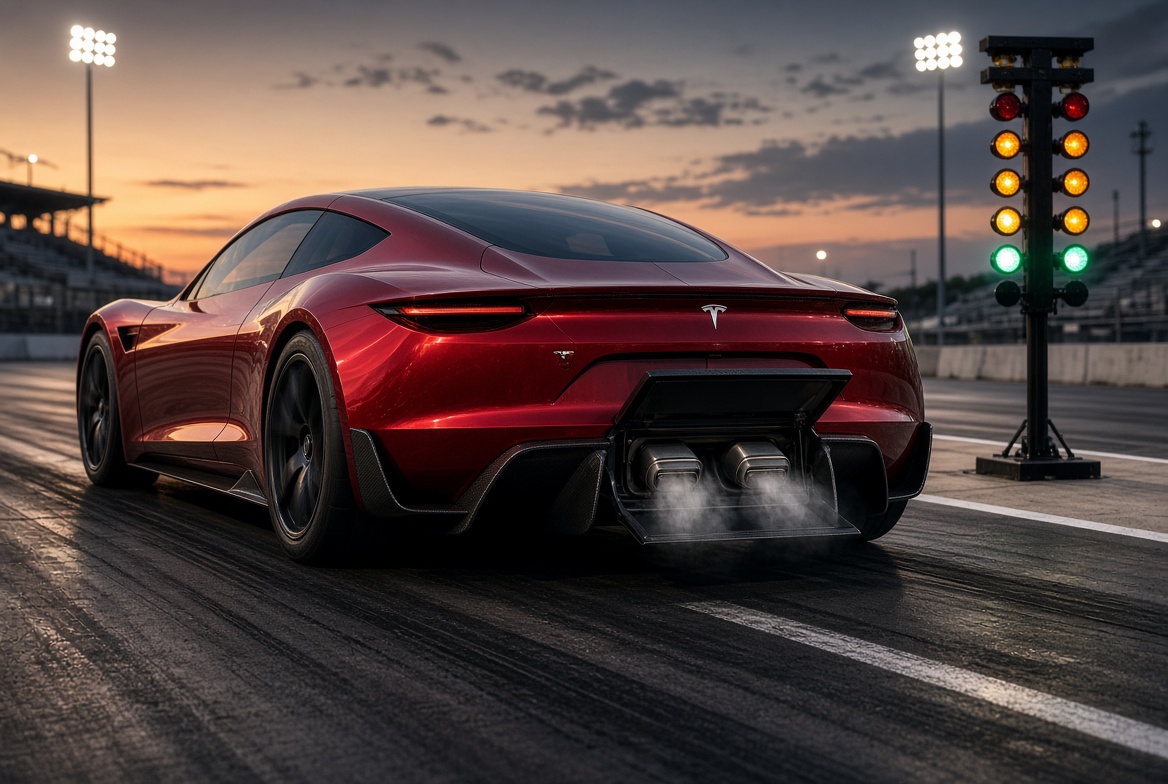
Technical documentation and internal discussions suggest that the thruster package utilizes cold gas thrusters fed by a composite-overwrapped pressure vessel (COPV), utilizing the same materials and structural design principles found in the Falcon 9 rocket. The implications of this integration are profound. Musk has suggested that with the thruster system engaged, the Roadster could potentially achieve a 0 to 60 mph sprint in approximately 1.1 seconds, exerting nearly 2.75 g of force during the launch sequence.
Such performance would comfortably eclipse the standard vehicle’s already impressive 1.9-second claim. However, these figures come with significant caveats. Industry experts point out that the thruster-equipped variant would likely be restricted to track use, as the extreme forces and potential safety regulations make it unsuitable for public roadways. It is widely expected that this high-performance configuration will be released as part of a limited-run, track-only program, further cementing the Roadster’s status as a halo vehicle rather than a mass-market commodity.
Logistical Realities and Production Outlook
The October 1 event will be a high-stakes affair for Tesla, with strict access protocols in place. The invitation confirms an 8:30 p.m. Eastern Time start, with RSVPs required by midnight on September 16. Reflecting the exclusive nature of the vehicle, attendance is restricted to guests 21 years of age and older, and all invitations are strictly non-transferable.

Beyond the spectacle of the launch, the conversation is shifting toward the realities of manufacturing. Lars Moravy, Tesla’s Vice President of Vehicle Engineering, has confirmed that production for the Roadster is slated to occur at Gigafactory Texas. While the demo serves as the public face of the vehicle’s readiness, the timeline for full-scale production remains in the 2027 to 2028 window—roughly 12 to 18 months following the formal demonstration. This gap underscores the complexity of transitioning from a prototype that can perform at the limits of physics to a production-ready vehicle capable of meeting the stringent quality and safety standards expected of a luxury supercar.
Market Implications and Competitive Landscape
The reveal of the Roadster comes at a pivotal moment for the high-end electric vehicle market. As traditional luxury marques like Porsche, Ferrari, and Lamborghini accelerate their own electrification efforts, Tesla’s ability to deliver on the promises made in 2017 will be scrutinized heavily.
For Tesla, the Roadster is less about volume and more about the "halo effect"—the ability to shift the narrative of what is possible within the constraints of battery-electric propulsion. By integrating aerospace technology, Tesla is effectively attempting to bridge the gap between automotive performance and rocket science, a strategy that aligns with the broader vision of its leadership.
However, the primary challenge remains the cost-to-performance ratio. Maintaining the $200,000 base price after nine years of inflation, global supply chain volatility, and substantial R&D expenditure will be a masterclass in cost management. If Tesla succeeds in bringing the vehicle to market at or near these price points while delivering the advertised performance, it will likely be viewed as one of the most significant engineering achievements of the decade.
As the industry prepares to converge on Waco, the stakes are clear. Tesla is not merely introducing a new car; it is attempting to finalize a project that has become a symbol of the company’s "first principles" engineering philosophy. Whether the October 1 event provides the long-awaited proof of concept or simply sets the stage for further development remains the primary question. For now, the countdown is active, the venue is prepared, and the automotive world waits to see if the Roadster can finally transition from the test pad to the track.