Elon Musk Issues Warning to SpaceX Short Sellers Amid Market Volatility and Technological Milestones

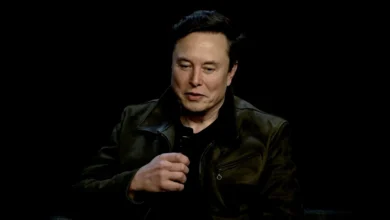
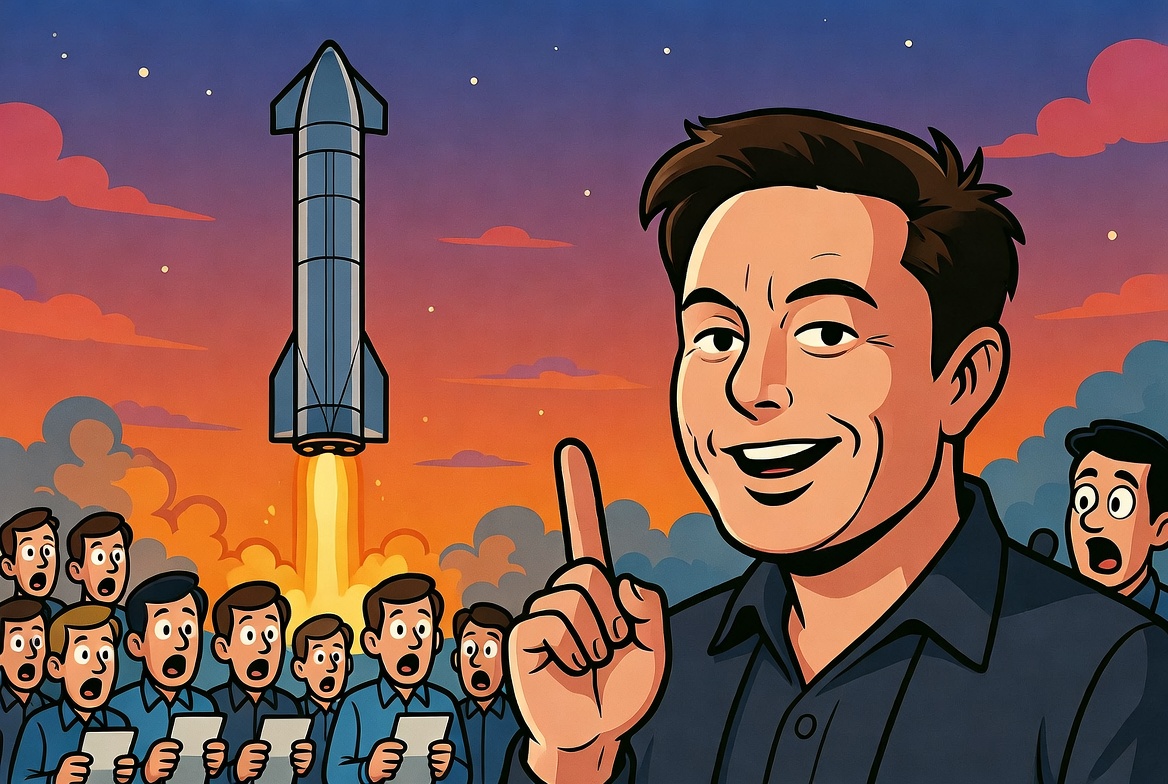
In a pointed message broadcast to his millions of followers on the social media platform X, Elon Musk has issued a stark warning to financial institutions and individual investors maintaining short positions against SpaceX. Musk asserted that firms betting against the long-term success of the aerospace giant face a “very low” probability of survival, a statement that comes during a period of significant market turbulence following the company’s historic initial public offering (IPO). Trading under the ticker symbol $SPCX, SpaceX has recently experienced the typical volatility associated with high-valuation tech debuts, prompting a surge in short-selling activity that Musk is now directly addressing.
The warning follows a period of intense market activity for SpaceX, which recently executed what financial analysts have described as the largest IPO in history. At its peak, the company’s market capitalization surged past $2.6 trillion, briefly eclipsing the valuations of established tech titans such as Microsoft and Amazon. However, in the five weeks following its market debut, the stock underwent a correction of approximately 30%. This downward movement provided a lucrative window for short sellers, who reportedly realized gains of roughly $8.7 billion. Despite these immediate fiscal headwinds, Musk’s rhetoric remains rooted in a long-term vision of orbital infrastructure and interplanetary expansion that he believes will eventually render current bearish positions untenable.
The Economic Thesis of the Space Frontier
Central to Musk’s confidence is the projected evolution of the space economy, driven primarily by the operational maturity of the Starship launch system. Market analysts and proponents of the company argue that Starship’s unprecedented payload capacity and full reusability will drastically reduce the cost of reaching orbit, potentially unlocking a multi-trillion-dollar economy. This vision encompasses a wide array of industrial applications, including the deployment of orbital data centers, the harvesting of solar power from space to be beamed back to Earth, and eventually, the extraction of resources through asteroid mining.
Some bullish projections suggest these advancements could generate over $100 trillion in new market capitalization over the coming decades. In this framework, SpaceX is positioned not merely as a launch provider but as the essential infrastructure layer for the final frontier—analogous to how Amazon Web Services (AWS) provides the backbone for the modern internet. By controlling the primary means of transport for crew, cargo, and data across the solar system, SpaceX aims to capture monopoly-like revenues that Musk believes short sellers are fundamentally failing to account for in their valuation models.
A History of Confrontation with Short Sellers
Musk’s latest salvo against short sellers is consistent with a decade-long history of public animosity toward those who bet against his ventures. His most notable conflicts have occurred in relation to Tesla, where he has frequently framed persistent bears as being on the wrong side of history and progress. In July 2024, Musk declared that once Tesla successfully achieved full autonomy and scaled the production of its Optimus humanoid robots, any remaining short sellers would be “obliterated.” He specifically cited Microsoft co-founder Bill Gates, who has been reported to hold significant short positions against the electric vehicle manufacturer.

The pattern of these warnings often precedes significant shifts in company performance or market sentiment. In 2018, during a period of extreme stress for Tesla’s Model 3 production, Musk famously taunted short sellers on social media, suggesting they had only weeks before their positions “exploded.” That remark was followed by a series of sharp stock gains that forced many bears to cover their positions at a loss. Musk has frequently described short selling as “value destroying” and has even suggested the practice should be illegal, viewing it as a mechanism that incentivizes the failure of innovative enterprises.
Starship Flight 13: Technical Challenges and New Timelines
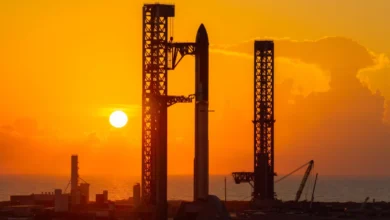
While the financial battle rages in the markets, SpaceX’s engineering teams are focused on the practical realities of launch operations. The company recently announced another adjustment to the launch window for its thirteenth integrated flight test of the Starship system. Originally scheduled for earlier in the week, the mission is now targeting a launch as early as Thursday, July 23, 2026. The 90-minute window is set to open at 5:45 p.m. CT from the Starbase facility in Boca Chica, South Texas.
The delay follows a scrubbed attempt on July 16, when the automatic abort system was triggered at T-0. The failure occurred during the engine startup sequence for the Super Heavy booster. Musk later confirmed that several of the 33 Raptor engines failed to ignite as expected, leading to the decision to replace two engines on Booster 20 to ensure mission reliability. This cautious approach highlights the immense complexity of the Starship program, which relies on the simultaneous and precise coordination of more engines than any rocket in history.
Flight 13 is designed to build upon the successes and failures of Flight 12, which took place in May 2026. The primary objectives for the Super Heavy booster include a successful ascent, stage separation, and a controlled splashdown in the Gulf of Mexico. Engineers have implemented hardware and software modifications to address "off-nominal" issues observed in previous flights, specifically regarding propellant slosh during the boostback burn and engine relight reliability.
For the Starship upper stage, Flight 13 represents a significant milestone: the deployment of 20 operational Starlink V3 satellites. This marks the first time the system will carry a functional commercial payload of this scale. The mission also aims to demonstrate a single Raptor engine relight in the vacuum of space and a controlled entry through the atmosphere, culminating in a splashdown in the Indian Ocean. To monitor the thermal protection system’s performance, six satellites equipped with high-resolution cameras will capture footage of the heat shield tiles during the high-heat phases of re-entry.
Tesla’s Cybercab and the Integration of Starlink
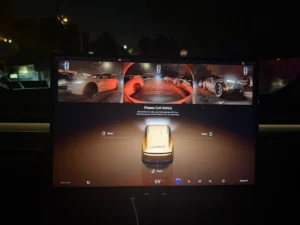
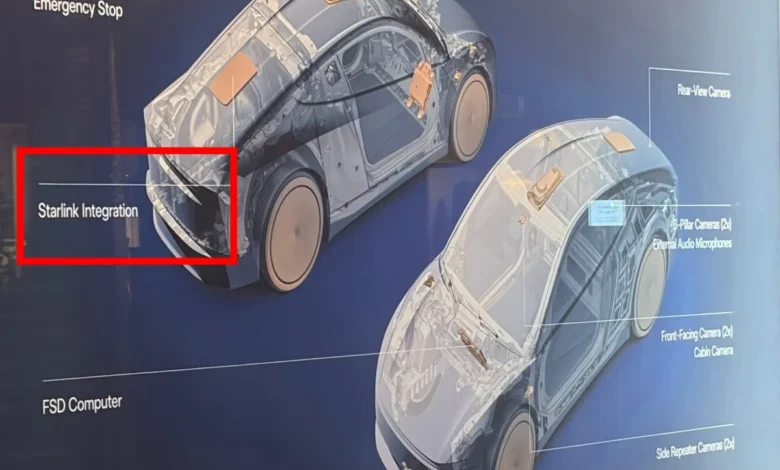
Parallel to the developments in aerospace, Musk’s automotive venture, Tesla, has revealed a critical technological bridge between his various companies. At the Santana Row showroom in California, Tesla recently debuted a production-ready display of the "Cybercab," its dedicated autonomous ride-hailing vehicle. The most significant revelation from the exhibit was the official confirmation that the Cybercab will be the first Tesla model to feature integrated Starlink satellite internet.
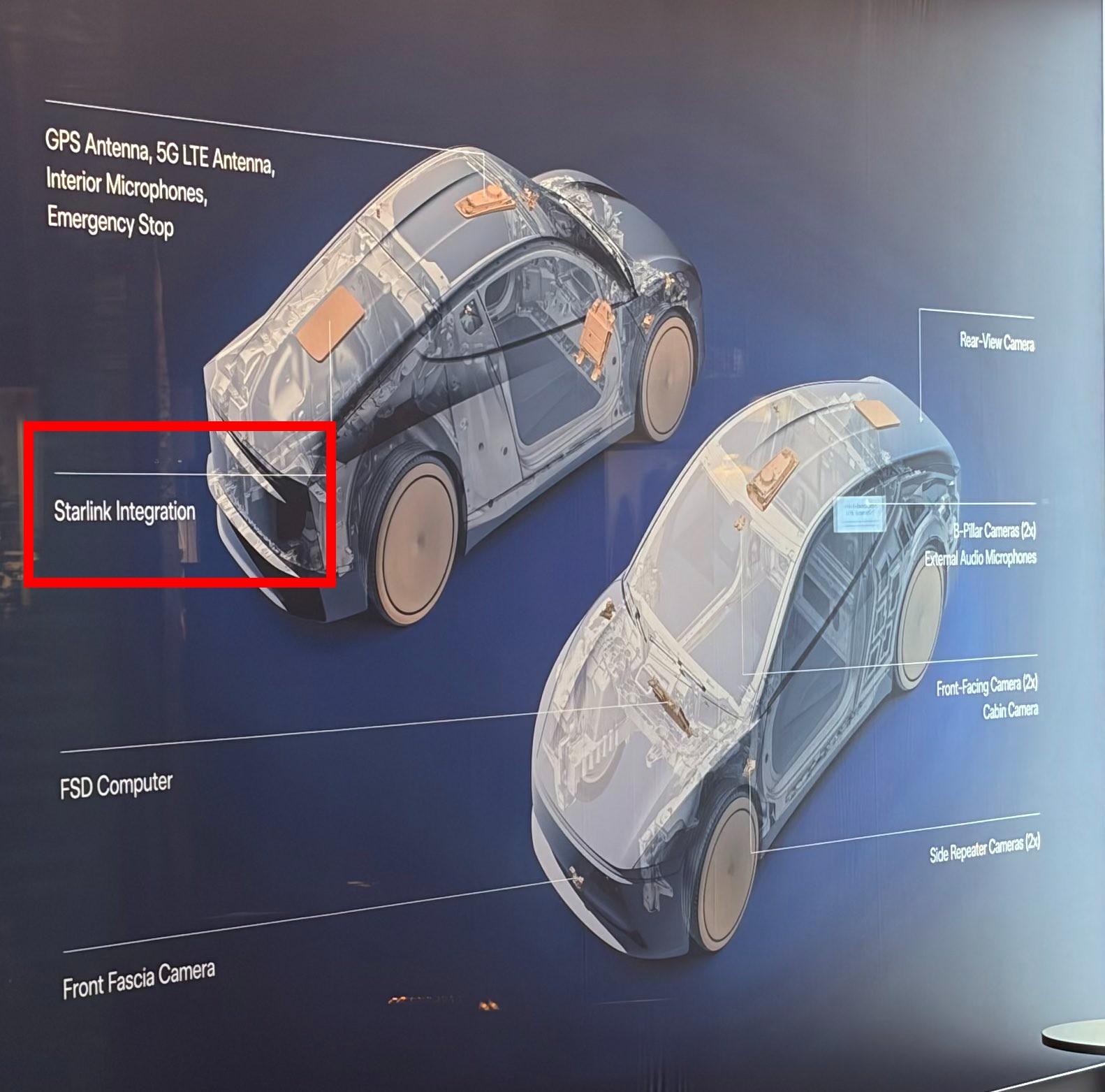
The Cybercab is a radical departure from traditional automotive design, featuring no steering wheel, no pedals, and no side mirrors. It is built exclusively for Level 5 autonomy, allowing passengers to focus entirely on productivity or entertainment. The integration of a Starlink antenna—likely utilizing a new radio-frequency (RF) transparent roof design recently patented by Tesla—ensures that the vehicle maintains high-speed, low-latency internet connectivity regardless of terrestrial cellular coverage.
This integration is viewed as a strategic masterstroke by proponents of the "Musk ecosystem." By utilizing Starlink, Tesla’s autonomous fleet can remain connected in remote areas, providing a consistent user experience for passengers and ensuring that the vehicle’s onboard AI can communicate with central servers for real-time mapping and software updates. In the Santana Row display, Tesla emphasized that the Cybercab is "hyper-aware" of its surroundings and designed to navigate the rarest of road scenarios without human intervention.
Broader Impact and Industry Implications
The convergence of SpaceX’s market dominance, the rapid iteration of the Starship program, and the rollout of Starlink-integrated autonomous vehicles paints a picture of a unified technological front. For investors, the volatility of $SPCX reflects a clash between traditional valuation metrics and the "exponential growth" narrative championed by Musk. Critics often dismiss Musk’s multi-trillion-dollar projections as hyperbole designed to prop up stock prices during periods of operational difficulty. They point to the repeated delays in Starship’s timeline and the regulatory hurdles facing full autonomy as evidence that the "space economy" is still years, if not decades, away from reality.
However, the completion of the FAA’s mishap investigation into Flight 12 and the subsequent clearing of the path for Flight 13 suggest that regulatory momentum is beginning to catch up with SpaceX’s "test-and-learn" philosophy. If Flight 13 successfully deploys its Starlink V3 payload and demonstrates reliable re-entry, it will serve as a powerful proof of concept for the company’s ability to generate revenue while simultaneously refining its hardware.
As SpaceX transitions from an experimental phase to an operational one, the pressure on short sellers is likely to increase. Musk’s warning serves as a reminder that he views his companies not as isolated entities, but as interconnected components of a future where humanity is a multi-planetary species. For those betting against SpaceX, the risk is not just a temporary spike in stock price, but the possibility that they are standing in the way of a fundamental shift in how the global—and orbital—economy functions. For now, the eyes of the financial and scientific worlds remain fixed on the launchpads of South Texas and the fluctuating charts of the NASDAQ, waiting to see if Musk’s "very low" survival probability for his detractors will once again prove prophetic.
Related posts: