Tesla Accelerates Global Expansion with Strategic Entry into Latvian and Uruguayan Markets.

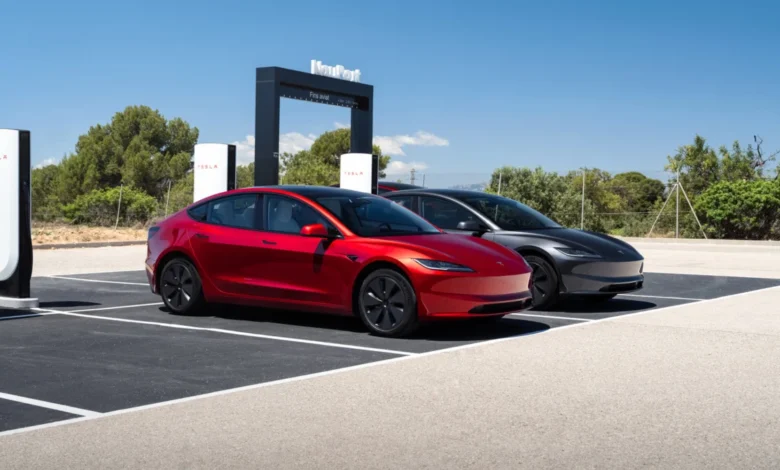
In a significant move that broadens its influence across two continents, Tesla has officially launched operations in Latvia and Uruguay, signaling a rapid intensification of its global growth strategy. These simultaneous entries into the European Baltic region and the South American Southern Cone underscore the company’s commitment to capturing emerging electric vehicle (EV) markets that are characterized by favorable government policies, high renewable energy integration, and a growing consumer appetite for sustainable transportation. By establishing a direct presence in these nations, Tesla aims to transition from a brand accessible primarily through third-party importers to a fully supported ecosystem featuring official sales, service centers, and a dedicated Supercharger infrastructure.
Strengthening the Baltic Corridor: Tesla’s Expansion into Latvia
Tesla’s entry into Latvia represents a logical progression of its "Baltic offensive." While the company has long been a dominant force in Western Europe, the Baltic states—Lithuania, Estonia, and Latvia—have recently become a focus for the Texas-based automaker as it seeks to close geographical gaps in its European service network. The groundwork for the Latvian expansion began in late 2025 with the formal registration of Tesla Latvia SIA. This corporate entity served as the precursor to the operational rollout witnessed in mid-2026.
The company’s strategy in Riga, the Latvian capital, mirrors its successful deployment in neighboring Lithuania. By utilizing a "pop-up store" model combined with permanent service facilities, Tesla can minimize initial capital expenditures while quickly establishing a touchpoint for customers. Recent job postings in Riga for service technicians, parts advisors, and showroom staff indicate that the company is moving toward a full-service model. This is a critical development for local owners who previously had to travel to neighboring countries or rely on independent mechanics for specialized repairs and software updates.
The Latvian EV market, while smaller than those of Nordic neighbors like Norway or Sweden, shows a steady upward trajectory. Current data indicates that battery-electric vehicles (BEVs) account for approximately 7.1 percent of new passenger car registrations in the country. In 2025, approximately 1,602 BEVs were registered out of a total of 22,500 new vehicles. When combined with plug-in hybrids, the total plug-in market share nears 19 percent. Tesla’s Model 3 and Model Y have consistently led these registrations even before the official launch, suggesting a strong latent demand that was previously hindered by the lack of official support.
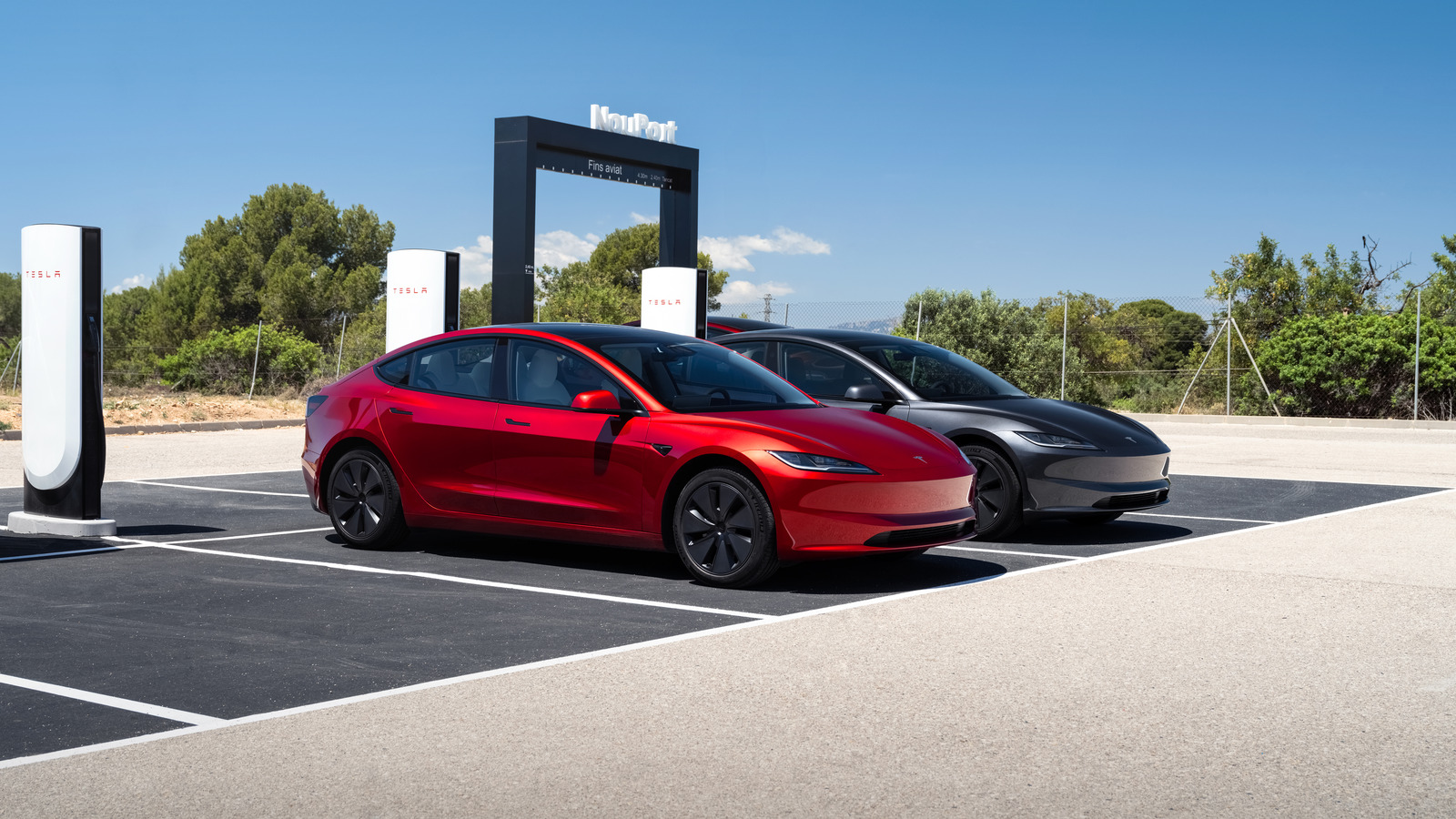
To support this new fleet, Tesla is leveraging Latvia’s existing charging infrastructure while adding its own high-speed solutions. The country currently boasts between 400 and 2,000 public charging points, depending on the classification of the charging speed. Tesla’s Supercharger network is strategically positioned in Riga and the coastal city of Jūrmala, as well as along the Via Baltica—a crucial transit route connecting Finland to Central Europe. These V3 and V4 Superchargers offer speeds of up to 250 kW, significantly reducing the "range anxiety" often cited as a barrier to EV adoption in the region.
The South American Offensive: Uruguay Joins the Network
Simultaneously, Tesla has turned its attention to South America, officially entering Uruguay. This marks the company’s third official market on the continent, following successful launches in Chile and Colombia. The arrival was teased through social media with the phrase “Estamos llegando” (We are arriving), followed by the formal presentation of the Model 3 and Model Y in July 2026.
The establishment of Tesla Uruguay SAS and the successful homologation of multiple versions of the Model 3 and Model Y mark the end of the "grey market" era in the country. For years, affluent Uruguayans have imported Teslas privately, often from the United States or Europe. However, these owners faced significant challenges regarding warranty claims and specialized maintenance. With an official presence, Tesla now provides local warranties, authorized service, and a direct-to-consumer sales model that bypasses the complexities of independent importing.
Uruguay is uniquely positioned as a premier EV market in Latin America. The country boasts one of the highest EV penetration rates in the region, with BEV market share recently exceeding 20 percent. This rapid adoption is driven by a combination of factors: exceptionally high fuel prices, significant tax incentives for electric mobility, and a national electricity grid that is nearly 100 percent powered by renewable sources (primarily wind, solar, and hydroelectric). For Tesla, Uruguay represents a "perfect storm" of market conditions where the environmental benefits of their vehicles align perfectly with the nation’s energy infrastructure.
Logistics and Supply Chain Strategy
A key component of Tesla’s dual-continent expansion is its sophisticated global manufacturing and logistics network. Vehicles destined for the Latvian market are expected to be sourced from two primary locations: Gigafactory Berlin-Brandenburg and Gigafactory Shanghai. Giga Berlin, which specializes in the Model Y, provides a logistical advantage for European distribution, reducing shipping times and costs. Meanwhile, Giga Shanghai continues to serve as the company’s primary export hub, providing high-quality Model 3 units to the European market.
For Uruguay, the supply chain will rely heavily on Gigafactory Shanghai. By importing vehicles from China, Tesla can take advantage of streamlined production processes and competitive pricing. This is particularly important in South America, where Tesla faces increasing competition from Chinese EV manufacturers like BYD and Great Wall Motor (GWM), who have been aggressively expanding their footprints in Brazil and Uruguay. Tesla’s ability to offer its premium technology at a price point that remains competitive with these regional players will be vital for its long-term success in the Southern Cone.
Economic Incentives and Government Policy
The success of Tesla’s entry into these markets is inextricably linked to local government policies. In Latvia, the government has implemented subsidies of up to 4,500 EUR for the purchase of new EVs, alongside exemptions from vehicle operation taxes and lower registration fees. These incentives are part of a broader European Union mandate to achieve carbon neutrality, and Tesla’s arrival provides the high-performance options necessary to convince traditional luxury car buyers to make the switch.

In Uruguay, the government has gone even further. Under the "Uruguay Natural" initiative, the state has eliminated or significantly reduced the Internal Specific Tax (IMESI) for electric vehicles. Furthermore, the national utility company, UTE, has been proactive in developing a "Green Route" of charging stations across the country. Tesla’s Superchargers will complement this existing network, providing a premium charging experience that leverages the country’s low-cost, renewable energy. This synergy makes the total cost of ownership (TCO) for a Tesla in Uruguay significantly lower than that of a comparable internal combustion engine (ICE) vehicle.
Broader Implications for Global EV Adoption
Tesla’s simultaneous push into Latvia and Uruguay is a microcosm of its broader global ambition. The company is no longer focusing solely on massive markets like the U.S. or China; it is now identifying and saturating high-potential niche markets where the infrastructure and policy environment are ripe for disruption.
In Europe, the Baltic expansion fills a critical geographical gap, ensuring that a Tesla owner can drive from Lisbon to Tallinn with the confidence of a unified service and charging network. In South America, the entry into Uruguay serves as a strategic lighthouse. As the region’s most stable and "green" economy, Uruguay acts as a proof-of-concept for Tesla’s viability in South America, potentially paving the way for future entries into larger markets like Brazil or Argentina as their charging infrastructures mature.
Moreover, these moves demonstrate Tesla’s resilience in a cooling global EV market. While some legacy automakers have scaled back their EV ambitions due to fluctuating demand, Tesla is doubling down on expansion. By entering markets with high renewable energy profiles, Tesla reinforces its mission to accelerate the world’s transition to sustainable energy, rather than just selling cars.
Future Outlook and Market Impact
For investors and industry analysts, the launch in Latvia and Uruguay suggests that Tesla is successfully navigating the complexities of regional homologation and international logistics. The appointment of local leadership in both regions indicates a commitment to understanding local consumer behavior and regulatory nuances.
As the EV transitions in the Baltics and South America continue to mature, Tesla’s early-mover advantage in the "official" space will likely yield long-term dividends. By establishing the gold standard for charging and service in these regions now, Tesla is positioning itself to remain the dominant player even as more competitors enter the fray. The dual-continent expansion is not just a growth story; it is a tactical deployment of the Tesla ecosystem in corners of the world that are ready to lead the next wave of the electric revolution.