The Rise of AI-Assisted Hardware Development How Schematik and Vibe Coding are Lowering Barriers for Makers

The intersection of generative artificial intelligence and physical engineering has reached a significant milestone with the emergence of specialized tools designed to bridge the gap between digital instructions and tangible circuitry. For Samuel Beek, an Amsterdam-based developer, the journey into this frontier began with a localized power failure. Attempting to construct an automated electric door opener using instructions generated by OpenAI’s ChatGPT, Beek inadvertently created a device that failed to distinguish between wet and dry connections. The resulting power surge bypassed safety thresholds and blew every fuse in his residence. This failure, while disruptive, served as the catalyst for the development of Schematik, a new AI-driven platform that aims to do for hardware engineering what tools like Cursor have done for software development.
Schematik represents a shift toward what industry observers call "vibe coding" for the physical world. The term, which gained popularity in software circles, describes a process where users describe desired outcomes in natural language, allowing AI models to handle the underlying technical complexities. In the context of hardware, this involves not only writing code for microcontrollers but also selecting compatible components, designing circuit diagrams, and managing the logistical hurdles of procurement. By leveraging advanced large language models (LLMs), specifically Anthropic’s Claude, Schematik provides a comprehensive assistant that guides users through the entire lifecycle of a hardware project, from initial concept to a functioning prototype.
The Genesis of Schematik and the Democratization of Engineering
The primary obstacle to hardware innovation has historically been its high barrier to entry. Unlike software, where errors are often confined to a screen and can be rectified with a simple "undo" command, hardware errors can result in physical damage, financial loss, or safety hazards. The complexity of modern electronics—characterized by thousands of different stock-keeping units (SKUs), varying voltage requirements, and intricate communication protocols—has long acted as a form of gatekeeping, restricting device creation to those with formal training in electrical engineering.
Beek’s experience highlighted a critical flaw in general-purpose AI models: a lack of specialized "grounding" in the laws of physics and the specifics of electronic components. To address this, Beek developed Schematik to act as a more rigorous intermediary. The platform does more than just offer advice; it suggests specific parts, provides direct links to retailers for purchase, and offers step-by-step assembly instructions. This structured approach is designed to ensure that the "vibe" of a project is translated into a technically sound reality.

The market has responded with significant interest. Schematik recently secured $4.6 million in seed funding from Lightspeed Venture Partners, a leading venture capital firm. This investment underscores a growing belief that AI can significantly compress the development cycle for Internet of Things (IoT) devices, consumer electronics, and specialized industrial tools.
Early Adopters and the "Clawy" Phenomenon
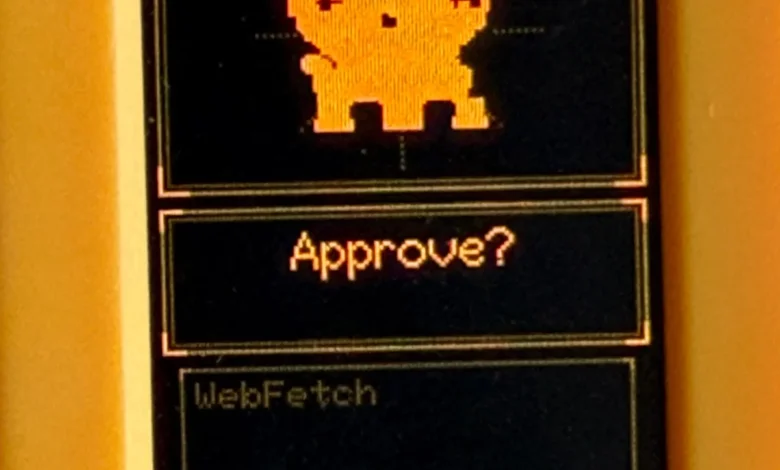
The utility of Schematik is already being demonstrated by a growing community of "makers" and developers. Marc Vermeeren, the head of branding at the European AI firm N8N, has become a prominent advocate for the tool. Vermeeren, who does not identify as a professional hardware engineer, used Schematik to build a variety of devices, including a custom MP3 player and a Tamagotchi-style robotic assistant named "Clawy."
Clawy was designed to serve as a physical companion for coding sessions, interacting with the user as they work through software problems with AI. The project gained viral traction on social media, leading to various community-driven iterations. One notable variation included a device modeled after the character Paulie Walnuts from the television series The Sopranos. These projects, while whimsical, demonstrate a serious technological shift: the ability for individuals to move from a digital idea to a physical, interactive object in a matter of days rather than months.
Vermeeren’s success points to a broader trend where the "blockers" for creativity are being removed. By automating the selection of resistors, capacitors, and microcontrollers, AI allows creators to focus on the high-level functionality and aesthetic design of their inventions.
Corporate Integration and the Role of Anthropic
The movement toward AI-integrated hardware is not limited to independent startups. Large AI laboratories are beginning to provide the infrastructure necessary for these physical interactions. In a significant development, Anthropic recently enabled a Bluetooth API (Application Programming Interface) for its Claude model. This feature allows developers to build hardware devices that can communicate directly with the AI in real-time.

Felix Rieseberg, an engineer at Anthropic, showcased this capability by introducing a "desktop buddy" on GitHub, a device that shares many functional similarities with Vermeeren’s Clawy. While Anthropic has not explicitly confirmed if these internal projects were inspired by the Schematik community, the timing suggests a symbiotic relationship between the tools being built by independent developers and the platform features being released by AI giants.
This corporate interest indicates that the next phase of the AI revolution will likely move beyond the browser and the smartphone, embedding intelligent agents into the physical environment. Whether through wearable devices, smart home components, or educational toys, the integration of LLMs with hardware is becoming a strategic priority for the industry.
Technical Safeguards and the Physics of AI
One of the most significant challenges in AI-assisted hardware design is the risk of "hallucinations"—a phenomenon where an AI generates plausible-sounding but factually incorrect information. In software, a hallucinated function might simply crash a program. In hardware, a hallucinated wiring diagram can cause a fire.
To mitigate these risks, Beek has focused on the inherent "checkability" of electronics. Unlike the subjective nature of creative writing or image generation, electronics are governed by rigid physical laws. Schematik is designed to operate within these constraints, currently focusing on low-voltage architectures (typically three to five volts). By limiting the scope to these "safe" ranges, the platform ensures that even if a mistake is made, the consequences are likely to be a non-functioning device rather than a dangerous explosion.
Kyle Wiens, the CEO of iFixit and a prominent figure in the "Right to Repair" movement, has noted that AI is particularly well-suited for managing the logistical complexity of electronics. The process of searching through data sheets for compatible components is a task that AI can perform with much higher efficiency than a human. Wiens suggests that by handling the "super hard problem" of component matching and SKU management, AI can enable a new era of repairability and custom device creation.

Chronology of the AI Hardware DIY Movement
The transition from manual tinkering to AI-assisted engineering has followed a rapid timeline:
- Late 2022: The release of ChatGPT-3.5 leads to an explosion of "coding assistants," primarily focused on software.
- Early 2023: Makers begin experimenting with using LLMs to write Arduino and Raspberry Pi code, with mixed results due to technical hallucinations.
- February 2024: Samuel Beek announces the concept of Schematik on X (formerly Twitter), positioning it as a specialized tool for hardware.
- Mid-2024: Early adopters like Marc Vermeeren demonstrate successful builds (Clawy, MP3 players), proving the viability of the "vibe coding" approach for hardware.
- Late 2024: Anthropic releases its Bluetooth API, providing a formal bridge between its AI models and physical devices.
- Late 2024: Schematik secures $4.6 million in funding, signaling institutional confidence in AI-driven engineering tools.
Broader Implications and Future Outlook
The rise of tools like Schematik suggests a future where the "Internet of Things" is no longer dominated solely by large corporations like Amazon or Google. Instead, we may see a resurgence of the "Maker Movement," where individuals and small businesses can manufacture bespoke hardware solutions tailored to specific needs.
There are also significant implications for education. For decades, the barrier to learning electronics was the steep curve of understanding circuit theory and component math. With an AI tutor that can explain why a certain capacitor is needed or how a voltage regulator works while the user is actively building, the educational process becomes more kinesthetic and immediately rewarding.
However, the industry remains cautious about the potential for "hardware slop"—a term for poorly designed, mass-produced devices that lack durability or security. As the barrier to entry drops, the volume of devices will likely increase, raising questions about electronic waste and cybersecurity. If a device is "vibe coded" without a deep understanding of security protocols, it could become a vulnerability in a user’s network.
Despite these concerns, the trajectory of the technology is clear. Samuel Beek’s ultimate goal is to evolve the platform to the point where it can assist in the creation of complex robotics and even humanoids. While that remains a long-term vision, the current reality of AI-assisted hardware is already transforming how we interact with the physical world. By turning a failure that blew the fuses of a house into a platform that empowers thousands of creators, Beek has illustrated the resilient nature of innovation in the age of artificial intelligence. The gatekeeping of the past is slowly dissolving, replaced by a world where if you can describe it, you can build it.