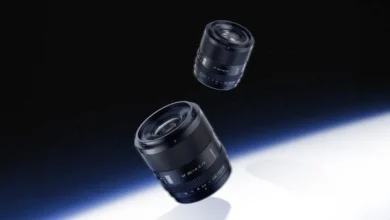
Sigma Rumored to be Developing a Groundbreaking 65mm f/1.2 Ultra-Fast Prime Lens for Mirrorless Systems


The landscape of third-party lens manufacturing has undergone a significant transformation in recent years, with companies like Sigma consistently pushing the boundaries of optical innovation and affordability. While established brands such as Zeiss historically set the benchmark for high-quality optics, Japanese manufacturers, particularly Sigma, have emerged as formidable competitors, offering compelling alternatives for users of Canon, Sony, and Nikon cameras. The latest whispers from the industry suggest that Sigma may be preparing to launch a truly unique and potentially game-changing lens: a 65mm prime with an aperture faster than f/1.2.
This potential release, if realized, would mark a significant advancement in the realm of ultra-fast prime lenses for mirrorless camera systems. The information originates from a report by Asobinet, which cites how2fly, a source known for its accuracy in predicting Sigma’s product roadmap. The leaker shared details on X, indicating that Sigma is indeed working on a lens that aims to deliver exceptional low-light performance and shallow depth-of-field capabilities.
A History of Innovation in Prime Lenses
Sigma’s commitment to expanding its lens offerings has been evident for years. The company has a well-established reputation for producing lenses that offer exceptional optical quality and robust build construction at price points often significantly lower than their first-party counterparts. This strategy has resonated with a broad spectrum of photographers, from enthusiasts to seasoned professionals.
In 2020, Sigma introduced a 65mm f/2 DG DN | Contemporary lens, a focal length that, at the time, was considered somewhat unconventional. Occupying a space between the ubiquitous 50mm "nifty fifty" and longer portrait lenses like a 75mm, this 65mm offered a versatile perspective. It was praised for its sharpness and image quality, catering to photographers seeking a distinct field of view for portraits, environmental shots, and even certain cinematic applications, as the 65mm focal length is frequently utilized in filmmaking. The current f/2 aperture, while considered bright, could be surpassed by a hypothetical f/1.2 offering.
The Technical Hurdles and Potential of an f/1.2 Aperture
Developing a lens with an aperture as wide as f/1.2 presents considerable optical and engineering challenges. A larger aperture allows more light to reach the sensor, which is crucial for shooting in low-light conditions and for achieving extremely shallow depth of field, isolating subjects with a creamy bokeh. However, this increased light-gathering capability comes at a cost.
Physically, a larger aperture necessitates a larger front lens element. This, in turn, can lead to increased lens size and weight, impacting portability and handling. Optically, maintaining sharpness and minimizing aberrations across the entire frame with such a wide aperture requires complex optical designs. The current Sigma 65mm f/2 lens features 12 elements arranged in 9 groups. A hypothetical f/1.2 version would likely require a more intricate element count and potentially advanced glass formulations to control chromatic aberration, distortion, and coma, especially at the edges of the frame.
These optical complexities often translate into higher manufacturing costs, which would inevitably be reflected in the final retail price of the lens. Sigma’s success has often been built on providing excellent value, and the challenge will be to deliver an f/1.2 lens that remains competitive not only in performance but also in price.
Competing in the Ultra-Fast Lens Arena
If Sigma were to release a 65mm f/1.2 lens, it would directly enter a market segment populated by some of the most prestigious and expensive lenses available. This segment is currently dominated by offerings from Canon, Nikon, and Leica, known for their exceptional optical performance and premium pricing.
For Canon users, the RF 50mm f/1.2L USM and the EF 50mm f/1.2L USM are flagship primes, renowned for their exquisite bokeh and low-light capabilities. Nikon’s offerings include the NIKKOR Z 50mm f/1.2 S and the legendary AI-S NIKKOR 58mm f/1.2 Noct, as well as the even faster F-mount NIKKOR 58mm f/0.95 NOCT. Leica’s Noctilux-M 50mm f/0.95 ASPH. represents the pinnacle of optical engineering and exclusivity, commanding prices well into the five figures. These lenses are typically targeted at high-end professional photographers and collectors, making them inaccessible to many enthusiasts.

A Sigma 65mm f/1.2, if it can deliver comparable or superior optical performance at a more attainable price point, could democratize access to this level of photographic capability. This would empower a wider range of photographers to explore creative possibilities offered by ultra-fast lenses, particularly in challenging lighting conditions.
The Cinematic Vision and Potential for Unique Character
The original review of the Sigma 65mm f/2 lens, penned by Chris Gampat, highlighted an interesting observation: while the focal length is popular among cinematographers, Sigma’s rendition produced "sterile" and "clinically sharp" images. The suggestion was that while sharpness is desirable, a lens with such cinematic appeal could benefit from features that enhance its character, such as controlled lens flare or specific rendering of out-of-focus areas.
If Sigma is indeed developing a faster 65mm lens, there’s an opportunity to imbue it with a more distinctive optical signature. Instead of solely focusing on clinical perfection, Sigma could aim to create a lens that produces aesthetically pleasing bokeh and perhaps even desirable flaring characteristics, catering to photographers and filmmakers who value a unique visual style. This approach would differentiate it from other ultra-fast lenses that prioritize absolute sharpness above all else. The pursuit of "cinematic" rendering, as opposed to merely replicating the sharp, clean aesthetic often associated with Sony’s optics, could be a key differentiator.
Strategic Implications and Future Outlook
The potential release of a 65mm f/1.2 lens aligns with Sigma’s broader strategy of offering high-performance, innovative lenses for various camera systems. The company’s growing partnership with Canon, particularly for APS-C cameras, indicates a desire to expand its reach and capture a larger market share. This collaboration could also foster deeper integration and compatibility for future full-frame lens development.
Furthermore, the 65mm focal length holds particular significance for cinematographers. By developing an ultra-fast prime in this range, Sigma could be strategically targeting the burgeoning market of independent filmmakers and content creators who rely on high-quality optics for their productions. The demand for lenses that offer excellent low-light performance and shallow depth of field is consistently high in this sector.
However, the competitive landscape is dynamic. The possibility exists that other manufacturers, including those in China, might release similar ultra-fast lenses before Sigma. Such a development could potentially diminish the impact of Sigma’s offering. Nevertheless, Sigma’s established reputation for quality and its track record of delivering compelling value suggest that a new ultra-fast prime would likely be met with significant interest.
Challenges and Anticipation
While the prospect of a Sigma 65mm f/1.2 lens is exciting, it is important to acknowledge the inherent challenges. The optical complexities, potential for increased size and weight, and the inevitable rise in cost are factors that will need to be carefully balanced. Photographers will be eagerly awaiting official specifications, sample images, and pricing details to assess whether Sigma can indeed deliver another hit that captures the hearts of users.
The timeline for such a release remains speculative. Industry rumors often precede official announcements by several months, and sometimes even longer. Given the complexity of lens development and manufacturing, a launch later this year, as suggested by some reports, is plausible but not guaranteed.
In conclusion, the rumors surrounding Sigma’s potential 65mm f/1.2 ultra-fast prime lens signal an exciting new chapter in third-party lens innovation. If Sigma can successfully navigate the technical challenges and deliver a lens that combines exceptional optical performance with a desirable aesthetic and competitive pricing, it could further solidify its position as a leader in the global lens market and provide photographers with a powerful new tool for creative expression. The coming months will be crucial in determining whether this exciting possibility becomes a tangible reality for camera enthusiasts worldwide.