Elon Musk Reveals Tesla Optimus Hand Design Scrapped as Company Prioritizes Rapid Iteration Over Patent Blueprints

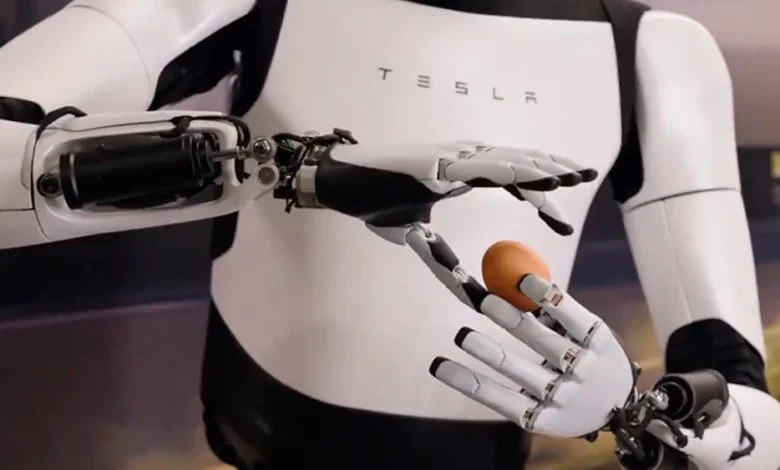
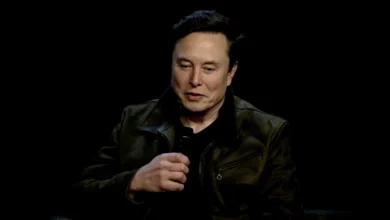
The rapid evolution of humanoid robotics has reached a critical juncture as Tesla CEO Elon Musk recently disclosed that a highly anticipated patent for the Optimus robot’s hand has already been rendered obsolete by internal development cycles. This revelation, shared via the social media platform X, underscores the significant gap between public patent filings and the actual state of cutting-edge research and development at Tesla’s labs in Palo Alto and Austin. Musk’s admission that a recently publicized design "didn’t actually work" provides a rare glimpse into the "fail fast" engineering philosophy that defines the company’s approach to solving one of the most complex challenges in modern engineering: the replication of human-like manual dexterity in a mechanical form.
The Disconnect Between Patents and Prototypes
In the world of intellectual property, patents are traditionally viewed as the definitive blueprints for a company’s future product roadmap. However, in the high-velocity field of artificial intelligence and robotics, the administrative timeline of patent offices often lags behind the pace of innovation. The patent in question, which detailed a sophisticated "rolling contact mechanism" for the Optimus humanoid robot’s fingers, was made public only last week. To fans and industry analysts, it appeared to be the next major leap in robotic articulation.
The design was intended to provide smooth, low-friction movement, allowing the robot’s fingers to mimic the subtle nuances of human grip and gesture. By utilizing a rolling contact interface rather than traditional geared joints, Tesla engineers hoped to reduce mechanical wear and improve the precision of fine motor tasks. Yet, as Musk clarified, real-world stress testing quickly exposed flaws that simulations had failed to predict. The mechanism, while elegant on paper, could not meet the rigorous durability and reliability standards required for a machine intended for mass-market labor.
Musk’s candid response—"We already changed the design. This one didn’t actually work"—highlights a fundamental truth about Tesla’s hardware development. By the time a patent application is processed and published by the United States Patent and Trademark Office (USPTO), the engineering team has often moved through several subsequent iterations, discarding failed concepts in favor of more robust solutions.
The Engineering Challenge: Replicating the Human Hand
The difficulty of engineering a functional humanoid hand cannot be overstated. The human hand is a biological marvel, the product of millions of years of evolution, comprising 27 bones, a complex network of tendons and ligaments, and thousands of nerve endings that provide instantaneous tactile feedback. For a robot to perform tasks such as folding laundry, threading a needle, or assembling delicate electronic components, it must possess a similar level of "Degrees of Freedom" (DoF) and sensory integration.
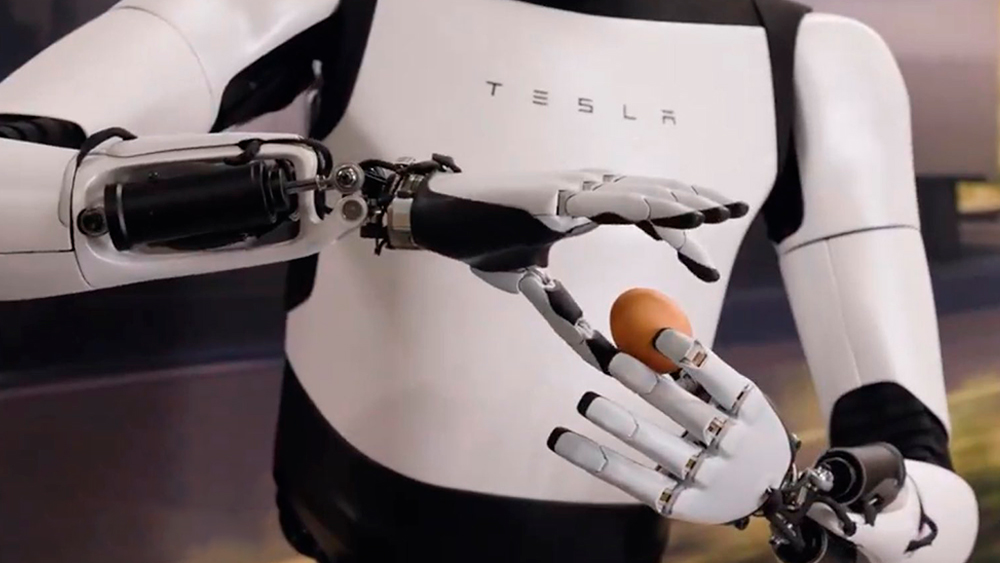
Tesla’s Optimus Gen 2, unveiled in late 2023, featured hands with 11 degrees of freedom, including a brand-new tactile sensing array on all fingers. This was a significant upgrade from the original "Bumblebee" prototype shown in 2022, which utilized more primitive actuators. Despite these advancements, the "Achilles’ heel" of humanoid robotics remains the hand. Most industrial robots operate with simple grippers or vacuum suctions because the margin for error in a five-fingered hand is razor-thin. A discrepancy of even a fraction of a millimeter in joint tension or sensor calibration can result in a dropped object or a crushed delicate surface.
The scrapped rolling contact design was likely an attempt to solve the "backlash" problem—the slight play or lost motion in a mechanism caused by gaps between parts. In robotics, backlash can lead to jittery movements and a lack of precision. While rolling contacts can mitigate this, they often struggle with load-bearing capacity and grip stability when handling objects of varying textures and weights.
A Chronology of Optimus Development
To understand the context of this recent setback, it is necessary to examine the timeline of the Tesla Bot project, which has moved from a conceptual joke to a primary corporate focus in less than four years.
- August 2021 (AI Day): Tesla first announces the "Tesla Bot" concept. The presentation famously included a human performer in a spandex suit dancing on stage, leading many to dismiss the project as a distraction. Musk, however, insisted that Tesla was already a robotics company due to its work on autonomous vehicles (FSD).
- September 2022 (AI Day 2): Tesla showcases "Bumblebee," a deconstructed prototype that walked on stage without tethered support. A more refined, non-walking prototype was also displayed, showing the intended aesthetic of the robot.
- May 2023 (Shareholder Meeting): Tesla releases video updates showing Optimus performing basic tasks like sorting objects and walking through a factory environment. The movement appeared more fluid, and the software stack showed signs of advanced end-to-end neural network training.
- December 2023 (Optimus Gen 2 Reveal): A significant leap in hardware is demonstrated. Gen 2 featured a 30% increase in walking speed, a 10kg weight reduction, and the aforementioned 11-DoF hands with tactile sensors.
- April 2024 (Patent Disclosure): The public release of the finger joint patent occurs, followed immediately by Musk’s confirmation that the design has already been abandoned for a superior, undisclosed version.
This timeline illustrates a development cycle that is significantly faster than traditional aerospace or automotive engineering. Tesla appears to be applying its "hardware-in-the-loop" testing methodology—honed during the development of the Model 3 and Model Y—to the field of humanoid robotics.
Implications for the Robotics Industry and Competitors
Tesla’s admission of failure is being interpreted by industry analysts not as a sign of weakness, but as a demonstration of technical maturity. The humanoid robot sector is currently experiencing an "arms race," with several well-funded competitors vying for dominance.
- Boston Dynamics: The industry veteran recently retired its hydraulic Atlas robot in favor of an all-electric version. While Boston Dynamics excels at dynamic mobility and parkour, Tesla’s focus is on mass-producibility and integration with a generalized AI "brain."
- Figure AI: Backed by Microsoft, Nvidia, and OpenAI, Figure has demonstrated impressive speech-to-action capabilities. Like Tesla, Figure is targeting the logistics and manufacturing sectors.
- Sanctuary AI: This firm focuses heavily on "teleoperation," using human pilots to train the robot’s "synaptic" memory for hand-eye coordination.
Tesla’s advantage lies in its vertical integration and its massive data-gathering capabilities. However, the hardware challenges remain universal. By being transparent about the failure of the rolling contact mechanism, Tesla signals to the engineering community that it is prioritizing real-world utility over theoretical elegance. This transparency also serves to manage investor expectations, clarifying that the path to a fully functional "General Purpose" robot is paved with discarded prototypes.

The Role of Transparency in Tesla’s Strategy
Elon Musk’s communication style on X often bypasses traditional PR channels, providing a direct, if sometimes unpolished, feed of information to the public. In this instance, the disclosure serves a dual purpose. First, it manages the narrative surrounding Tesla’s intellectual property, ensuring that competitors do not waste resources analyzing an obsolete design. Second, it reinforces the image of Tesla as a company that operates on the "bleeding edge" of science.
In traditional corporate environments, admitting that a patented design "didn’t work" might be seen as a waste of legal and engineering resources. At Tesla, it is framed as a necessary step in the scientific method. This approach builds a specific type of brand loyalty among engineers and tech-savvy investors who value iterative progress over glossy, static product launches.
Future Outlook: The Path to Version 3
With the rolling contact design scrapped, speculation has turned to what the next iteration of the Optimus hand will entail. Internal rumors and job postings at Tesla suggest a move toward more integrated "smart actuators" that combine motors, sensors, and controllers into a single unit. There is also increased focus on synthetic "skin" materials that can provide the friction and compliance necessary for a stable grip without requiring extreme mechanical force.
Musk has previously stated that Optimus could eventually represent a larger portion of Tesla’s long-term value than its automotive business. For this to become a reality, the robot must be able to perform autonomously in unscripted environments. The hand is the primary interface between the robot’s AI and the physical world.
As Tesla continues to refine the hardware, the software side—driven by the same neural network architecture used in Full Self-Driving (FSD)—will need to adapt to the new mechanical constraints of the redesigned hands. The company’s ability to synchronize these hardware and software updates will determine whether Optimus can meet Musk’s ambitious goal of having robots working in Tesla factories by the end of 2025.
In conclusion, the revelation that the Tesla Optimus hand patent is already "old news" serves as a potent reminder of the speed at which modern technology moves. While the patent office provides a historical record of what was once thought possible, the real innovation is happening behind closed doors, where failure is not a setback, but a data point on the road to a functional humanoid future. The world now waits to see the design that Tesla deems "working" enough to change the face of global labor.