Google DeepMind and Google Labs Unveil Genie 4 to Redefine Real-Time Interactive World Simulation and AI-Generated Environments

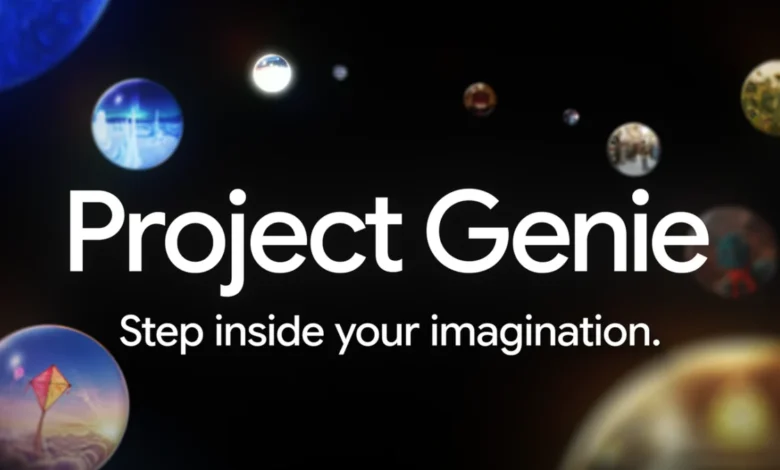
Google DeepMind and Google Labs have officially announced the rollout of Project Genie, an advanced experimental research platform featuring the debut of Genie 4, upgraded Genie 3 capabilities, an intelligent Project Genie agent, and an interactive community gallery. Available starting today for eligible Google AI Ultra subscribers, the new platform bridges the gap between passive media consumption and active, real-time world generation. By combining cutting-edge world models with Google’s Gemini multimodal ecosystem, the technology allows users to generate, step inside, and dynamically manipulate rich 3D environments directly from a standard web browser.
The release marks a significant milestone in the evolution of generative artificial intelligence, moving beyond static images and short video clips into fully responsive, interactive simulations. Early testers of the initial prototype, introduced earlier this year, expressed a strong demand for deeper user control over simulated events, alongside streamlined tools for creation and social sharing. In response, Google has designed the new iteration of Project Genie to deliver superior responsiveness, higher creative fidelity, and a robust collaborative ecosystem.
Core Capabilities and Technical Advancements of Genie 4
At the heart of the new release is Genie 4, described by developers as Google’s most realistic and interactive world model to date. Unlike previous iterations that required predefined parameters before a session began, Genie 4 introduces real-time, mid-session prompting. Users can now type descriptive commands while actively navigating an environment, altering the world instantly. Whether a user chooses to shift weather patterns, introduce unexpected characters, or radically redirect the narrative action, the underlying model adapts the visual landscape on the fly.
Furthermore, Genie 4 integrates real-time native audio generation for the first time. As scenes unfold, the simulation dynamically produces corresponding ambient soundscapes and character dialogue that evolve in tandem with the visual environment. This synchronization addresses a long-standing challenge in generative simulation: maintaining auditory immersion that matches shifting physics and spatial contexts.
While Genie 4 powers high-fidelity visuals and immediate responsiveness, Genie 3 remains accessible via the platform’s model selector. Genie 3 continues to serve users who require longer simulation runs or environments grounded in 360-degree panoramic inputs. Recent updates to Genie 3 include real-time promptable events—allowing users to seamlessly transition through contrasting landscapes like dense forests, underwater ruins, and icy expanses—alongside enhanced panorama grounding that preserves architectural and geographical consistency during extended exploration.
The Project Genie Agent and Natural Language Creation
To democratize world-building, Google has introduced the Project Genie agent, designed to eliminate the technical barriers traditionally associated with 3D design and game development. Crafting an interactive universe no longer requires complex coding or asset creation; instead, users can build complex worlds entirely through natural language conversations.
When a user describes a desired setting, the Project Genie agent orchestrates Google’s suite of multimodal models to generate foundational visuals that establish the aesthetic signature of the world. Simultaneously, the system generates custom background musical scores tailored to the emotional tone of the environment.
During exploration, the Gemini model can be invoked directly within the session. Gemini observes on-screen activity, analyzes the user’s trajectory, and surfaces context-aware suggestion chips to guide future exploration. It can also autonomously trigger in-world events, functioning as an intelligent director or referee depending on the specific parameters of the simulation. For example, in curated experiences like Rock Paper Scissors, Gemini acts as a real-time arbiter while users interact with themed objects on a virtual desktop.
A Collaborative Community Gallery and Creator Partnerships
To foster user engagement, Google has launched a comprehensive community gallery featuring both curated institutional experiences and user-generated content. Among the curated offerings is Living Memory, an experience that transforms personal photographs into explorable spaces, and Dino Field Guide, which immerses users in prehistoric habitats built upon 360-degree panoramas.
The platform also highlights high-profile collaborations with pioneering external creators. Working alongside creative technologist Will, known professionally as BLVCKL!GHT, the team developed Villa Giallo, an atmospheric, room-by-room mystery set within a gothic manor powered by Genie 4. Similarly, a collaboration with filmmaker Anand Gandhi produced The Life of Ants, an experience that leverages Genie 4’s photorealism to let users navigate a complex insect colony from a micro-perspective.
Beyond passive exploration, the gallery functions as a remixing ecosystem. Users can launch original visions using simple prompts, or take existing community-built experiences and alter their underlying structures, soundtracks, and operational rules. Once a world is customized, creators can publish their work back to the community gallery, enabling a continuous cycle of iteration and collaborative world-building.
Background Context and Technological Evolution
Project Genie represents the culmination of years of foundational research in world models—artificial intelligence systems trained to understand and simulate the physical dynamics of real and imagined environments. Unlike traditional video games, which rely on hard-coded physics engines and pre-rendered assets, world models predict the next visual and interactive states based on learned patterns of physics, light, and geometry.
The development of Genie models addresses fundamental hurdles in computer vision and artificial intelligence, including camera latency, complex physical interactions, real-time audio precision, and long-term scene permanence. While Genie 3 and Genie 4 remain active research prototypes pushing the boundaries of frontier AI, Google’s decision to transition them into an accessible web platform signals a broader industry shift toward consumer-facing simulation tools.
Responsible AI Frameworks and Safety Protocols
As generative models grow increasingly sophisticated, questions surrounding safety, authenticity, and digital watermarking have taken center stage. Google has implemented strict oversight protocols for the Project Genie ecosystem. All video and audio assets generated within the platform incorporate SynthID watermarking technology, allowing for the reliable identification of AI-generated content. Furthermore, all model inputs and outputs undergo automated and manual safety screenings to prevent the generation of harmful, abusive, or unauthorized material.
In conjunction with the public release, Google DeepMind has published a comprehensive model research overview detailing the current capabilities and acknowledged limitations of Genie 4. The research documentation addresses ongoing technical challenges—such as maintaining consistent long-term scene memory and refining intricate physical interactions—providing transparency to the broader scientific and developer communities.
Market Implications and Access Details
The launch of Project Genie positions Google at the forefront of the burgeoning generative media and interactive simulation market. By merging conversational AI with real-time 3D world generation, the company is carving out a new category that intersects entertainment, education, virtual prototyping, and digital art.
Access to the new Project Genie experience is currently rolling out to eligible Google AI Ultra subscribers. Meanwhile, Google AI Pro members can join an active waitlist via the official Google Labs portal to secure future access as capacity expands. Industry analysts view this tiered release strategy as a calculated measure to manage computational infrastructure demands while gathering critical telemetry and user feedback from power users.