Peak Design Expands Ecosystem with Cutting-Edge Qi2.3 Magnetic Power Bank and Ultra-Slim Charging Lineup

Peak Design, a brand traditionally recognized for its premium backpacks, camera bags, and everyday carry gear, has officially expanded its footprint in the mobile accessories market with a comprehensive suite of advanced charging solutions. Announced today, the new hardware ecosystem—anchored by what is claimed to be the world’s first Qi2.3-certified magnetic power bank—challenges the dominance of first-party device manufacturers such as Google and Samsung by offering superior power output, innovative form factors, and heightened portability.
The introduction of these products signifies a strategic shift for the company, moving deeper into consumer electronics while maintaining the design-centric, utilitarian ethos that initially earned the brand global recognition among photographers and urban commuters.

Main Facts and Product Lineup
The newly unveiled lineup addresses persistent consumer demands for faster, more efficient, and travel-friendly power accessories. The centerpiece of the launch is the Kickstand Travel Battery, a groundbreaking device that integrates the latest Qi2.3 wireless charging standard into a compact, 5,000mAh magnetic power bank.
According to Peak Design, the Kickstand Travel Battery delivers 15W of wireless power when operating strictly on its internal battery. However, when plugged directly into an external power source, the output increases significantly to 25W. True to its name, the device features a built-in, collapsible kickstand, allowing users to prop up their smartphones at optimal viewing angles while simultaneously replenishing the battery. Available in two aesthetic finishes, Moon and Black, the Kickstand Travel Battery is priced at $99.95 and is available for immediate purchase.
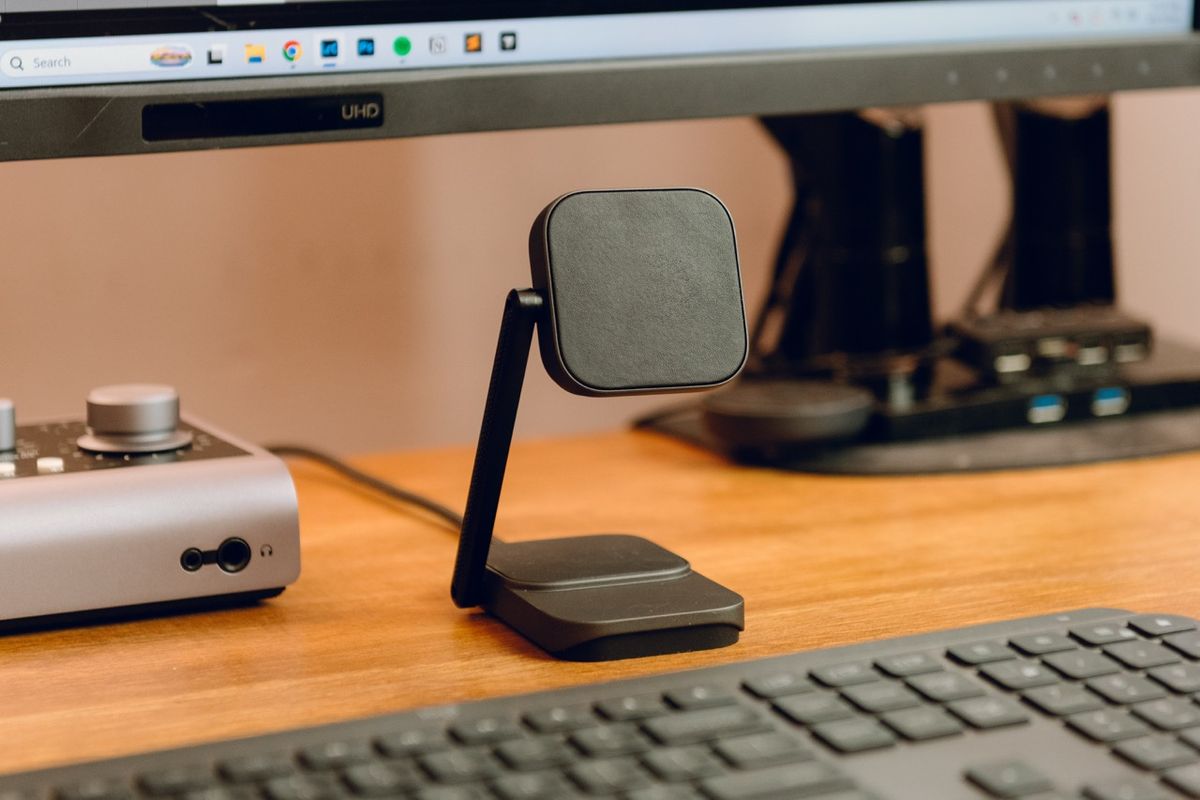
Complementing the power bank is the new 2-in-1 Wireless Charging Station. Built with dual Qi2.2 charging pads, the station supports up to 25W wireless charging per pad, enabling users to power multiple devices at high speeds concurrently. A supplementary port on the side accommodates an additional wired accessory. True to Peak Design’s mobile-first engineering, the entire station folds completely flat, eliminating the bulk typically associated with multi-device desktop chargers and making it an ideal companion for frequent flyers. It retails starting at $99.95.

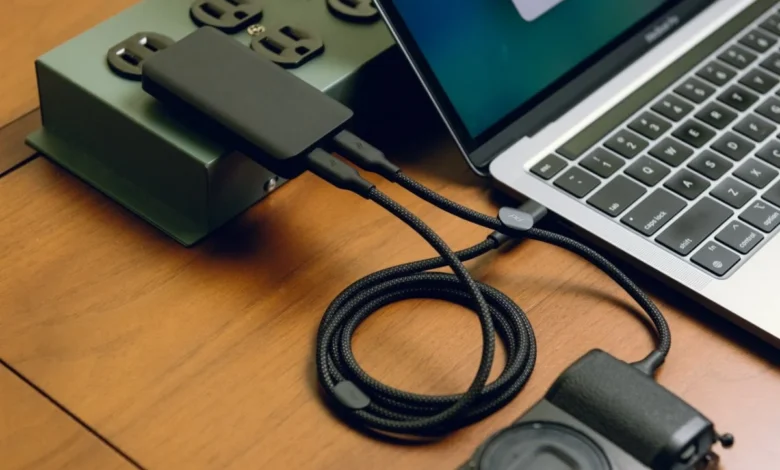
For professionals and travelers requiring high-wattage power delivery on the go, Peak Design introduced the Dual Slim Charger. Utilizing Gallium Nitride (GaN) semiconductor technology, the charging brick measures a mere half-inch in thickness while pushing up to 65W of total power. The slim profile allows users to simultaneously fast-charge a laptop and a smartphone without adding cumbersome weight or awkward geometry to travel bags. The Dual Slim Charger is priced at $65.
Rounding out the hardware ecosystem are the new Ultra Strand USB-C cables, offered in 60W and 240W configurations. The high-end 240W variant supports USB4 data transfer speeds of up to 40Gbps, satisfying the heavy data-transfer requirements of modern content creators and tech enthusiasts. In a move that underscores confidence in their durability, all accessories in the new lineup are backed by Peak Design’s signature lifetime guarantee, with battery products receiving an additional two-year performance coverage plan.
Background Context and Industry Evolution
Peak Design’s transition into mobile hardware did not happen overnight. The company first entered the smartphone accessory market via a highly successful crowdfunding campaign in 2021, introducing its "Mobile" ecosystem. Centered around proprietary mechanical and magnetic mounting mechanisms (known as SlimLink), the ecosystem quickly gained traction for its robust cases, bike mounts, and car chargers.

Over the past three years, the company has methodically scaled its catalog, introducing straps, wallets, and modular everyday carry add-ons that integrate seamlessly with modern smartphones. However, the latest announcement marks a distinct maturation point: rather than focusing solely on mounting solutions and mechanical security, Peak Design is tackling core power delivery infrastructure.
The timing of this release coincides with the broader industry adoption of the Qi2 wireless charging standard, overseen by the Wireless Power Consortium (WPC). Qi2 integrates Magnetic Power Profile (MPP) technology, heavily inspired by Apple’s MagSafe ecosystem, ensuring precise alignment between the charger and the mobile device for optimal energy transfer and reduced thermal loss. By pushing the envelope to Qi2.3 and incorporating proprietary thermal management and high-wattage GaN configurations, Peak Design is positioning itself at the absolute forefront of wireless power technology—surpassing the baseline offerings currently bundled or sold separately by major smartphone giants like Google and Samsung.
Chronology of Expansion
- 2021: Peak Design launches its Mobile ecosystem via crowdfunding, introducing SlimLink cases and mounts.
- 2022–2023: The brand broadens its mobile accessory portfolio with creator-focused tools, travel tripods with mobile integration, and everyday carry bags tailored for tech gear.
- Early 2024: Industry-wide normalization of Qi2 standards prompts independent accessory makers to innovate beyond standard 15W limitations.
- Today: Peak Design formally unveils its high-wattage charging ecosystem, including the Qi2.3 Kickstand Travel Battery, the folding 2-in-1 Wireless Charging Station, the 65W Dual Slim GaN Charger, and Ultra Strand USB4 cables.
Industry Implications and Competitive Analysis
The release of Peak Design’s charging suite carries notable implications for the broader consumer electronics market. Historically, first-party manufacturers—such as Samsung with its Galaxy ecosystem and Google with its Pixel line—have held a captive market for branded accessories, often prioritizing aesthetic continuity over cutting-edge versatility. However, first-party charging solutions have frequently faced criticism for lagging behind third-party innovators in terms of raw power output, multi-device management, and travel-friendly ergonomics.
By launching products that deliver up to 25W wireless charging, deploy advanced GaN technology for ultra-thin power bricks, and offer foldable multi-device stations, Peak Design directly exposes the limitations of OEM hardware. Consumers are increasingly demanding interoperability and space-saving designs that reduce friction during travel. Products like the Dual Slim Charger and the foldable 2-in-1 station cater directly to the modern hybrid worker and digital nomad who carries multiple power-hungry devices across different operating systems.
Furthermore, the integration of lifetime warranties and extended battery performance guarantees serves as a strong market differentiator. In an accessory market often flooded with inexpensive, low-durability alternatives, Peak Design is leaning heavily into its reputation for rugged, premium-grade manufacturing—a strategy that justifies the higher price tier of its catalog.
As the Qi2 standard continues to saturate the Android and iOS ecosystems alike, accessories that bridge the gap between high-speed wired delivery and magnetic wireless convenience will likely become the benchmark for consumer expectations. With this comprehensive rollout, Peak Design has demonstrated that its ambitions in the mobile space extend far beyond simple phone cases, establishing the brand as a serious contender in the personal power electronics sector.