Samsung Capitalizes on Apple iPhone Duo Quality Concerns as Galaxy Z Fold8 Sales Surge Globally


The global foldable smartphone market is currently experiencing a profound and rapid shift in consumer sentiment, largely catalyzed by early missteps from industry newcomer Apple and aggressive counter-programming by veteran manufacturer Samsung. Recent reports originating from South Korea indicate that sales of the Samsung Galaxy Z Fold8 surged by more than 20 percent week-over-week immediately following the commercial release of the Apple iPhone Duo. This latest market development highlights not only the fickle nature of early adopters in the ultra-premium device sector, but also the formidable agility of Samsung’s supply chain and promotional machinery in capturing disillusioned consumers.

The roots of this shifting consumer tide trace back several months to the official unveiling of Apple’s long-rumored first foldable device. When the iPhone Duo made its debut in September, market observers noted an immediate, albeit modest, ten percent week-over-week spike in Galaxy Z Fold8 sales. At the time, consumers and industry analysts alike were reacting to the sheer reality of Apple’s entry into the foldable arena, which brought with it a notoriously steep price tag. However, what began as curiosity-driven market adjustments quickly escalated into a full-scale consumer migration as the iPhone Duo actually landed in the hands of buyers and reviewers.
Shortly after the device hit store shelves, early adopters and technical reviewers began reporting significant hardware vulnerabilities. Prominent among these complaints were issues concerning spotty quality assurance standards during manufacturing, alongside alarming reports of inner displays cracking under normal usage conditions. Rumors quickly circulated suggesting that Apple may have inadvertently compromised its rigorous QA protocols in a desperate bid to expedite production timelines and ensure sufficient unit availability at launch. For a consumer base investing upwards of $2,000 to $2,500 into a cutting-edge foldable device, structural fragility and inconsistent build quality proved to be absolute dealbreakers. Consequently, a substantial segment of potential Apple buyers redirected their purchasing power toward Samsung’s mature and thoroughly iterated foldable ecosystem.
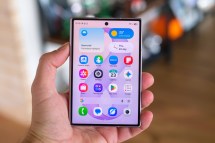
Sensing a critical window of opportunity to cement its market dominance, Samsung acted swiftly to capitalize on Apple’s misfortune. The South Korean tech giant announced an immediate extension of its flagship upgrade program, the New AI Subscription Club, stretching the enrollment period through the end of November. Originally designed to alleviate the financial friction of purchasing high-end hardware, the subscription program allows consumers to trade in their legacy devices and seamlessly transition to a brand-new model every one, two, or three years.
To make the transition even more frictionless for defecting Apple users and hesitant upgraders, Samsung restructured the buy-back guarantees associated with the program. Members who purchase a device from the Galaxy Z Fold8 lineup—which includes the standard Z Fold8, the high-end Z Fold8 Ultra, or the clamshell-style Z Flip8—are now promised aggressive residual values. Specifically, the one-year plan guarantees a 50 percent buy-back value, the two-year plan offers a 40 percent guarantee (scaling up to 50 percent for those opting for the Z Flip), and the three-year plan secures a 25 percent return value.

Furthermore, Samsung eliminated traditional trade-in friction by integrating automated Mintit ATM kiosks into the return ecosystem. Rather than requiring customers to visit a traditional brick-and-mortar retail location, ship devices via postal services, or deal with cumbersome appraisal processes, users can simply drop their old hardware into a local Mintit kiosk. To incentivize this method further, Samsung introduced an immediate KRW 100,000 (approximately $75 USD) cash bonus added directly to the appraised trade-in value. This localized convenience, paired with the broader "Galaxy End of the Year Fiesta" promotional campaign running through December 31, has ensured sustained retail momentum across domestic markets.
The success of Samsung’s strategic offensive is not confined to South Korea. Regional performance metrics coming out of Europe reveal a similar, highly favorable trajectory for the brand. European sales data indicates that the combined market offering of the Galaxy Z Fold8 and the Z Fold8 Ultra has outperformed the previous-generation Galaxy Z Fold7 sales figures by an impressive 45 percent. This robust performance demonstrates that consumer confidence in Samsung’s foldable engineering remains exceptionally high, even as competition in the multi-thousand-dollar smartphone tier intensifies.

Financial analysts evaluating these market dynamics point to several broader implications for the smartphone industry at large. First and foremost, Apple’s entry into the foldable sector—while historically significant for legitimizing the form factor—proves that brand loyalty alone cannot overcome hardware reliability issues at these elevated price points. Consumers purchasing first-generation foldable technology demand absolute structural integrity, a lesson Samsung learned through its own growing pains with the original Galaxy Fold years prior. By refusing to compromise on build quality while simultaneously refining its hinge mechanisms, ultra-thin glass displays, and software optimization, Samsung has successfully insulated its foldable franchise against new market entrants.
Moreover, the aggressive deployment of subscription and trade-in financial ecosystems highlights a growing trend in consumer electronics. As hardware innovation plateaus and baseline device prices continue to scale upward, manufacturers must rely heavily on circular economy models—such as guaranteed buy-backs and automated recycling kiosks—to lower the psychological and financial barriers to entry. By subsidizing the cost of upgrades and making device retirement effortless, Samsung has created a self-sustaining ecosystem that encourages continuous brand retention.

As the holiday shopping season approaches, the spotlight remains fixed on how Apple will respond to the ongoing quality assurance fallout surrounding the iPhone Duo. Industry insiders speculate that Cupertino will need to issue comprehensive hardware revisions or aggressive software patches to restore consumer trust. In the interim, however, Samsung has effectively monopolized the seasonal demand for reliable foldable technology, turning its competitor’s manufacturing setbacks into one of its most profitable quarters for the Galaxy Z Fold series to date.