Dolphin X Remote Access Trojan Uses AI Profiler to Rank and Target High-Value Victims

The cybersecurity landscape has reached a pivotal inflection point with the discovery of Dolphin X, a sophisticated Remote Access Trojan (RAT) that integrates artificial intelligence to solve one of the most persistent problems facing modern cybercriminals: information overload. As malware developers increasingly adopt professional software development practices, the introduction of the "AI Profiler" within the Dolphin X platform marks a significant evolution in how threat actors manage and exploit stolen data. Discovered by researchers at Varonis Threat Labs, this new malware strain is being marketed not just as a tool for data theft, but as an intelligent triage system designed to identify and prioritize the most lucrative targets from a pool of thousands of infected machines.
The malware was first identified by Varonis Threat Labs researcher Daniel Kelley, who observed its promotion on a prominent cybercrime forum. The vendor, operating under the alias "Kontraktnik," advertises Dolphin X as an "all-in-one" solution for remote access and data exfiltration. Unlike traditional RATs that require manual labor to sort through exfiltrated logs, Dolphin X leverages a specialized operator panel that claims to automate the valuation of victims. This shift toward automated triage reflects a broader trend in the cybercrime underground, where the sheer volume of stolen credentials has become a bottleneck for attackers seeking to maximize their return on investment.
The Evolution of Triage in Cybercrime Operations
Historically, the primary challenge for operators of credential-stealing malware has been the "signal-to-noise" ratio. A single campaign can result in thousands of infected hosts, each yielding megabytes of data, including browser history, saved passwords, session cookies, and system metadata. For a human operator, determining which of these thousands of victims holds the keys to a corporate network, a high-value cryptocurrency wallet, or a sensitive cloud environment is a labor-intensive process. Dolphin X aims to eliminate this manual hurdle through its AI Profiler, which acts as a sophisticated sorting and ranking engine.
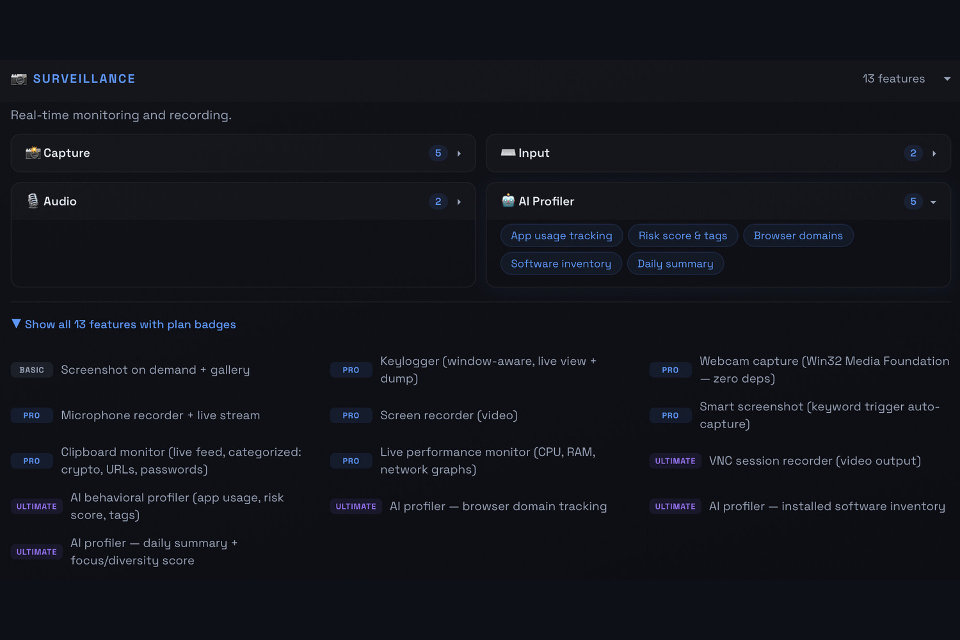
According to the Varonis analysis, the Dolphin X operator panel features a dedicated surveillance tab housing the AI Profiler. The developer describes this feature as an "AI behavioral profiler with app usage tracking, risk score, and daily summary." By analyzing the specific applications used by a victim, their browsing habits, and the software installed on the machine, the malware assigns a "risk score" to each infected host. In this context, "risk" refers to the value the victim poses to the attacker; a high risk score indicates a target that likely possesses sensitive access or significant financial assets.

The operator panel provides attackers with daily summaries that rank victims based on these profiles. This allows cybercriminals to prioritize their efforts, focusing on "high-value" machines that might provide entry points into corporate infrastructures, production systems, or significant cryptocurrency holdings. This automated prioritization represents a "Big Data" approach to cybercrime, mirroring the analytics tools used by legitimate enterprises to understand customer behavior, but repurposed for the purpose of efficient exploitation.
Technical Capabilities and Target Scope
The Varonis research team, led by Daniel Kelley, obtained the Dolphin X operator panel and builder to conduct a detailed analysis within an isolated laboratory environment. While the researchers focused on the administrative interface and network traffic rather than executing a live agent on a victim machine, the technical strings discovered within the panel provide strong evidence of the malware’s intended functionality. Key strings such as Auto-Start AI Profiler, ProfilerStart, ProfilerGetData, risk_score, and risk_factors confirm that the profiling workflow is a core component of the malware’s architecture.
Beyond its AI-driven triage capabilities, Dolphin X is a formidable credential stealer. The operator panel lists 329 distinct features categorized across ten different modules. Its data exfiltration capabilities are extensive, claiming to target more than 300 different applications. This includes:
- Web Browsers: Comprehensive coverage of Chromium and Gecko-based browsers, which are the primary repositories for saved passwords and session cookies.
- Cryptocurrency Assets: The malware targets 100 different cryptocurrency wallet extensions and 65 desktop-based crypto wallets, reflecting the high priority attackers place on liquid digital assets.
- Developer and Administrative Tools: Perhaps most concerning for enterprise security is the malware’s focus on more than 30 cloud command-line interface (CLI) tools, SSH keys, and
.envfiles.
The inclusion of .env (environment) files and SSH keys is particularly telling. Environment files often contain hardcoded API keys, database credentials, and secret tokens used in software development and cloud deployments. By stealing these, an attacker can move laterally from a single infected developer workstation into an organization’s entire cloud infrastructure, potentially leading to massive data breaches or supply chain compromises.
The Role of Artificial Intelligence in Modern Malware
While Varonis could not independently verify the specific AI model or engine powering the Dolphin X profiler without a live sample, the presence of the feature underscores a growing trend. Artificial intelligence is no longer a theoretical threat in the hands of cybercriminals; it is being integrated into various stages of the attack lifecycle. We have already seen the emergence of "SpamGPT" for crafting convincing phishing lures and AI agents capable of conducting autonomous network reconnaissance.

Dolphin X uses AI to solve an operational efficiency problem. In the "Malware-as-a-Service" (MaaS) economy, competitive advantage is gained by providing tools that save time and increase the success rate of attacks. By offering a built-in profiler, "Kontraktnik" is positioning Dolphin X as a premium product for sophisticated attackers who want to bypass the "noise" of low-value victims and strike directly at targets with the highest potential payout.
The use of AI for victim scoring also suggests a move toward "Precision Hacking." Instead of a "spray and pray" approach where every victim is treated equally, attackers can now use machine learning to identify the "whales"—individuals with administrative access to Fortune 500 companies, high-net-worth cryptocurrency investors, or developers with access to critical code repositories. This level of targeting was previously the domain of nation-state actors or elite ransomware groups; Dolphin X democratizes these capabilities for a broader range of cybercriminals.
Chronology and Discovery Context
The emergence of Dolphin X follows a steady increase in the complexity of Remote Access Trojans over the last three years. The chronology of its discovery began with routine monitoring of underground forums where Daniel Kelley spotted the advertisement by "Kontraktnik." The vendor’s marketing materials emphasized the malware’s ability to operate silently while gathering a vast array of telemetry.
Following the initial discovery, Varonis Threat Labs initiated a deep dive into the malware’s infrastructure. By examining the builder—the tool used by attackers to "build" their specific version of the malware—researchers were able to see the full scope of configurable options. The discovery of the AI Profiler strings was a significant milestone, as it provided the first technical confirmation that the "AI" claims in the marketing materials were backed by actual code within the operator’s control panel.
The timeline of Dolphin X’s development suggests it was built to compete with established stealers like RedLine, Raccoon, and Vidar. However, by adding the AI Profiler, the developers have introduced a unique selling proposition that addresses the primary pain point of modern botnet operators: the management of massive data sets.
Implications for Enterprise Security and Incident Response
The rise of AI-powered triage in malware has several critical implications for corporate security teams. First, the speed at which an attacker can identify a high-value target has drastically increased. In traditional scenarios, a security team might have a window of time between the initial infection and the moment the attacker realizes they have breached a sensitive account. With Dolphin X, that window is virtually eliminated, as the AI Profiler can flag a high-value machine almost immediately upon infection.
Second, the focus on developer tools like .env files and cloud CLI credentials means that organizations must rethink their approach to endpoint security for technical staff. Developers often require higher levels of access and may use a variety of specialized tools that Dolphin X is specifically designed to exploit. The theft of SSH keys and cloud tokens can lead to "account takeover" (ATO) attacks that bypass traditional perimeter defenses and multi-factor authentication (MFA) if session cookies are also exfiltrated.
Security experts suggest several defensive measures to mitigate the risk posed by advanced RATs like Dolphin X:
- Hardened Credential Management: Moving away from storing credentials in browsers and environment files. Using dedicated secret management services and hardware security modules (HSMs) can reduce the "harvestable" surface area.
- Behavioral Analytics: Since Dolphin X uses AI to analyze behavior, defenders must use AI-driven Endpoint Detection and Response (EDR) tools to identify the malware’s own behavioral patterns, such as the scanning of specific directories for
.envfiles or the unauthorized access of browser data folders. - Network Segmentation: Restricting the ability of an infected endpoint to communicate with cloud management consoles or sensitive internal servers can prevent an initial infection from turning into a full-scale breach.
- Monitoring for Exfiltration: Dolphin X must communicate with its Command and Control (C2) server to send its profiling data. Monitoring for unusual outbound traffic to known malicious IP ranges or unexpected cloud storage providers is essential.
Conclusion and Future Outlook
Dolphin X represents a significant step in the professionalization of the cybercrime industry. By integrating an AI Profiler, the creators of this malware have acknowledged that the future of cybercrime lies not just in the volume of data stolen, but in the intelligence with which that data is processed. As the Varonis report highlights, the ability to automatically triage victims based on their "risk score" allows attackers to operate with unprecedented efficiency and precision.
While the "AI" label is often used as a marketing buzzword, the technical evidence found in the Dolphin X operator panel suggests a functional implementation of data processing designed to maximize criminal profits. As threat actors continue to adopt these technologies, the defensive community must respond by further integrating machine learning and automated response capabilities into their own security stacks. The battle for the future of cybersecurity is increasingly becoming a contest between competing algorithms: one side using AI to find the most valuable targets, and the other using AI to stop them before they can be exploited.
Related posts: