The Technical Committee on Motor Vehicles (TCMV) draft agenda for its 119th meeting reveals that the subject of Tesla’s FSD (Supervised) has been relegated to a brief 25-minute window for a “continuation of discussions.” This development signifies that member states remain divided on the technical and legal frameworks required for continent-wide approval. With the next TCMV session scheduled for December, the earliest possible window for a binding, bloc-wide vote has shifted, extending the current patchwork regulatory landscape for several more months.
A Fragmented Regulatory Landscape
The current uncertainty stems from the complexities of EU vehicle type approval protocols. On April 10, the Dutch vehicle authority, RDW, granted the first European type approval for Tesla’s system under UN Regulation 171 and an Article 39 exemption within EU Regulation 2018/858. This landmark approval provided a legal foundation that other member states have begun to recognize on an individual basis.
To date, seven nations—the Netherlands, Lithuania, Estonia, Denmark, Belgium, Slovenia, and the Czech Republic—have independently cleared FSD (Supervised) for use on their public roads. While these approvals represent a combined population of approximately 53 million people, they account for only about 12 percent of the total EU population. For Tesla to achieve a seamless, borderless rollout, it requires a qualified majority within the TCMV. This threshold mandates the support of at least 15 member states, provided those nations represent at least 65 percent of the EU’s total population, or approximately 292 million citizens.
The delay is particularly impactful because of the influence of the bloc’s most populous and influential markets: Germany, France, Italy, and Spain. Among these, France has already expressed significant reservations regarding the current iteration of the system, and several other governments have raised specific concerns regarding speed-limit compliance and the transition between manual and supervised autonomous operation.
Data-Driven Safety Arguments
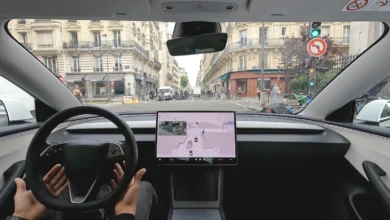
In response to the regulatory scrutiny, Tesla Europe has pivoted to a strategy of extreme transparency, publishing internal performance metrics to assuage safety concerns. As of September 1, the company reported that FSD (Supervised) was being utilized by more than 70,000 customers across the continent. The data set is substantial, covering over 1 million kilometers of driving daily.

According to Tesla’s internal reporting, vehicles equipped with the software were 4.1 times less likely to be involved in a collision compared to manual driving, based on a sample size of 100 million kilometers on European public roads. A more granular, mid-year analysis of 65 million kilometers across five approved countries indicated an even higher safety margin, suggesting a 5.2-fold reduction in collision risk. Notably, Tesla reported zero highway collisions over a distance of 41.9 million kilometers during that same period.
The company further emphasized that its software significantly reduced the frequency of abrupt vehicle interventions, such as sudden automatic emergency braking, harsh accelerations, and erratic swerving, when compared to traditional manual operation of the same vehicle models. While these figures represent a compelling case for the technology, regulators have noted that they remain company-reported and lack the independent, third-party auditing typically required for broad-scale automotive safety certification.
The Human Element and Public Health
The discourse surrounding the delay is underscored by the broader context of European road safety. In 2025, the EU recorded approximately 19,400 road fatalities—an average of 53 deaths per day. The vast majority of these accidents are attributed to human error, including distraction, fatigue, and impaired decision-making.

Tesla representatives and proponents of advanced driver-assistance systems (ADAS) argue that even in a “supervised” capacity, the software serves as an essential safety net that can mitigate these human failures. However, regulators are cautious to distinguish between “Supervised” autonomy and fully autonomous driving. Under the current EU framework, the human driver remains the sole entity legally responsible for the vehicle’s actions, regardless of the system’s level of engagement. This legal distinction remains a point of friction between the rapid pace of technological innovation and the cautious, legislative nature of European governing bodies.
Industry Reaction and Elon Musk’s Response
The postponement was met with palpable frustration from leadership. Elon Musk, who has been vocal about his ambition to bring Tesla’s full suite of autonomous capabilities to global markets, responded to the news with a single-word post on the social media platform X: “Sigh.” This reaction highlights the growing tension between Tesla’s aggressive expansion timeline and the bureaucratic reality of international regulatory hurdles.
Industry analysts suggest that the delay is not necessarily a rejection of the technology, but rather a reflection of the EU’s desire to set a rigorous, uniform precedent. “The European Union is not simply looking at one company; they are establishing the rules for the next decade of transportation,” noted a policy analyst familiar with the TCMV process. “The concern is not just whether the system works today, but how it integrates with the existing infrastructure and traffic laws of 27 different countries.”

Implications for the Future of Mobility
The implications of the December vote are far-reaching. Should the TCMV grant approval, it would immediately open the floodgates for a consistent, cross-border autonomous experience for millions of Tesla owners. Conversely, if the committee remains deadlocked, the current patchwork of availability—where the system is accessible in Amsterdam or Prague but restricted in Paris or Berlin—will continue to stifle the adoption of the platform and delay the collection of the massive data sets required to further refine the system’s performance in diverse European driving conditions.
For the remainder of 2026, the focus will likely remain on lobbying efforts and the continued accumulation of real-world data to address the specific technical concerns raised by the French and German delegations. The case presented by Tesla is clear: the technology is mature enough to improve current road safety metrics. However, in the eyes of the European regulatory machine, the burden of proof remains high. Until the TCMV convenes in December, the European automotive market remains at a standstill, awaiting a decision that could redefine the future of the continent’s transport infrastructure.
While Tesla continues to demonstrate its commitment to vertical integration—highlighted by recent breakthroughs in localized, in-house cathode production for the Cybercab in the United States—the European theater remains a test of the company’s ability to navigate not just engineering challenges, but the intricate and often slow-moving world of global policy. Whether the December vote provides the clearance necessary for growth or another period of waiting, it is certain that the intersection of AI, automotive engineering, and international law will remain the primary battlefield for the next phase of Tesla’s global mission.