
PacketStream Residential Proxy Network Review 2024: Affordable P2P Bandwidth Sharing Versus Enterprise Limitations

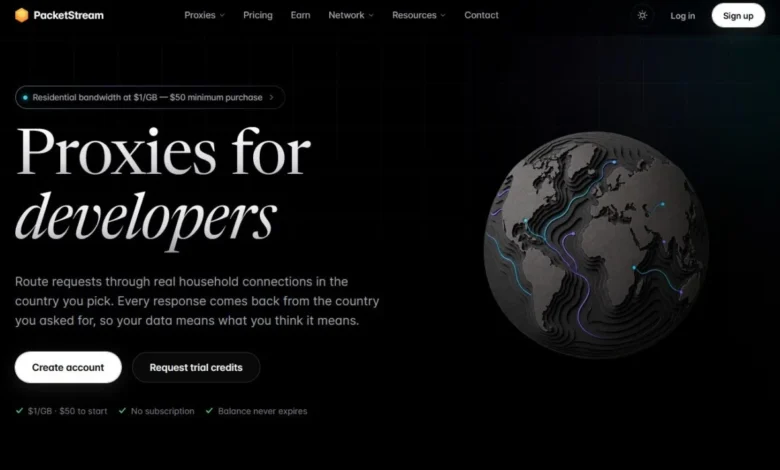
Founded in California in 2018, PacketStream entered the proxy market with a distinct mission: to drastically lower the financial and structural barriers associated with residential proxies. Traditional residential proxy networks—which utilize IP addresses assigned by Internet Service Providers (ISPs) to real consumer devices—have historically been prohibitively expensive and tightly controlled by enterprise-focused vendors. By implementing an innovative peer-to-peer (P2P) bandwidth-sharing model, PacketStream aimed to democratize access to residential IPs for individual developers, small businesses, and budget-conscious researchers.
Over the years, the platform has carved out a unique niche in the data collection and web scraping ecosystem. However, as the digital landscape shifts toward stricter anti-bot measures, heightened cybersecurity scrutiny, and enterprise-grade automation requirements, a critical evaluation is necessary to determine how PacketStream stacks up against high-end competitors like Bright Data, Oxylabs, and Webshare. This comprehensive review examines PacketStream’s pricing structure, operational mechanics, security implications, performance, and overall utility in modern digital operations.
The Mechanics of Peer-to-Peer Bandwidth Sharing
At its core, PacketStream operates on a symbiotic economic model divided into two participant categories: buyers and "Packeters." Individual device owners download a lightweight background application available for Windows, macOS, and Linux (via Docker containers) that allows them to share their unused internet bandwidth. In exchange, these participants earn financial compensation starting at $0.10 per gigabyte shared.
On the opposing side of the network, developers and businesses purchase this aggregated residential bandwidth for a flat rate of $1.00 per gigabyte. This P2P architecture effectively bypasses the traditional, capital-intensive infrastructure costs faced by legacy proxy providers who must maintain dedicated server farms or partner directly with retail ISPs. Because every IP address in PacketStream’s pool originates from a genuine consumer device across more than 190 countries, the resulting traffic closely mimics organic human behavior, making it highly effective for routine data collection tasks.
However, this decentralized approach inherently introduces compromises regarding speed, connection stability, and network governance. Unlike centralized enterprise networks where hardware infrastructure is rigorously monitored and managed by the service provider, PacketStream relies on the variable uptime, connection speeds, and hardware quality of everyday consumer devices. Consequently, network performance can fluctuate significantly depending on geographic location and the active availability of peer nodes.
Plans, Pricing, and Financial Entry Barriers
In an industry notorious for labyrinthine subscription tiers, hidden fees, and complex contractual commitments, PacketStream maintains a remarkably straightforward financial model. The platform eschews recurring monthly subscriptions in favor of a pure pay-as-you-go pricing structure charged at a flat rate of $1.00 per gigabyte. Purchased balances never expire, providing users with long-term flexibility.
When evaluated purely on a cost-per-gigabyte basis, PacketStream is undeniably one of the most affordable entry-level options available on the market. Industry heavyweights command substantially higher rates for comparable traffic. For example, standard pay-as-you-go residential bandwidth through IPRoyal typically starts at approximately $7.00 per gigabyte, while Bright Data’s entry-level tiers begin around $8.40 per gigabyte. Even Webshare, widely recognized as a budget-friendly alternative for small-to-medium businesses, generally prices its residential bandwidth between $1.40 and $3.50 per gigabyte depending on volume commitments.
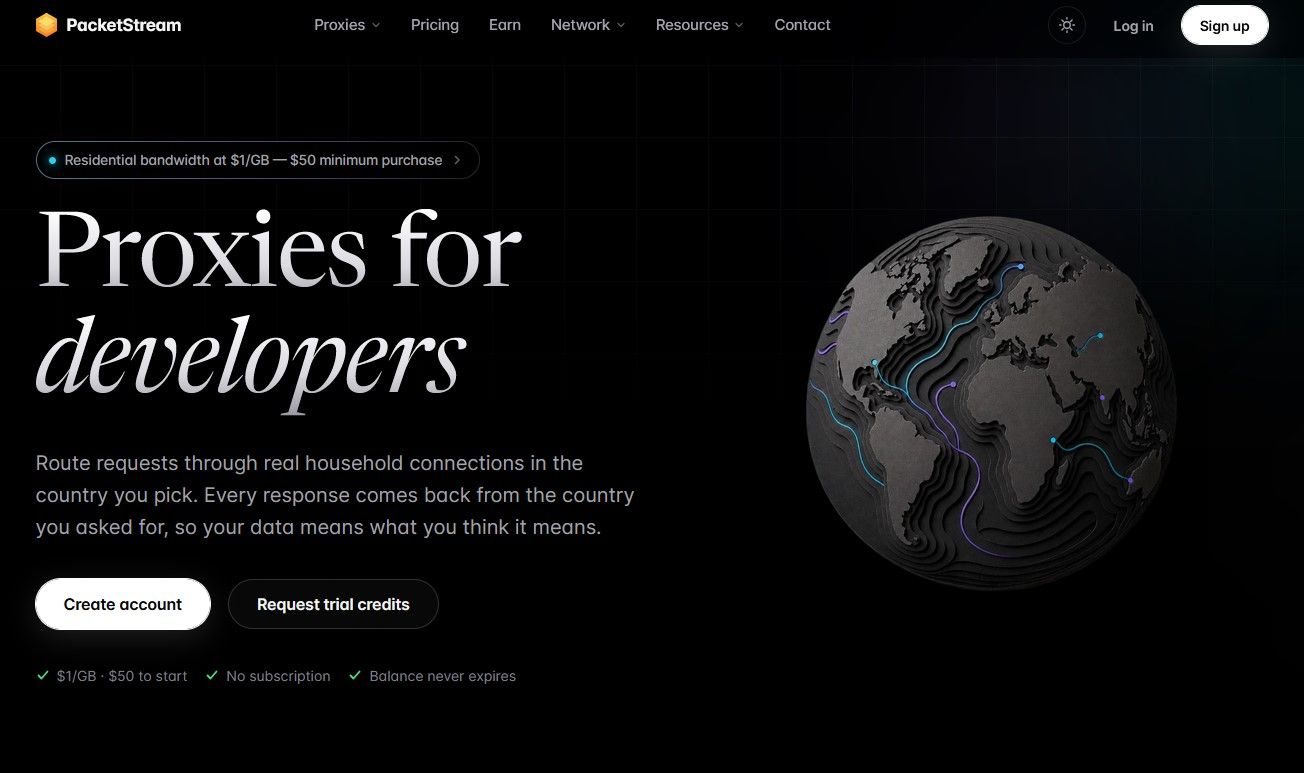
Despite its low unit cost, PacketStream enforces a notable financial barrier to entry: a mandatory minimum purchase threshold of $50 to activate a new buyer account. Users cannot simply deposit a nominal sum, such as $5 or $10, to test the platform’s capabilities before making a financial commitment. Furthermore, for prospective customers demanding empirical proof of performance prior to purchase, PacketStream does not provide an automated instant trial mechanism. Instead, interested parties must submit a formal trial request form or contact customer support directly, where a representative manually evaluates the user’s workload before discretionary test credits are approved—a cumbersome workflow for individual developers seeking immediate verification.
Accepted payment methods for standard accounts include major credit cards and PayPal, while enterprise-tier or reseller orders exceeding $500 support traditional bank transfers.
Proxy Types, Protocols, and Core Capabilities
PacketStream’s infrastructure focuses almost exclusively on dynamic residential proxies, leaving several specialized proxy categories entirely unaddressed.
The network supports both rotating sessions and sticky sessions. Rotating sessions automatically assign a new exit IP address with every subsequent HTTP request, maximizing anonymity and reducing the likelihood of rate-limiting during large-scale scraping operations. Sticky sessions, by contrast, maintain a persistent connection to the same residential IP address for up to 60 minutes, accommodating workflows that require authenticated user sessions, multi-step checkout procedures, or sequential form submissions. It is worth noting that PacketStream does not offer true permanent static ISP proxies or dedicated datacenter IPs, as its sticky sessions remain strictly tethered to the operational uptime of individual peer devices.
In terms of network protocols, the platform accommodates HTTP, HTTPS, and SOCKS5 connections. The inclusion of SOCKS5 is particularly advantageous for developers, as it operates at a lower network layer than standard HTTP/HTTPS protocols, granting greater flexibility for handling diverse traffic types, custom scraping scripts, and specialized networking tools.
Geographic targeting within the network is constrained. While users can select proxy exit nodes spanning more than 190 countries globally, granular geographic filtering—such as targeting specific metropolitan areas, individual states, postal ZIP codes, or Autonomous System Numbers (ASNs)—is unavailable. Advanced data collectors often rely on hyper-local targeting to bypass regional content restrictions or emulate specific local consumer bases, a capability readily found on enterprise-grade alternatives like Oxylabs or NetNut.
Security, Antivirus Flagging, and Compliance
Operating a decentralized P2P proxy network inevitably attracts heightened scrutiny from cybersecurity software vendors and operating system developers. During standard installation and testing procedures, security software such as Microsoft Defender frequently flags the PacketStream client application, identifying it as a program that "displays deceptive product messages."
This classification typically aligns with heuristic definitions for potentially unwanted programs (PUPs) or software that exhibits unusual behavior. Industry analysts and technical evaluations suggest this flagging stems from the application’s core functionality—specifically, its utilization of local system resources to route third-party network traffic. Because traditional antivirus heuristics monitor for background applications that autonomously manage external data streams, the software’s atypical network behavior triggers preventative alerts, even though the application operates transparently with user consent and contains no inherently malicious payload.
On the compliance front, PacketStream maintains a strict policy regarding the provenance of its IP addresses. Unlike illicit proxy networks that surreptitiously harvest consumer IP addresses through infected machines or hidden malware payloads, every node within PacketStream’s global network is consensually contributed. Device owners actively choose to install the client application to monetize their idle bandwidth, ensuring that downstream users operate within a legitimate supply chain framework.
Primary Use Cases: Web Scraping and E-Commerce Automation
Residential proxies distributed by PacketStream primarily serve two major commercial and technical applications: large-scale web data extraction and retail inventory monitoring.
Web Scraping and Price Intelligence: Modern digital enterprises increasingly rely on automated data aggregation to track competitor pricing, monitor commodity markets, and gather market intelligence. Target websites frequently deploy sophisticated Web Application Firewalls (WAFs) and rate-limiting algorithms designed to detect and block automated scraping bots. By routing requests through PacketStream’s vast pool of residential IP addresses, automated scripts effectively mask their programmatic nature. If a target server detects and blocks a specific IP address, subsequent requests are seamlessly routed through an alternative household connection, ensuring uninterrupted data pipelines.
Retail and E-Commerce Automation: Consumers and institutional buyers frequently employ automated scripts to secure limited-edition inventory, high-demand footwear, or fast-selling consumer electronics. E-commerce platforms actively combat automated purchasing bots by blocklisting suspicious IP addresses. Because PacketStream’s proxies originate from legitimate residential internet connections, e-commerce firewalls struggle to differentiate between automated scripts and authentic human shoppers without risking excessive false-positive blocks that would inadvertently lock out genuine retail customers.
The Enterprise Divide: Missing Advanced Infrastructure
While PacketStream excels as an economical entry-level solution for independent operators and small businesses, enterprise-level organizations will encounter significant functional limitations.
- Absence of Datacenter Proxies: Datacenter proxies are sourced from dedicated server racks rather than residential consumer hardware, offering vastly superior connection speeds and low latency. They are essential for high-volume, rapid-fire data extraction tasks where speed supersedes organic anonymity. PacketStream lacks datacenter infrastructure entirely.
- No Dedicated Mobile IPs: Mobile device IP addresses—sourced from cellular carriers—are vital for mobile application testing, localized ad verification, and social media account management. PacketStream’s P2P network undoubtedly captures mobile traffic organically, but the platform provides no mechanism to filter, target, or isolate mobile carrier networks.
- Limited Customer Support Infrastructure: Enterprise deployments demand robust, real-time technical support channels, guaranteed Service Level Agreements (SLAs), and dedicated account managers. PacketStream restricts its customer support exclusively to asynchronous channels, specifically email and web-based contact forms. Live telephone support and instantaneous live chat utilities are absent, and response times can extend up to 48 hours.
The Reseller API Ecosystem
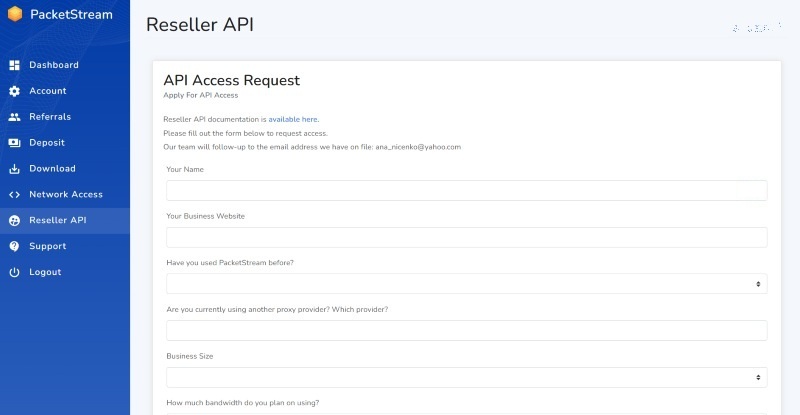
For entrepreneurial developers and business clients seeking to enter the proxy market independently, PacketStream offers a white-label Reseller API. This administrative framework enables third parties to market residential proxy bandwidth under their own proprietary brand identity, completely obscuring any association with PacketStream.
Through the Reseller API, operators can programmatically provision and manage subaccounts, allocate traffic quotas, monitor real-time consumption metrics, and track financial balances. Resellers acquire wholesale bandwidth at the standard platform rate of $1.00 per gigabyte, subject to a higher minimum purchase threshold of $500. Resellers retain full autonomy to establish their own retail pricing models, manage profit margins, and handle end-user customer support independently, while leveraging PacketStream’s underlying global P2P infrastructure.
Ease of Use and Documentation
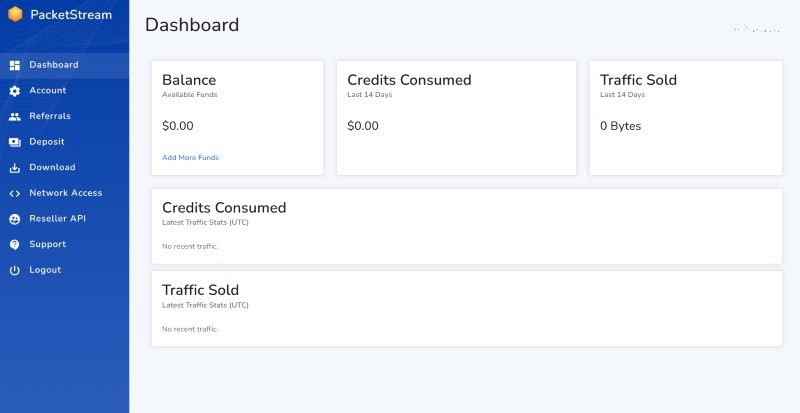
PacketStream distinguishes itself through a remarkably clean, minimalist user interface. The web-based dashboard prioritizes absolute simplicity, avoiding the visual clutter and convoluted navigation menus common among competing proxy dashboards. Essential account metrics, API credentials, and traffic allocation controls are organized logically along a sidebar menu against a clean, high-contrast visual backdrop.
However, usability is tempered by the complete absence of dedicated browser extensions. Users cannot quickly toggle proxy connections or modify routing parameters directly from a browser toolbar. Instead, developers must manually copy authentication endpoints, port numbers, and credentials directly from the web dashboard for integration into custom scripts or third-party automation tools.
For self-directed troubleshooting, PacketStream maintains a dedicated Resources portal featuring quickstart guides, gateway configuration references, integration tutorials, and runnable code repositories hosted on GitHub—resources that developers will find particularly pragmatic for rapid deployment.
Competitive Landscape: Weighing Alternatives
When measured against premier industry competitors, PacketStream’s strategic positioning becomes starkly defined by its financial efficiency versus functional minimalism.
- Bright Data: Widely regarded as the industry gold standard, Bright Data offers an expansive suite encompassing residential, static ISP, and datacenter proxies alongside advanced web scraping APIs, automated web unlockers, and browser automation tools. While vastly more powerful than PacketStream, Bright Data commands a premium price, with standard pay-as-you-go residential plans starting around $8.40 per gigabyte.
- Oxylabs: Operating a massive pool exceeding 100 million residential IPs, Oxylabs delivers superior connection speeds, hyper-local targeting capabilities, enterprise-grade web unblockers, and comprehensive API integrations. Like Bright Data, its advanced infrastructure carries a significantly higher financial cost, pricing residential traffic around $8.00 per gigabyte on baseline tiers.
- Webshare: Offering a balanced portfolio of residential, static ISP, and datacenter proxies backed by an extensive IP pool, Webshare bridges the gap between budget solutions and enterprise platforms. Its residential entry pricing starts at approximately $3.50 per gigabyte, scaling down to $1.40 per gigabyte for volume commitments, making it a formidable competitor to PacketStream for mid-sized operations.
Verdict and Final Analysis
PacketStream occupies a clear, highly specialized segment of the proxy market. By leveraging a decentralized peer-to-peer bandwidth-sharing architecture, the company successfully delivers functional residential proxies at an aggressive flat rate of $1.00 per gigabyte. For individual developers, budget-conscious researchers, and small businesses requiring basic rotating or sticky residential proxies for routine data scraping and web browsing tasks, the platform offers exceptional economic value.
Conversely, enterprise organizations, large-scale data collection operations, and users demanding hyper-granular geographic targeting, dedicated mobile proxies, high-speed datacenter infrastructure, or real-time customer support will likely find PacketStream’s offerings insufficient. Prospective buyers must carefully weigh the platform’s unbeatable per-gigabyte pricing against its mandatory $50 deposit threshold, lack of advanced targeting tools, and asynchronous support model before committing resources to the network.