The Vision Behind the Eyewear: Extending Galaxy AI Beyond the Smartphone
The unveiling of the Intelligent Eyewear at Galaxy Unpacked signals Samsung’s ambitious vision to permeate every aspect of daily life with its "Galaxy AI" capabilities. For years, Galaxy Unpacked events have served as the primary platform for Samsung to showcase its latest advancements in mobile technology, particularly its flagship smartphones and smartwatches. This year, the introduction of AI-powered glasses marks a pivotal moment, illustrating a shift towards a more ubiquitous and contextualized AI experience. By embedding Gemini’s intelligence directly into eyewear, Samsung aims to provide users with instant, hands-free access to a suite of AI functions, transforming how individuals interact with information, communicate, and navigate their surroundings. This move is not merely about launching a new product but about cementing Samsung’s leadership in the broader AI landscape, extending its reach far beyond the confines of a handheld device. The collaboration with Google on Gemini and Android XR, alongside the design expertise of Gentle Monster and Warby Parker, highlights a multi-faceted approach to addressing the complex challenges and opportunities within the smart eyewear category.
Aesthetic Appeal Meets Advanced Functionality: The Design Philosophy
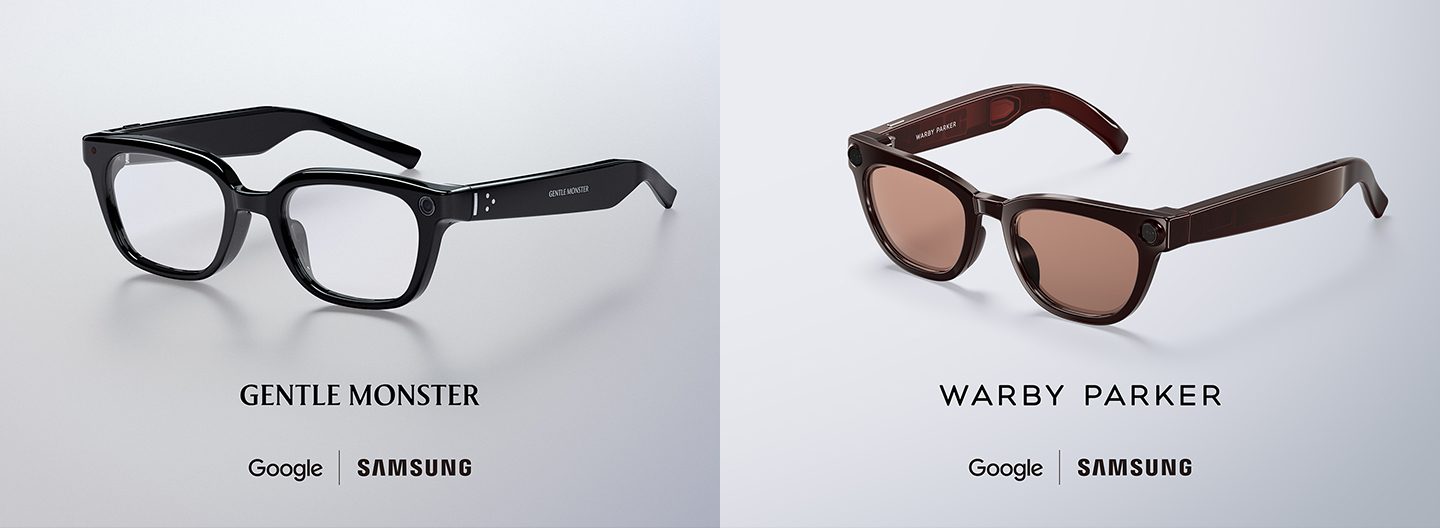
Understanding that widespread adoption of smart glasses hinges significantly on their aesthetic appeal and comfort, Samsung has placed a strong emphasis on design. The company introduced two distinct styles for its Intelligent Eyewear, each catering to different fashion sensibilities, a deliberate strategy to overcome the "geek chic" stigma that plagued earlier smart glass attempts.
The Gentle Monster version embodies a modern, fashion-forward aesthetic. It features a slim black frame with a refined and sophisticated shape, designed to appeal to users who prioritize high fashion and minimalist elegance. Gentle Monster, a South Korean eyewear brand celebrated for its bold and experimental designs, brings a distinctive edge to this collaboration. Their involvement suggests Samsung’s intent to position this particular model as a statement piece, seamlessly integrating advanced technology into contemporary fashion trends without compromising style.

Conversely, the Warby Parker model offers a more classic and accessible look. It sports a warm brown finish and a subtly upswept brow line, reflecting Warby Parker’s reputation for timeless, universally flattering designs. Warby Parker, an American eyewear company known for making stylish prescription glasses and sunglasses more affordable and widely available, lends its expertise in creating comfortable and approachable frames. This model is clearly aimed at a broader consumer base, those who prefer a more understated and traditional eyewear style but still desire the benefits of integrated AI.
This dual-pronged design strategy underscores a crucial lesson learned from the history of smart glasses: functionality alone is insufficient. For smart eyewear to move beyond niche markets, it must first and foremost be desirable as eyewear. By partnering with brands that have established credibility and distinct design languages, Samsung aims to bypass the common hurdle of form factor acceptance, positioning its Intelligent Eyewear as a natural extension of personal style rather than a conspicuous gadget.
The Technological Core: Powering the Intelligent Eyewear
Beneath their stylish exteriors, Samsung’s new AI glasses are packed with advanced technology, representing a collaborative engineering effort between industry titans. The core operational system is Android XR, Google’s extended reality platform, which is optimized for wearable devices and immersive experiences. Android XR provides a robust and flexible foundation, allowing for seamless integration of Google services and a growing ecosystem of XR applications. This choice of platform signifies Google’s continued commitment to an open XR environment, fostering innovation and interoperability across various hardware partners. The platform is crucial for enabling the complex AI functionalities and rich user interactions that these glasses promise.
At the heart of the hardware is Qualcomm’s Snapdragon AR1 Gen 1 chip. This processor is specifically engineered for lightweight eyewear, striking a delicate balance between powerful performance and ultra-low power consumption – a critical factor for all-day wearability. The Snapdragon AR1 Gen 1 is designed to handle on-device AI processing efficiently, enabling real-time responses to user commands and environmental inputs without relying solely on cloud processing, thus enhancing privacy and reducing latency. Its capabilities include advanced sensor fusion, high-resolution camera processing, and robust connectivity features, all essential for the diverse functions the glasses offer. Qualcomm’s expertise in mobile and XR chipsets makes it a natural partner, ensuring the hardware foundation is both powerful and energy-efficient.
Unprecedented Battery Life: A "Power Camp" Achievement
One of the most significant advancements highlighted by Samsung is the impressive battery performance. The Intelligent Eyewear offers up to 9 hours of continuous use on a single charge, with the accompanying charging case providing an additional 7 full charges, extending the total usage time significantly. This level of battery life is a game-changer for smart glasses, addressing a major pain point that has plagued previous iterations of wearable technology. Achieving this longevity required a dedicated, collaborative effort known as "Power Camp." This joint project, involving Samsung, Google, and Qualcomm, focused intensively on optimizing every aspect of the hardware and software stack for maximum energy efficiency. From chip architecture and display power management to software algorithms and AI processing loads, every component was meticulously fine-tuned to extend battery life without compromising performance. This "Power Camp" initiative exemplifies the depth of integration and shared commitment among the partners to deliver a truly practical and user-friendly device.
Gemini: The Brains Behind the Smart Functions
Google’s Gemini, the multimodal AI model, serves as the intelligence engine for Samsung’s new glasses. Gemini’s advanced capabilities allow the glasses to interpret and respond to the user’s visual and auditory environment through the built-in camera and microphones. This enables a wide array of hands-free AI functionalities designed to augment daily life:
- Real-time Translations: Users can engage in conversations with people speaking different languages, with Gemini providing instant audio translations directly through the glasses, breaking down communication barriers.
- Navigation Assistance: Overlaying directions directly onto the user’s field of view, the glasses can provide intuitive turn-by-turn navigation, eliminating the need to constantly check a phone screen.
- Information Retrieval and Summarization: Gemini can process information captured by the camera or accessed online, summarizing long messages, articles, or documents and reading them aloud, allowing users to stay informed without distraction.
- Messaging and Note-taking: Voice commands enable users to dictate messages, send emails, or take notes, which can then be automatically organized within Samsung Notes, streamlining productivity.
- Contextual Information: By analyzing what the user is seeing, Gemini can provide relevant information about objects, landmarks, or even people (with appropriate privacy safeguards and user consent), acting as a personal intelligent assistant.
- Whiteboard and Meeting Notes Capture: A particularly useful feature for professionals, the glasses can capture images of whiteboards or meeting notes, digitize them, and integrate them directly into productivity tools.
- Live Point-of-View Sharing: During video calls, users can share their real-time perspective, offering a more immersive and collaborative experience, whether for remote assistance, virtual tours, or simply sharing a moment.
Interaction with these features is primarily through intuitive voice commands, leveraging Gemini’s natural language processing. For enhanced control, gesture control is also available when paired with a Galaxy Watch 9, creating a truly integrated ecosystem experience. This multimodal interaction approach aims to make the technology feel natural and unobtrusive, seamlessly blending into the user’s routine.
Prioritizing Privacy: A Crucial Differentiator
In an era of increasing digital awareness and privacy concerns, Samsung has taken proactive steps to address potential anxieties associated with camera-equipped eyewear. A critical feature designed to build user trust is the LED indicator, which visibly illuminates when the camera is active, signaling to both the user and those around them that recording or image capture is in progress. Furthermore, wear detection technology automatically deactivates the camera if the glasses are removed or if the light sensor is covered, preventing unintended recordings.

This emphasis on privacy is a direct response to the market’s previous experiences, most notably the significant backlash faced by Meta’s Ray-Ban Stories over "always-on camera" concerns. Meta’s initial smart glasses, while integrating social sharing, struggled with public acceptance due to fears of covert recording. By implementing clear visual cues and automatic safeguards, Samsung aims to differentiate its offering and alleviate public apprehension. This thoughtful approach to privacy is not just a technical feature but a strategic move to foster broader social acceptance and encourage widespread adoption of its Intelligent Eyewear. It demonstrates an understanding that for wearable cameras to succeed, they must operate within clear ethical boundaries and transparent user controls.
Market Context and Competitive Landscape
The introduction of Samsung’s Intelligent Eyewear places it squarely in a nascent but rapidly evolving market. The smart glasses sector, while still in its early stages, is projected to see significant growth in the coming years, driven by advancements in AI, miniaturization of components, and increasing demand for hands-free computing. Market analysts predict the global smart glasses market to reach tens of billions of dollars by the end of the decade, with augmented reality (AR) applications being a primary driver.
Samsung’s entry intensifies competition with existing players like Meta, which has been iterating on its Ray-Ban Stories line, focusing on social connectivity and casual capture. However, Samsung’s offering, with its deep integration of Google’s Gemini AI and Android XR, positions itself differently. Unlike Meta’s social-first approach or Apple’s rumored high-end, immersive AR headset (like the Vision Pro), Samsung appears to be targeting a blend of practical utility, seamless AI integration, and everyday fashion. This strategy could make its glasses more appealing for daily use cases beyond entertainment or specialized professional tasks. Other competitors include companies like XREAL and Vuzix, which focus more on enterprise solutions or specific AR viewing experiences.
The "Fall 2026" launch target suggests that Samsung is not rushing to market but is taking its time to refine the product, build out the Android XR ecosystem, and ensure a robust launch. This timeframe also allows for further technological advancements and potential adjustments based on evolving market demands and competitor moves. While pricing details remain undisclosed, it will be a crucial factor in determining its market penetration, balancing advanced features with accessibility.
Strategic Partnerships: The Foundation for Success
The success of Samsung’s Intelligent Eyewear is intrinsically linked to its robust network of strategic partnerships:
- Samsung and Google: This collaboration extends beyond Gemini and Android XR. It signifies a deeper alignment in their respective visions for AI and extended reality, creating a powerful synergy between Samsung’s hardware prowess and Google’s software and AI leadership. This partnership ensures a cohesive user experience and access to a vast ecosystem of applications and services.
- Samsung and Qualcomm: Qualcomm’s Snapdragon AR1 Gen 1 chip is a foundational element, providing the necessary processing power and efficiency for a compact, wearable device. This hardware-software optimization through "Power Camp" is a testament to the close working relationship aimed at pushing the boundaries of what’s possible in wearable tech.
- Samsung with Gentle Monster and Warby Parker: These partnerships are critical for overcoming the aesthetic barrier to smart glasses adoption. By collaborating with established fashion brands, Samsung directly addresses consumer concerns about design and wearability, positioning its product as a desirable fashion accessory rather than just a tech gadget. This strategy aims to normalize smart eyewear as a mainstream item.
These multi-faceted partnerships underscore the complexity of bringing advanced smart glasses to market. No single company possesses all the necessary expertise in hardware, software, AI, and fashion. By pooling resources and knowledge, Samsung and its partners are attempting to create a comprehensive and compelling offering that can capture a significant share of the emerging smart eyewear market.
Implications and Future Outlook
Samsung’s entry into the AI glasses race with Gemini-powered Intelligent Eyewear carries significant implications for the future of personal technology. It signals a strong belief that AI-infused wearables will become a critical interface for interacting with the digital world, moving computing closer to our natural senses.
For Users: These glasses promise to redefine hands-free computing, offering a discreet yet powerful assistant for everyday tasks. From enhancing productivity to simplifying travel and communication, the potential for augmented reality and real-time AI assistance is vast. However, widespread adoption will depend on factors like price, comfort, battery life, and crucially, social acceptance. The discreet design and privacy features are key steps in addressing these.
For the Wearables Market: Samsung’s move validates the smart glasses category and is likely to spur further innovation and competition. It could accelerate the development of more sophisticated AR experiences and encourage other tech giants to double down on their own eyewear projects. This could lead to a rapid evolution of the form factor, functionality, and overall user experience in the coming years.
For Samsung’s Ecosystem: The Intelligent Eyewear is a natural extension of Samsung’s Galaxy ecosystem, aiming to create a seamless and interconnected experience across phones, watches, and now, glasses. This deep integration further strengthens Samsung’s position as a comprehensive technology provider, offering a unified user experience powered by Galaxy AI.
While the "Fall 2026" launch is still some time away, the announcement at Galaxy Unpacked firmly establishes Samsung’s intent to be a dominant player in the future of wearable AI. The success of these glasses will ultimately hinge on their ability to deliver on the promise of truly intelligent, unobtrusive, and socially acceptable assistance, transforming how we perceive and interact with the world around us. The journey from niche gadget to mainstream accessory for smart glasses has been long and fraught with challenges, but Samsung, armed with powerful partnerships and a clear vision for integrated AI, appears well-positioned to finally make that leap.