Tapping Activate on Tesla’s Emergency Drive Away feature can trigger a $539 service bill even if the vehicle never leaves the Supercharger stall.

Tesla owners who mistakenly trigger the “Emergency Drive Away” feature in their vehicles are discovering that the cost of an error is significant, regardless of whether the vehicle actually moves from its charging position. Recent reports from the Tesla community, including accounts shared by industry observers on X, have highlighted a critical, potentially costly misunderstanding regarding the software feature introduced in the 2026.38.3 update.
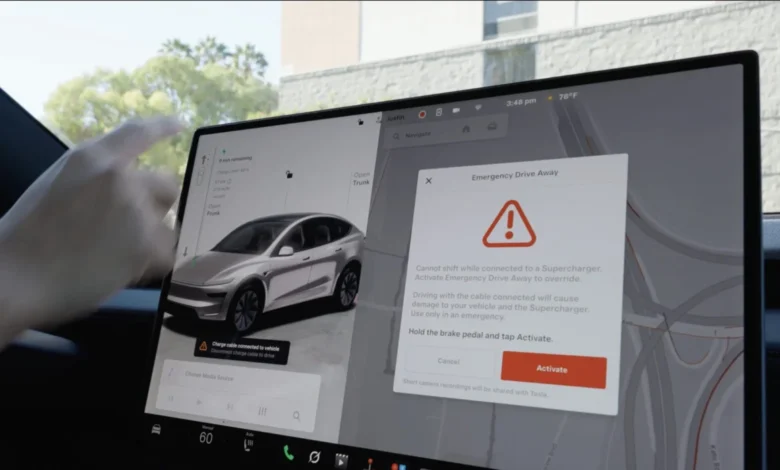
The feature, designed to allow owners to detach and move their vehicle in urgent situations where a standard disconnection process is not possible, carries a stringent diagnostic requirement. Evidence suggests that once the "Activate" prompt is engaged, the vehicle’s onboard computer registers a fault code—BMS_a228_EmergencyDriveAwayServiceRequired—that locks the system and necessitates a professional inspection at a Tesla Service Center.
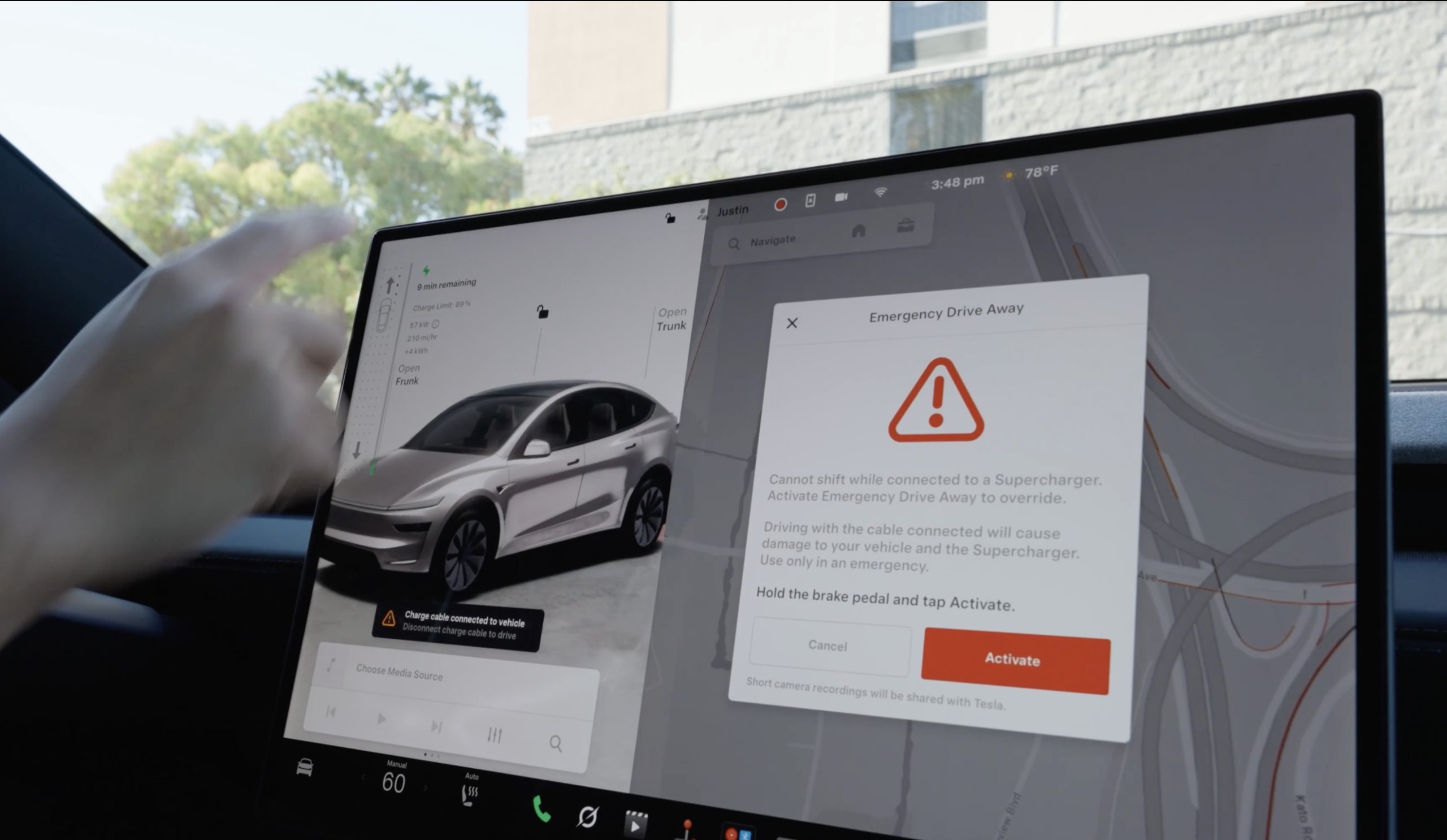
The Mechanics of the Emergency Drive Away Feature
Launched on October 1, 2026, the Emergency Drive Away function was intended to address rare, high-stakes scenarios. According to Tesla’s documentation, the process requires the driver to shift the vehicle into "Drive" while the charging cable remains connected, hold the brake pedal, and then manually select "Activate" on the center touchscreen. The system explicitly warns the driver that proceeding will likely cause damage to both the vehicle’s charge port and the Supercharger hardware itself. Furthermore, the prompt notifies the user that the vehicle’s external cameras will capture and store footage, which is then transmitted to Tesla for safety and liability review.
The engineering rationale behind this, according to industry experts, is one of absolute caution. The high-voltage connection between a Supercharger and a vehicle is a critical safety interface. By engaging the "Activate" button, the vehicle’s Battery Management System (BMS) assumes that the port’s physical latching mechanism and electrical pins have been subjected to significant mechanical stress. To ensure the integrity of the high-voltage system, Tesla has programmed the vehicle to disable certain features and mandate an inspection.
The Financial Cost of a Digital Misclick
For many users, the "Emergency Drive Away" button has become a cautionary tale of user interface design. On October 28, 2026, a report emerged detailing a situation where a driver, having realized they were still plugged in just moments after pressing the "Activate" button, refrained from moving the car. Despite the vehicle remaining stationary, the internal software had already locked the system.
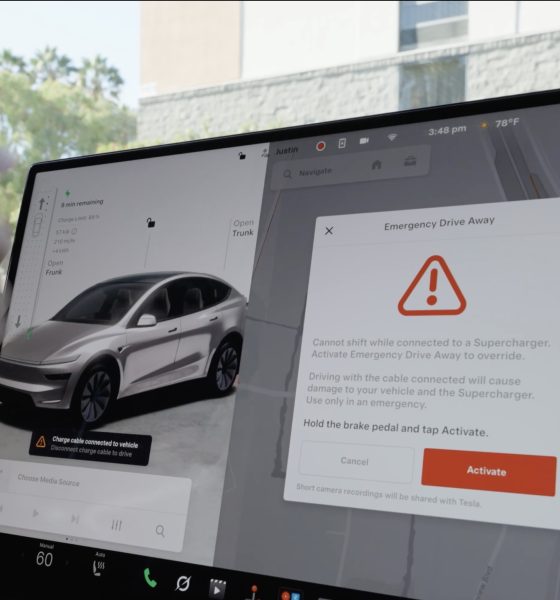
The owner was met with a persistent red alert on the touchscreen: "Emergency Drive Away has been activated." Below this, a secondary message stated, "Service is required." Upon visiting a service center, the owner was informed that the alert could not be cleared remotely or via a simple software reboot. The mandatory inspection of the charge port, combined with the administrative cost of clearing the BMS_a228 fault code, resulted in an invoice of $539.
While Tesla has not officially commented on the specific pricing structure for this service, the $539 figure reflects the labor hours required for a technician to inspect the physical charge port assembly, verify the continuity of the pins, and perform a diagnostic reset. For many, this represents a "cautionary penalty" for a feature that is, by design, intended only for extreme circumstances.
Chronology of Implementation and Real-World Usage
The introduction of the feature followed months of pressure for more flexible charging solutions. However, the transition from concept to real-world application has been fraught with confusion.

- October 1, 2026: Tesla releases software update 2026.38.3, officially introducing the Emergency Drive Away feature to the U.S. fleet.
- October 2026: Reports begin to surface of the feature being utilized in non-emergency situations, largely due to user error or lack of familiarity with the new prompt sequence.
- Late October 2026: A notable incident occurred in Austin, Texas, during a high-traffic event where a driver inadvertently triggered the system and proceeded to drive away, dragging the Supercharger cable. The event served as a stark illustration of the consequences—both mechanical and financial—of failing to heed the system’s warnings.
- October 28–30, 2026: Following the viral circulation of the $539 service bill, Tesla owners began expressing concerns about the lack of a "confirm" or "are you sure" secondary layer, which might prevent accidental activations.
Implications for Tesla’s Service Infrastructure
The decision to treat the "Activate" button as an irreversible trigger for service is consistent with Tesla’s broader philosophy regarding the Supercharger network. Tesla Charging has previously stated that repairs for damaged Supercharger stalls can cost upwards of $25,000, depending on the severity of the damage to the pedestal and the cooling systems within the cable.
By mandating an inspection as soon as the button is pressed, Tesla is effectively outsourcing the risk assessment to its service teams. This approach serves a dual purpose: it mitigates the liability of an owner driving off with a compromised charge port, and it acts as a significant deterrent against using the button for convenience rather than necessity.
However, the policy has sparked debate among consumer advocates. The argument is that if a vehicle has not moved, the "mechanical stress" on the port is effectively zero. Charging customers over $500 to clear a software flag for a non-event is viewed by some as an overly punitive measure. Yet, from a legal and engineering standpoint, Tesla’s position remains firm: the software cannot differentiate between a "near miss" and a "gentle tug," and thus must treat every activation as a potential safety incident.

Broader Context: The Evolution of Supercharging
This incident occurs against a backdrop of massive growth for the Tesla ecosystem. The company continues to refine its software to accommodate an increasingly diverse user base, including non-Tesla electric vehicle owners who are now gaining access to the Supercharger network. As the network scales, the potential for user error increases, necessitating more robust safety protocols.
While the "Emergency Drive Away" feature is a niche utility, it sits at the intersection of three major Tesla initiatives:
- Software-Defined Maintenance: The move toward having the car monitor its own health and proactively flag issues for service.
- Network Resilience: Protecting the billions of dollars of hardware invested in the Supercharger network from preventable damage.
- Liability Management: Ensuring that Tesla maintains a clear digital paper trail regarding the physical state of its charging hardware and the vehicles that connect to it.
Recommendations for Owners
For the average Tesla owner, the lesson is clear: the Emergency Drive Away interface should be treated as a "break-glass-in-case-of-emergency" measure. If a driver shifts out of Park while connected by mistake, the recommended protocol is to immediately shift back into Park and disconnect the cable using the standard, authorized methods—either through the Tesla mobile app, the button on the charge handle, or the touchscreen interface.
Should a driver accidentally trigger the activation, they are advised to document the situation, maintain the vehicle’s current position if possible, and contact Tesla support immediately. While the $539 fee appears to be the current standard for clearing the associated error code, the primary goal for any owner should be to avoid the activation entirely.
As Tesla continues to push updates to its fleet, it remains to be seen whether the company will introduce a more nuanced software response that can detect if the cable was successfully disconnected without force, potentially allowing for a "reset" that does not require a physical service center visit. Until then, the "Emergency Drive Away" button remains one of the most expensive user interface elements in the modern automotive world.