International Law Enforcement Coalition Seizes Core Infrastructure of Notorious Bulletproof Hosting Service Virtualine

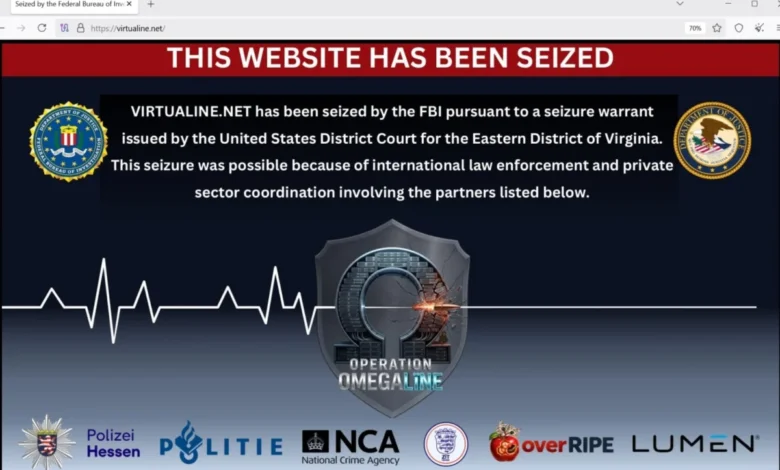
In a sweeping multinational cyber policing operation involving law enforcement agencies from the United States, Europe, and the United Kingdom, authorities have dismantled the primary infrastructure of Virtualine, a prominent "bulletproof" hosting provider. Advertised extensively across underground cybercrime forums, Virtualine served as a digital sanctuary for a vast array of malicious operations, ranging from ransomware deployments and sophisticated phishing campaigns to mass data theft and illicit marketplaces. The coordinated takedown highlights an escalating global effort to dismantle the foundational infrastructure that underpins the modern cybercrime economy.
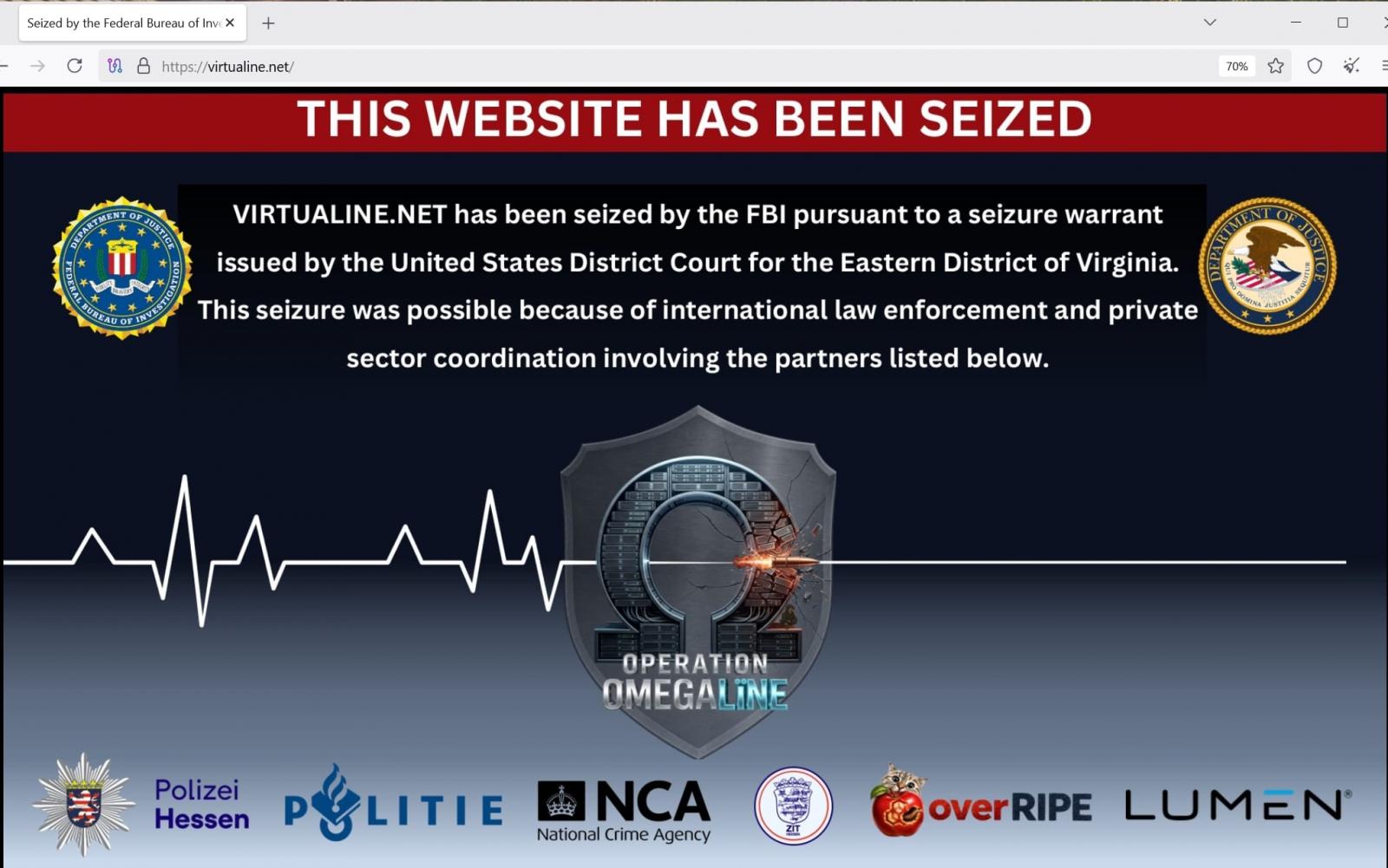
The United States Department of Justice (DOJ) confirmed that the Federal Bureau of Investigation (FBI) successfully seized the service’s primary domain, virtualine[.net]. This decisive action was the culmination of a rigorous, multi-jurisdictional investigation that brought together the expertise of Germany’s Polizei Hessen, the Netherlands’ Politie Midden-Nederland, and the U.K.’s National Crime Agency (NCA). Crucial operational support was also provided by private-sector cybersecurity partners, including OverRIPE, Lumen, Chainalysis, TRM Labs, and Silent Push.
Operating under a rotating constellation of alternative brand names—including Secury, Massgod, Spamhouse, Lanedo, and Omegatech—Virtualine built its business model on promises of absolute impunity. The company explicitly marketed its infrastructure to cybercriminals with the assurance that it would actively shield its clientele from legal complaints, DMCA takedown requests, and inquiries from law enforcement and regulatory authorities. According to the DOJ, Virtualine overtly permitted "illegal/black hat activities," explicitly accommodating everything from port scanning and carding to spamming and botnet command-and-control operations.
The Anatomy of a Bulletproof Infrastructure and Financial Complicity

Bulletproof hosting services represent a critical pillar of the global cybercrime underworld. Unlike mainstream web hosting providers that promptly suspend accounts upon receiving abuse reports or evidence of illegal activity, bulletproof hosts deliberately ignore complaints, relocate servers across lenient jurisdictions, and provide robust anonymity to their criminal tenants. For years, Virtualine excelled in this capacity, acting as the invisible backbone for threat actors who required stable, uninterrupted hosting to execute high-stakes cyberattacks.
Beyond merely ignoring abuse complaints, Virtualine functioned as an active financial intermediary for the criminal underground. By accepting direct Bitcoin payments through unhosted wallet addresses, the platform allowed malicious actors to bypass the rigorous Know Your Customer (KYC) protocols and compliance programs enforced by centralized cryptocurrency exchanges. Blockchain intelligence firm Chainalysis revealed that this payment architecture effectively functioned as a money-laundering mechanism, obfuscating the illicit origins of funds stolen through diverse cybercrimes.
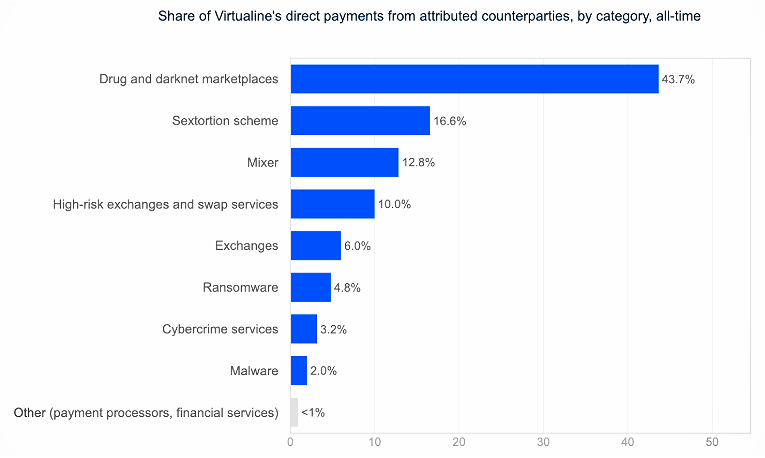
Detailed financial and forensic analysis conducted by blockchain analytics firms shed light on the sheer scale of illicit capital flowing through Virtualine’s infrastructure. According to a comprehensive report published by TRM Labs, ransomware operations accounted for approximately 5% of Virtualine’s total financial inflows. However, the largest single revenue stream—comprising roughly 44% of the platform’s funds—was traced directly to a massive Russian-language drug marketplace. Additional significant sources of revenue included a large-scale sextortion scheme, cryptocurrency mixers, and ongoing transactional relationships with the developers of the StealC infostealer throughout the year.
The Netherlands National Police (Politie) revealed the physical dimensions of the takedown, reporting that dozens of physical servers were seized during simultaneous raids in Limburg, Netherlands. These raids effectively took hundreds of virtual servers offline. Furthermore, Dutch investigators reported recovering extensive data pertaining to more than 3,000 Virtualine customers, signaling that individual identification and subsequent legal actions against the platform’s client base are already actively underway.
Chronology of Operations and Expanding Scope of Allegations
While Virtualine maintained a strict self-imposed marketing boundary prohibiting child sexual abuse material (CSAM), investigative findings paint a deeply concerning picture of complicity. Law enforcement authorities disclosed that the provider knowingly hosted an online forum dedicated to the promotion of child abuse material. Despite receiving repeated, urgent notices from international law enforcement agencies, the National Center for Missing and Exploited Children (NCMEC), and a victim’s legal counsel, Virtualine operators systematically ignored the warnings.
According to court and investigative documents, as legal and public pressure against the abusive forum escalated, Virtualine administrators actively assisted the forum’s operators in migrating and establishing a brand-new website. The DOJ explicitly noted that Virtualine continued to host this successor website up until the moment of the takedown, noting that the platform had already received fresh abuse complaints regarding sexually explicit images of children on the newly established domain.
In response to the international seizure and the gravity of the allegations, the administrator of Virtualine published an open letter on an alternate domain, virtualine[.]org—a move quickly documented and analyzed by cybersecurity intelligence firm Silent Push. In the open statement, the operator vehemently rejected allegations regarding complicity in child exploitation, stating that while the service’s broader facilitation of illicit activities "deserves a fair investigation," they personally regarded the "sexual exploitation of children as a crime against humanity."
Despite these defensive declarations, researchers and intelligence analysts note that Virtualine’s network infrastructure has been severely crippled. Network telemetry indicates that the provider’s network prefixes currently exhibit extremely low routing visibility, rendering the vast majority of its remaining servers and hosted services entirely unreachable.
Broader Industry Implications and the Evolving Cyberthreat Landscape
The dismantling of Virtualine serves as a watershed moment in the ongoing war against cybercrime enablement, underscoring the indispensable value of cross-border public-private partnerships. For years, cybercriminals operated under the assumption that decentralized operations and privacy-centric cryptocurrencies offered a permanent shield against accountability. The collaborative integration of traditional law enforcement investigative techniques with advanced blockchain forensics demonstrates that the digital footprints left by bulletproof hosting providers are increasingly traceable and actionable.
The timing of this operation also intersects with broader industry insights regarding the resilience of modern corporate and enterprise cybersecurity defenses. Recent empirical data, such as the findings published in the Blue Report, highlights a persistent vulnerability in network security: once malicious actors successfully compromise valid user credentials, traditional prevention mechanisms struggle to halt lateral movement, blocking only a minor fraction of subsequent attacker behaviors. In an environment where initial access can be easily monetized and leveraged, the disruption of infrastructure providers like Virtualine is vital, as it strikes directly at the operational staging grounds where threat actors orchestrate their campaigns before executing enterprise-wide intrusions.
As international law enforcement agencies continue parsing the terabytes of data seized from the physical servers in Europe and the digital infrastructure in the United States, the ripple effects across the cybercrime underground will likely be profound. The loss of a reliable, multi-purpose bulletproof host forces threat actors to scramble for alternative infrastructure, frequently exposing operational security flaws in the process. For the cybersecurity community and global law enforcement coalitions alike, the Virtualine seizure marks a significant strategic victory, signaling to the architects of underground hosting that geographical boundaries and pseudo-anonymous cryptocurrency transactions are no longer impenetrable armor against coordinated global justice.
Related posts: