Python developers frequently encounter context managers in the form of the "with open(filename) as f" pattern, a syntax that has become synonymous with basic file handling. However, viewing the with statement merely as a tool for closing files ignores its primary architectural purpose: the enforcement of a guaranteed lifecycle boundary. In complex software systems, particularly those involved in machine learning pipelines and large-scale data processing, the difference between a robust application and one that leaks resources is often found in how developers manage the setup and teardown of non-file state.
When an evaluation script performs housekeeping—such as configuring environment variables, establishing temporary directories, or adjusting logging verbosity—it creates a set of implicit dependencies. If the main logic fails, these dependencies often persist in an inconsistent state. This "zombie" state can lead to subsequent processing errors, such as stale cache paths or suppressed logs, which are notoriously difficult to debug. By transitioning from manual teardown procedures to formal context managers, developers can ensure that cleanup logic executes reliably regardless of whether the process terminates normally or encounters a runtime exception.
The Anatomy of the Context Management Protocol
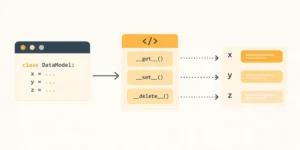
The Python language specification defines the context management protocol through two magic methods: enter and exit. When a block of code is wrapped in a with statement, Python invokes enter at the start and ensures that exit is called at the end, even if an exception propagates through the block.
This mechanism provides a deterministic way to handle errors. The exit method receives three arguments—the exception type, value, and traceback—allowing the manager to inspect the failure and decide whether to suppress it. A critical, often overlooked detail is that returning a true value from exit suppresses the exception entirely, which can lead to silent failures if not implemented with caution. In professional production environments, the standard practice is to allow exceptions to propagate, ensuring that the calling code remains aware of the underlying issue while still benefiting from the automated cleanup of the context manager.
Automating Resource Lifecycle: The Case of Timers and Logging
Instrumentation is a frequent requirement in performance-critical applications, yet developers often write brittle timing code that relies on sequential execution. By encapsulating a stopwatch within a class that implements the context management protocol, the timing logic becomes decoupled from the business logic.
For instance, a custom Timer class that captures the start time in enter and calculates the delta in exit guarantees that performance data is recorded even if the enclosed function crashes. This is particularly valuable when auditing batch jobs where understanding the duration of a failed process is just as important as measuring a successful one.
Similarly, the use of the @contextmanager decorator from the contextlib module simplifies the creation of these tools for state-based cleanup. Consider the common scenario of adjusting global logging levels for a third-party library to prevent console flooding. By utilizing a generator function decorated with @contextmanager, developers can encapsulate the "save-modify-restore" logic. The use of a try…finally block within the generator ensures that the original logging level is restored regardless of the execution outcome, providing a clean and readable alternative to scattered configuration calls.
Managing Temporary Artifacts and Environment States
In modern machine learning engineering, the reliance on temporary files for data extraction and model caching is significant. The standard library’s tempfile.TemporaryDirectory provides a robust solution for these tasks. Unlike a manually created directory, which remains on the disk if a script fails, a temporary directory managed via a context manager is automatically purged when the block exits.
This approach addresses several data integrity risks:
- Uniqueness: Each run receives a distinct directory, preventing cross-pollination of artifacts.
- Cleanup: Even in the event of an unhandled exception or a system crash that halts the script, the operating system’s interaction with the context manager facilitates the removal of transient data.
- Reproducibility: By ensuring that the environment is "clean" before and after execution, researchers reduce the likelihood of intermittent errors caused by legacy state.
The same principles apply to the manipulation of environment variables or configuration dictionaries. Using tools like unittest.mock.patch.dict—which, despite its origin in testing, is perfectly suited for production configuration management—allows developers to safely mutate global state. By localizing these changes, engineers can prevent "configuration drift," where a change made for one specific task accidentally impacts the entire runtime environment.
Orchestrating Complex Dependencies with ExitStack
In scenarios where the number of resources—such as multiple open file handles or active network connections—is not known until runtime, simple nested with statements become unmanageable. This is where ExitStack serves as a powerful utility for programmatic resource management.
ExitStack allows developers to dynamically register context managers and cleanup functions at runtime. When the stack unwinds, it executes the registered cleanup actions in the reverse order of their registration, effectively mimicking a chain of nested with blocks. This is essential for operations such as merging thousands of data shards where each shard must be closed individually. By using ExitStack, developers avoid the "callback hell" of manual try…finally blocks, ensuring that every handle is closed properly even if one of the earlier handles triggers an error during the closing sequence.
Fact-Based Analysis: The Implications for Stability
The transition to context-managed resource handling is more than a stylistic preference; it is a fundamental shift toward defensive programming. Data from long-running production systems suggests that a significant percentage of "stale state" bugs stem from manual cleanup code that is skipped during exception handling.
For instance, consider a production pipeline processing 3GB of extracted model data. If the script fails halfway through, a standard procedural approach might leave the files on the server. Over time, these orphaned files consume storage, potentially triggering disk-full errors that halt subsequent jobs. By utilizing automated cleanup, the system maintains a constant, predictable footprint on the underlying infrastructure.
Furthermore, the readability benefits are substantial. When a developer can look at a block of code and immediately identify the lifecycle of the resources involved, the cognitive load required to maintain the system decreases. This transparency is vital for large teams where codebases are shared and modified by multiple engineers.
Conclusion: Establishing a Standard for Cleanup
The architectural pattern of the context manager is one of the most effective tools in the Python ecosystem for ensuring system stability. By adopting a formal approach to resource management—choosing between class-based managers, @contextmanager generators, and ExitStack based on the specific requirements of the state being managed—engineers can build systems that are significantly more resilient to failures.
The ultimate goal is to move cleanup logic out of the "bottom of the file" and into the "boundary of the block." This ensures that the code responsible for managing a resource is physically tied to the resource’s usage, making the system’s behavior predictable even when the unexpected occurs. In the context of AI engineering and data science, where long-running processes and high resource consumption are the norm, this level of rigor is not just recommended—it is essential for maintaining production-grade reliability. As developers continue to build increasingly complex pipelines, the ability to define clean, safe, and automated boundaries will remain a cornerstone of effective software engineering.