Critical Security Vulnerability in Zimbra Collaboration Suite Exploited by Threat Actors to Facilitate Data Exfiltration and Remote Access

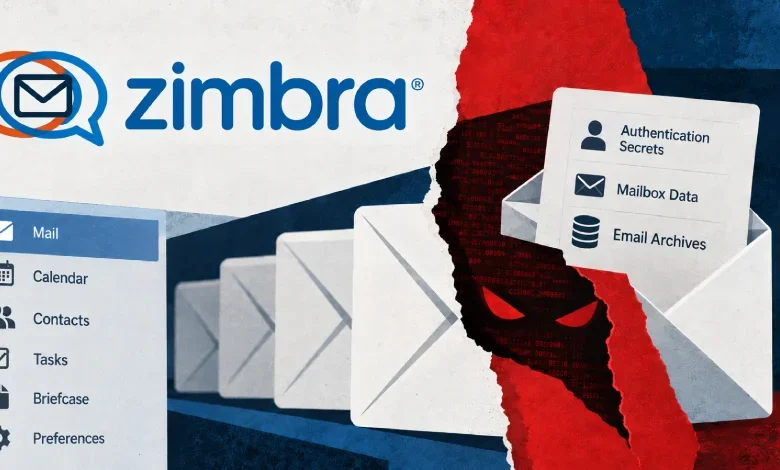
The cybersecurity landscape has been shaken by the emergence of a sophisticated exploitation campaign targeting the Zimbra Collaboration Suite (ZCS), a widely utilized email and collaboration platform. Recent findings from the Microsoft Security Research team have confirmed that threat actors have been actively weaponizing a critical operating system command injection vulnerability, identified as CVE-2026-73570, to gain unauthorized entry into enterprise mail servers. With a CVSS score of 8.9, this vulnerability represents a severe risk, allowing unauthenticated attackers to execute arbitrary code on exposed servers, deploy persistent web shells, and exfiltrate sensitive mailbox data.
The Anatomy of the Attack: CVE-2026-73570
The vulnerability stems from an insecure implementation within the Simple Network Management Protocol (SNMP) notification feature of the Zimbra Collaboration Suite. Specifically, the flaw exists when the optional zimbra-snmp package is installed and SNMP notifications are enabled. An attacker can trigger the vulnerability by sending a specially crafted SMTP request to an internet-facing Zimbra server. Because the exploit does not require authentication or user interaction, it provides an ideal entry point for opportunistic threat actors looking to compromise organizational communications.
Upon successfully injecting commands into the underlying operating system, attackers typically elevate their privileges to the "zimbra" service account. From this position, they initiate a multi-stage attack chain. This involves the deployment of JSP web shells within the Jetty and mailboxd application environments, which grant the actors persistent, remote-access capabilities. Microsoft’s telemetry indicates that the threat actors utilize these shells for a variety of malicious activities, including memory-backed execution, which helps them evade traditional disk-based forensic detection methods.

A Chronology of the Exploitation Campaign
The timeline surrounding this incident underscores the rapid nature of modern cyberattacks, where the window between patch release and active exploitation continues to narrow.
- July 20, 2026: Zimbra releases version 10.1.20, containing the critical security patch for CVE-2026-73570.
- July 28 – August 7, 2026: Microsoft identifies distinct out-of-band scanning activity. These probes were designed to confirm the presence of the injection path without immediately deploying malicious payloads, suggesting a phase of reconnaissance and target validation.
- August 13, 2026: The vulnerability is publicly disclosed, significantly increasing the risk of mass exploitation by less sophisticated actors.
- August 2026: The Polish Computer Emergency Response Team (CERT Polska) issues an urgent warning to users, providing specific guidance on detecting unauthorized service restarts and suspicious files in temporary and "webapps" directories.
- August 24, 2026: The U.S. Cybersecurity and Infrastructure Security Agency (CISA) adds the flaw to its Known Exploited Vulnerabilities (KEV) catalog, mandating that federal agencies apply the necessary patches.
During the interval between the patch release and the public disclosure, threat actors were observed refining their techniques. They transitioned from basic reconnaissance to the deployment of complex, Go-based malware and custom remote-access agents.
Sophisticated Persistence and Exfiltration Techniques
One of the most concerning aspects of this campaign is the attacker’s ability to maintain a long-term presence on compromised systems. Microsoft observed the use of "Zimdown2," a lightweight shell downloader that installs the "Zimclient2" remote-access agent. This agent provides attackers with an interactive shell, bidirectional file transfer capabilities, and SOCKS5 proxying, effectively turning the compromised Zimbra server into a pivot point for deeper network penetration.
To ensure persistence, the actors employed a variety of standard and stealthy methods, including modifying systemd services, creating cron jobs, and manipulating shell startup files. In some instances, the attackers went as far as creating new local user accounts or adding unauthorized SSH keys to the server to ensure they could regain access even if their primary web shells were discovered and removed.

The primary objective of this campaign appears to be the theft of intellectual property and sensitive communications. The attackers used custom Go-based executables to extract authentication credentials from the "/opt/zimbra/conf/localconfig.xml" file. These credentials were then used to access the Zimbra MySQL and LDAP databases. By querying these databases, the attackers were able to harvest configuration artifacts, email metadata, and the contents of entire mailboxes.
In a notable observation, Microsoft reported that at least one group attempted to use the legitimate tool "AzCopy" to exfiltrate archived data to an Azure Blob storage account. While evidence does not definitively confirm whether the transfer reached completion, the use of cloud-native tools for data exfiltration represents a growing trend in bypassing traditional network egress filtering.
Broader Implications for Enterprise Security
The exploitation of CVE-2026-73570 highlights a systemic challenge for organizations relying on legacy or complex collaboration software. Email servers are high-value targets because they act as a central repository for an organization’s internal and external communications, proprietary information, and authentication tokens.
The fact that this attack was successful even after a patch was available reinforces the necessity of aggressive patch management cycles. Many organizations face delays in updating software due to concerns regarding service downtime or compatibility issues. However, the speed at which threat actors identified and weaponized this flaw demonstrates that delayed patching is no longer a viable security posture.

Furthermore, the use of memory-resident malware and the temporary modification of directory permissions during the deployment phase show a high level of operational security (OPSEC) on the part of the attackers. These techniques are designed to defeat basic file-integrity monitoring and signature-based antivirus solutions, requiring organizations to adopt more advanced Endpoint Detection and Response (EDR) and Extended Detection and Response (XDR) tools.
Recommended Mitigation and Defense
Organizations that have not yet updated their Zimbra infrastructure are at immediate risk. The primary recommendation remains the immediate application of version 10.1.20 or later. For environments where immediate patching is not possible due to operational constraints, security professionals are advised to implement the following temporary mitigations:
- Uninstall/Disable SNMP: Remove the
zimbra-snmppackage entirely or disable SNMP notifications within the ZCS administration console. - Network Segmentation: Restrict access to both SNMP and SMTP ports to known, trusted internal hosts. Internet-facing exposure of these ports should be minimized or shielded behind a Web Application Firewall (WAF) configured with specific rules to detect command injection patterns.
- Credential Rotation: Assuming a worst-case scenario, any organization that has not patched should assume their Zimbra service account credentials have been compromised. All LDAP, MySQL, and administrative passwords must be rotated immediately.
- Forensic Auditing: Administrators should review
/var/log/zimbra.logfor anomalous service restarts and conduct a thorough audit of the/opt/zimbra/jetty/webapps/directory for any unexpected JSP files.
The incident serves as a stark reminder of the "cat-and-mouse" game between software vendors and threat actors. While Zimbra has provided the necessary fix, the responsibility for securing the deployment ultimately rests with the administrators. As threat actors continue to evolve their tactics to favor stealth, persistence, and the use of legitimate administrative tools for malicious ends, defensive strategies must similarly evolve to prioritize visibility, rapid response, and a defense-in-depth approach.
Related posts: