Hyundai R&D Chief Defends Solid-State EV Batteries Despite Soaring Costs and Manufacturing Hurdles

The automotive industry remains locked in a high-stakes race to commercialize solid-state battery technology, hailed widely as the potential holy grail of electric vehicle engineering. Even as conventional lithium-ion chemistry continues to achieve unprecedented milestones—such as advanced charging systems capable of replenishing a battery from 10% to 97% in under nine minutes—major automakers and agile startups alike are continuing to pour billions of dollars into alternative solid-state architectures.
Speaking to reporters, Manfred Harrer, the head of research and development at Hyundai Motor Group, delivered an unequivocal defense of this ongoing pursuit. Addressing skepticism surrounding the timeline and economic feasibility of solid-state cells, Harrer emphasized that established automotive players cannot afford to abandon the technology.
"You cannot give up right now on that. That’s clear," Harrer told journalists. "You must be in the game."
The Core Technology: Liquid versus Solid
To understand why automakers are spending heavily on solid-state research, one must examine the fundamental limitations of standard lithium-ion batteries. Traditional EV batteries rely on liquid electrolytes to facilitate the movement of lithium ions back and forth between the cell’s anode and cathode during charging and discharging cycles. While effective, liquid electrolytes present inherent engineering challenges, including thermal management issues, susceptibility to dendrite formation that can cause short circuits, and volumetric constraints that limit energy density.
Solid-state batteries replace this volatile liquid solution with a solid material, typically derived from ceramics, polymers, or sulfides. This fundamental shift offers the promise of dramatically higher energy density, which translates into smaller, lighter battery packs capable of delivering significantly extended driving ranges. Furthermore, solid-state designs offer superior thermal stability, drastically reducing the risk of thermal runaway and fires, while theoretically enabling much faster charging times.
However, moving from laboratory-scale chemistry to automotive-scale manufacturing has proven exceptionally difficult. To date, no major manufacturer has successfully mass-produced solid-state battery cells for a commercially available passenger vehicle.
A Long-Term Horizon for Production
While enthusiasm within boardrooms remains high, industry timelines for mass-market adoption are conservative. Harrer noted that within the next five years, the industry will likely see small-volume, high-end "halo" vehicles equipped with solid-state battery packs. This projection aligns closely with milestones set by specialized developers like QuantumScape, which anticipates supplying high-performance vehicle applications by the end of the decade.
Despite these coming luxury applications, mass-market availability remains a distant prospect. According to Hyundai’s R&D chief, raw material costs will remain prohibitively high for many years as supply chains and manufacturing techniques slowly scale up.
"You can solve, in the end, everything, but it comes with cost, tremendous cost," Harrer explained, noting that he does not believe the industry can resolve the raw material cost crisis within the next half-decade.
Industry-Wide Investment and Strategic Partnerships
Hyundai is actively pursuing a dual-track strategy, developing solid-state technology both internally and through strategic external partnerships, such as its collaboration with solid-state specialist Solid Power. This collaborative approach mirrors the broader automotive landscape, where nearly every major global manufacturer has aligned with specialized technology developers.
Toyota, an early pioneer in the field, has spent more than two decades researching solid-state chemistry and aims to bring production-ready cells to market within the next few years. Volkswagen Group remains the primary financial backer of QuantumScape, while BMW has partnered with Solid Power. Meanwhile, traditional Detroit heavyweights General Motors and Ford, alongside Asian giants Honda and Nissan, maintain dedicated internal R&D programs focused on solid-state integration and silicon anode advancements.
Several high-profile demonstrations have showcased the technology’s potential in controlled environments. QuantumScape cells have been integrated into custom motorcycle prototypes like a modified Ducati, and Mercedes-Benz has tested solid-state battery tech developed by Factorial, achieving real-world driving ranges exceeding 700 miles on a single charge. Yet, despite these engineering milestones, consumer-ready vehicles featuring solid-state packs remain unavailable on dealership lots.
In-House Manufacturing and Near-Term Priorities
For Hyundai, the commitment to solid-state batteries extends beyond financial investments into mastering the foundational manufacturing processes. Harrer stressed the importance of vertical integration, noting that Hyundai aims to own the core technology rather than relying entirely on third-party suppliers.
"We want to be the owner of this core technology, and that’s the reason why we’re also investing in our own battery manufacturing," Harrer said.
Because batteries represent the single most expensive component of an electric vehicle—and because battery architectures dictate the economics of hybrid, plug-in hybrid, and fully electric platforms—deep in-house expertise is viewed as a critical competitive advantage.
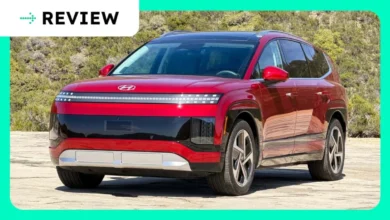
While solid-state development represents the long-term horizon, Hyundai’s immediate manufacturing roadmap focuses on optimizing existing chemistry. The company plans to deploy advanced, in-house-developed nickel-manganese-cobalt (NMC) cells in upcoming models, such as the Hyundai Santa Fe extended-range electric vehicle slated to launch early next year.
Broader Economic and Industrial Implications
The persistent pursuit of solid-state batteries underscores a broader strategic reality for legacy automakers: the transition to electrification is not merely a shift in propulsion methods, but a fundamental overhaul of global supply chains, chemical engineering, and manufacturing infrastructure.
While the near-term economic hurdles—including the high cost of specialized materials, the complexity of ceramic processing, and the lack of gigafactory-scale production lines—remain formidable, the penalty for falling behind could be existential. As automotive groups balance the soaring capital expenditures required for solid-state research against the rapid performance gains of conventional lithium-ion batteries, executive consensus like Hyundai’s suggests that standing still is not an option. The industry’s biggest bet is underway, and automakers are positioning themselves to ensure they are not left behind when the technology finally reaches economic and industrial maturity.