Capturing the Cosmos: Astrophotographer Andrea Girones on Gear, Technique, and the Evolution of Night Sky Imaging

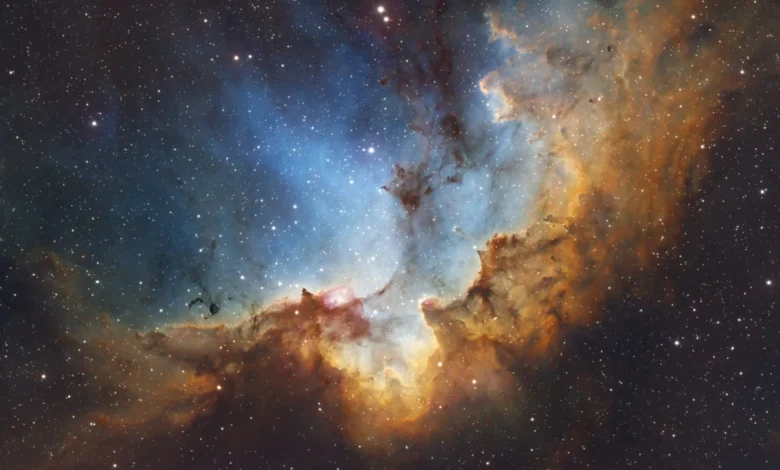
The human fascination with the celestial sphere spans millennia, evolving from ancient naked-eye stargazing and primitive eclipse tracking to modern digital astrophotography capable of revealing distant nebulae, the Andromeda Galaxy, and the sprawling expanse of the Milky Way. While capturing the night sky has never been more accessible, the genre remains technically demanding, requiring specialized optical setups, precise exposure timing, and dedicated post-processing workflows. Canadian astrophotographer Andrea Girones, based on the outskirts of Ottawa, has spent years mastering both deep-sky imaging and wide-field landscape astrophotography. Her work bridges the gap between complex observatory-style setups and portable field kits, offering a practical blueprint for photographers seeking to document the universe.
The Technical Divide: Deep Sky Versus Landscape Astrophotography
Understanding the fundamental dichotomy in astrophotography is the first step for any practitioner entering the field. The discipline is generally split into two distinct categories: deep-sky imaging, which focuses on faint, distant targets such as galaxies and emission nebulae, and landscape astrophotography, which anchors celestial phenomena within terrestrial environments.

According to Girones, choosing the right gear depends entirely on the desired field of view. Telescopes and specialized camera lenses allow astrophotographers to zoom in on specific astronomical targets or pull back for wide vistas. However, beginners face two primary technical hurdles: astronomical objects are notoriously dim, necessitating fast optics and extended exposure times, and the Earth’s rotation causes the apparent movement of the sky, requiring short exposures or tracking mounts to prevent unwanted star trails.
To capture faint deep-sky objects, Girones utilizes a large, long-focal-length telescope permanently housed outside her home near Ottawa. Operating at a focal length approaching 3,000mm, this system requires a heavy-duty, high-precision equatorial mount to compensate for sidereal tracking errors throughout the night. Paired with a thermo-electrically cooled astronomical camera, this configuration gathers raw data over multiple hours, which is subsequently processed and stacked into full-color digital composites.
Conversely, landscape astrophotography relies on mobility. Girones emphasizes that beginners should not start their journey with expensive, complex telescope rigs. Instead, entry-level practitioners are advised to begin with a standard interchangeable-lens camera, a sturdy tripod, and a fast wide-angle lens in the 14mm to 20mm focal range. For travel and remote expeditions, her preferred focal lengths typically range from 14mm to 85mm, prioritizing agility over raw magnification.
Evolution of the Field Kit and Equipment Selection

Astrophotography is frequently perceived as an elitist or prohibitively complex hobby, but seasoned practitioners argue that high-level results can be achieved with streamlined, efficient kits. Over years of field experience, Girones has refined her travel kit to balance optical performance with strict weight constraints.
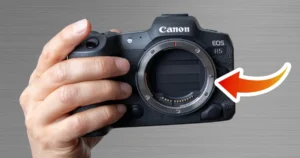
At the heart of her portable workflow are astromodified digital cameras. Girones currently shoots with a Nikon Z6 II that has been modified by Spencer’s Camera & Photo in the United States. The modification includes the integration of a Hydrogen-Alpha (H-alpha) filter, which transmits specific wavelengths of light emitted by glowing hydrogen gas clouds, dramatically enhancing the visibility of emission nebulae such as the Orion Nebula and complex structures within the Milky Way. Her legacy gear includes a Nikon D750, demonstrating a long-standing brand loyalty that extends back to her early experiences with vintage Nikon film cameras and manual lenses.
For tracking the diurnal motion of the stars during mobile shoots, Girones transitioned from the larger Sky-Watcher Star Adventurer to the significantly lighter Move Shoot Move Nomad tracker. Tracking becomes critical when employing focal lengths exceeding 20mm to avoid trailing. Her field bag typically accommodates 35mm, 85mm, and 135mm prime lenses. While the 135mm focal length is reserved for larger deep-sky targets like the Andromeda Galaxy and requires the stability of the larger Star Adventurer mount, lenses such as the Rokinon 85mm f/1.4 and Laowa 15mm f/2 serve as lightweight staples for comets, the Milky Way, and aurora borealis documentation.
When addressing lens selection, Girones notes that autofocus is effectively obsolete in deep-space and night-scape scenarios. Shooting in pitch-black environments renders phase-contrast and contrast-detection autofocus systems largely unreliable when attempting to acquire focus on distant, pinpoint stars. Consequently, manual focusing is an essential skill, often aided by specialized focusing masks such as Bahtinov masks.

For photographers aiming to transition from telephoto lenses to dedicated deep-sky optics, Girones recommends small refractive astrographs in the 180mm to 250mm focal length range. Telescopes of this class are engineered specifically to flatten the focal plane, eliminate chromatic aberration, and correct for coma and vignetting across the entire image circle, outperforming standard photographic telephoto lenses. She highlights the William Optics RedCat 51—a 250mm f/4 astrograph featuring a built-in focusing mask and filter slot—as an ideal tool for intermediate practitioners connecting digital camera bodies to small telescopes.
Logistical Challenges and Field Discipline
As astrophotographers venture into increasingly remote locations to escape light pollution, equipment weight becomes a critical limiting factor. Hiking multi-mile trails with tripods, star trackers, camera bodies, and multiple glass elements places a heavy physical toll on the photographer.
Girones stresses that field discipline is directly proportional to weight management. Every ounce carried into a remote wilderness area impacts mobility and endurance. Rather than packing an exhaustive inventory of gear for every conceivable shot, disciplined planning allows photographers to curate their kits based on specific objectives prior to departure. If a star tracker is included in the pack, specific telephoto and mid-range lenses are selected; if shooting strictly from a stationary tripod, ultra-wide focal lengths of 20mm or wider take precedence.

For air travel, gear must be compact enough to meet strict airline carry-on regulations, fitting securely beneath a forward passenger seat. Girones relies on specialized modular camera backpacks, such as products from Shimoda, which offer customizable internal dividers and numerous exterior access points to manage field accessories safely.
Beyond optical challenges, environmental factors such as extreme cold present significant operational hurdles. Rapid transitions between freezing outdoor temperatures and heated indoor environments risk internal condensation and thermal shock to sensitive electronic sensors and optical coatings, requiring careful acclimation protocols.
The Rise of Smart Telescopes and Democratization of the Hobby
The astrophotography landscape is currently experiencing a technological shift with the introduction of automated, smart telescope systems. Products such as the ZWO Seestar S30 Pro and S50 Pro have challenged traditional purist methodologies by integrating automated GoTo mounts, internal stacking software, and smartphone connectivity into a single, highly portable unit.

While traditionalists have occasionally viewed automated smart scopes with skepticism, Girones views them as a revolutionary entry point for the next generation of astronomers and photographers. These systems automate target acquisition, celestial tracking, real-time image stacking, color correction, and gradient removal, allowing novices to generate publishable astrophotographs on their very first night in the field.
By lowering the technical and financial barriers to entry, smart telescopes harness modern computing power to make a traditionally complex and expensive hobby accessible to a broader demographic. Proponents argue that this widespread engagement fosters a deeper public appreciation for the night sky, which in turn builds broader cultural and political support for combating escalating light pollution caused by urban sprawl, commercial satellites, and artificial illumination.
Broader Implications and Cultural Impact
The work of contemporary astrophotographers like Andrea Girones occupies an intersection between hard science, environmental advocacy, and fine art. By utilizing advanced sensor modifications, precision optics, and meticulous post-processing software—including Adobe Lightroom, Photoshop, and dedicated astronomical stacking suites like DeepSkyStacker or PixInsight—amateur astronomers routinely produce imagery that rivals mid-20th-century professional observatory outputs.

This democratization of space imaging alters humanity’s perspective on its place in the cosmos. As light pollution increasingly obscures the Milky Way from the majority of the global population, high-resolution astrophotography serves as a vital archival and educational medium. It reconnects urban societies with the broader universe, reminding observers of the fragile, isolated nature of Earth within an expanding, ancient cosmos.
Related posts: