Volkswagen Slashes ID.4 Prices by Up to $12,500 as Production Winds Down at Tennessee Plant

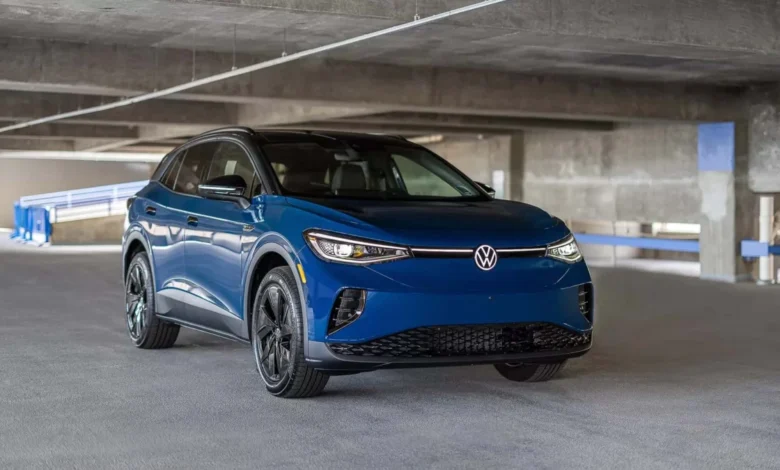
The automotive landscape is shifting once again as legacy manufacturers reallocate manufacturing capacity to meet changing consumer demands. Volkswagen is making significant adjustments at its assembly facility in Chattanooga, Tennessee, where production of the all-electric ID.4 crossover is winding down to make room for an expanded lineup of internal combustion engine sport utility vehicles. While the discontinuation of an electric vehicle line often signals a retreat from ambitious electrification targets, it frequently triggers substantial financial incentives for remaining inventory. For consumers currently shopping the electric vehicle market, Volkswagen’s latest pricing strategy has transformed remaining stock of the ID.4 into one of the most compelling value propositions available.
The German automaker has announced aggressive nationwide discounts reaching up to $12,500 on remaining 20th-century model-year equivalents and 2025 inventory sitting on dealer lots. This substantial markdown applies specifically to the 2025 Volkswagen ID.4, a vehicle that, despite being a model year behind the absolute latest production, remains fundamentally identical in capability, design, and performance to newer iterations. According to corporate communications from Volkswagen, inventory levels for the heavily discounted 2025 models are exceptionally limited, prompting dealerships to move quickly to clear out showroom floors. For buyers less concerned with model-year designations and more focused on bottom-line affordability, the incentive structure presents an opportunity to acquire a capable battery-electric crossover at a steep discount.
Understanding the Financial Structure and Deadlines
To capture these maximum savings, prospective buyers must navigate specific promotional guidelines established by the manufacturer. The financial relief is structured as a Customer Bonus, which can be successfully applied either when leasing or when executing a cash purchase through participating Volkswagen dealerships. Crucially, this manufacturer-backed incentive is targeted directly at private retail customers and carries a strict expiration date of November 2.
Industry analysts note that while the corporate discount is officially sponsored, individual franchise dealerships maintain some discretion in how these promotions are advertised and applied. Not every showroom floor will feature prominent signage detailing the full $12,500 reduction, meaning consumers must proactively inquire about the specific customer bonus when negotiating with sales representatives. Furthermore, Volkswagen has not left buyers of the newer 2026 model year entirely out of the equation. For consumers who insist on driving off the lot in the absolute newest model iteration, the automaker has instituted a direct $6,000 price reduction on 2026 ID.4 inventory, bridging the gap between older stock and fresh factory deliveries.
A Closer Look at Remaining Inventory and Real-World Pricing
Locating the heavily discounted 2025 models requires some diligence given their scarcity across the national retail network. However, digital inventory tracking across official Volkswagen retail portals reveals that select units remain available. A significant portion of the heavily discounted inventory consists of the ID.4 Pro trim level. These configurations typically feature a robust 77-kilowatt-hour usable battery pack paired with a dual-motor, all-wheel-drive system. This mechanical setup delivers an EPA-estimated driving range of approximately 263 miles on a single charge, providing ample capability for daily commuting and regional road trips.
When factoring in the maximum $12,500 manufacturer discount, the final transaction price for these well-equipped Pro all-wheel-drive models frequently dips below the $40,000 threshold. This aggressive pricing brings the German crossover into direct financial competition with high-volume market leaders, most notably the entry-level Tesla Model Y All-Wheel Drive. While the base Model Y offers a slightly higher EPA range rating of approximately 294 miles, industry reviews consistently highlight differences in interior execution. The Tesla relies on a notoriously minimalist, stripped-down cabin layout, whereas the ID.4 provides a more traditional, passenger-oriented interior environment with physical appointments that appeal to buyers transitioning out of conventional gasoline vehicles.
Evolution of the ID.4 Platform: Refreshes and Persistent Criticisms
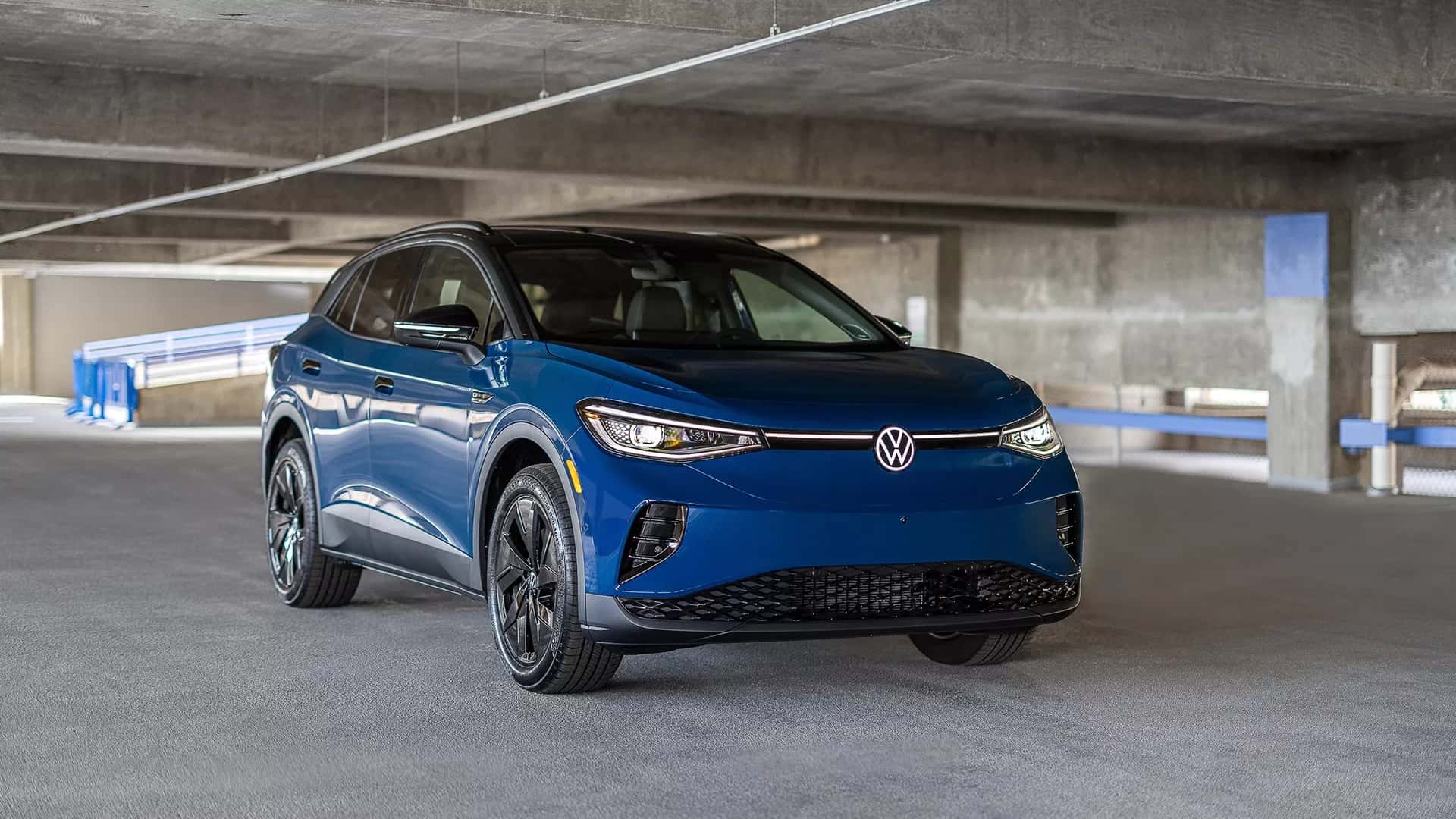
The Volkswagen ID.4 has occupied a unique space in the North American electric vehicle market since its introduction. As one of the first mass-market electric crossovers built on the automaker’s dedicated Modular Electric Drive Matrix (MEB) platform, it aimed to democratize zero-emission mobility. In the 2024 model year, Volkswagen implemented a comprehensive mid-life product refresh designed to address early criticisms. This update injected significantly more electric motor power into higher-tier trims, expanded driving ranges across the lineup, and introduced a much-needed upgrade to the cabin technology via a responsive 12.9-inch central infotainment display.
Additionally, Volkswagen attempted to rectify ergonomic complaints by introducing backlit touch-sensitive sliders for the audio volume and climate control systems. Yet, despite these iterative improvements, certain design quirks remained a frequent point of frustration for automotive journalists and owners alike. Most notably, the vehicle retained an unconventional and widely criticized window switch configuration on the driver’s door, which required motorists to toggle between front and rear panes using a capacitive touch button rather than providing dedicated switches for all four windows.
Looking Ahead: The Next Generation of Volkswagen Crossovers
The wind-down of ID.4 production in Chattanooga is not merely a tactical inventory reduction; it represents a transitional phase in Volkswagen’s broader product strategy. The automotive group is actively restructuring its American manufacturing output to balance consumer demand for both internal combustion engines and electrified powertrains. As production lines in Tennessee are reconfigured to accommodate higher volumes of gas-powered SUVs, the engineering teams in Wolfsburg are simultaneously preparing the groundwork for subsequent generations of electrified and hybrid transport.
Future iterations slated for the global market, including upcoming replacements and heavily overhauled derivatives often discussed under designations like the ID. Tiguan, are expected to directly address the ergonomic and software complaints that plagued earlier MEB-based vehicles. Reports from engineering previews indicate that future Volkswagen models will pivot away from purely capacitive interior controls, reintroducing physical buttons and tactile switches for primary climate and convenience functions. Furthermore, software architecture is slated for a thorough overhaul to ensure faster processing speeds and greater stability.
Market Implications for Used and New EV Buyers
The decision to discount remaining inventory by up to $12,500 has immediate ripple effects across the broader automotive ecosystem. For shoppers who have remained hesitant to adopt electric vehicles due to high upfront acquisition costs, these deep manufacturer-backed cuts eliminate a significant barrier to entry. Buying a brand-new electric crossover with full factory warranties for under $40,000 fundamentally alters the financial calculations that typically favor gasoline-powered alternatives.
At the same time, this aggressive clearance strategy exerts downward pressure on the used electric vehicle market. When new vehicles can be purchased with massive incentives that rival or undercut second-hand pricing, pre-owned residual values inevitably face adjustment. Consumers shopping the secondary market will find that older electric models must be priced exceptionally competitively to attract buyers who could otherwise stretch their budgets to secure a brand-new, heavily discounted ID.4.
As the November 2 expiration date for the $12,500 customer bonus approaches, dealership lot inventory is expected to deplete rapidly. Prospective buyers are advised to consult multiple regional inventory databases and confirm with local franchise representatives to ensure the maximum financial incentives are successfully applied to their purchase or lease agreements. While the first chapter of local ID.4 production in Tennessee is drawing to a close, Volkswagen’s clearance event ensures the vehicle’s exit from the market will be remembered as a high-value moment for American car buyers.
Related posts: