Kia Expands Its Award-Winning Commercial EV Lineup With the Larger, Longer-Range PV7 Van

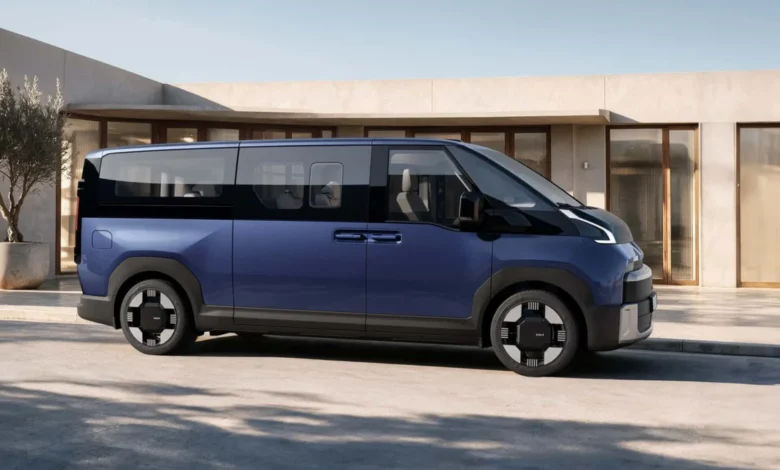
Building upon the recent momentum of its commercial electric vehicle strategy, South Korean automaker Kia has officially pulled the covers off its latest zero-emission commercial offering: the Kia PV7. This announcement follows closely on the heels of the smaller PV5 variant securing the prestigious 2026 International Van of the Year award. While commercial vehicle accolades often escape mainstream public attention, the international recognition serves as a testament to Kia’s refined engineering approach to vehicle electrification within the fleet and commercial sector.
The new PV7 scales up the successful architecture of the PV5, providing a larger footprint, enhanced interior volume, advanced digital integrations, and a greater degree of operational versatility. Designed from the ground up to cater to heavy-duty logistics and passenger transport industries, the PV7 aims to capture a significant share of the evolving European and Asian electric commercial vehicle markets.
Evolution of Kia’s Platform-Beyond-Vehicle Strategy
The introduction of the PV7 is part of Kia’s broader corporate roadmap centered around flexible mobility solutions, often referred to as Platform-Beyond-Vehicle (PBV) technology. Unlike traditional internal combustion engine vehicles retrofitted with battery-electric powertrains, Kia’s dedicated commercial EV architecture has been conceptualized to maximize utility, floor space, and operational efficiency.
While the aesthetic lineage shared between the PV5 and the PV7 is immediately noticeable—both vehicles sport a minimalist, utilitarian silhouette optimized for aerodynamics and interior capacity—the PV7 distinguishes itself through a noticeably stretched wheelbase and an extended overall body length. Underneath the familiar exterior panels, however, lies a significantly more robust mechanical and electrical specification sheet tailored for heavy commercial demands.
Powertrain Specifications and Battery Architecture
The foundational battery option for the PV7 is a 71.5 kilowatt-hour unit, which mirrors the optional long-range battery pack found in the smaller PV5. However, for fleet operators requiring extended operational radii, Kia offers an exclusive, larger 96.2 kWh battery pack reserved specifically for the PV7.
At launch, the vehicle utilizes a single-motor, front-wheel-drive configuration. This setup generates a respectable 268 horsepower and 310 pound-feet of torque, ensuring that the van remains responsive even when operating under maximum payload conditions. Company insiders have indicated that a dual-motor, all-wheel-drive variant is currently in development and will join the lineup at a later date to address slippery road conditions and off-road worksite requirements.
When equipped with the larger battery pack and configured in the lightest "Long Range Cargo" trim, the PV7 achieves a maximum estimated range of 289 miles based on the generous Worldwide Harmonized Light Vehicles Test Procedure (WLTP) cycle. To minimize downtime for commercial operators, the vehicle incorporates advanced 800-volt electrical architecture. When connected to a compatible 350-kilowatt DC fast charger, the PV7 can replenish its state-of-charge from 10% to 80% in approximately 20 minutes. This capability represents a substantial upgrade over the current 400-volt charging infrastructure utilized by the PV5, though Kia has noted that the smaller van is also slated to receive 80-volt technology in future updates.
Additionally, engineers have integrated a specialized "Heavy Load Driving" mode. This software-driven feature dynamically alters the powertrain delivery, throttle mapping, and vehicle stability controls to maintain predictable handling and protect drivetrain components when the cargo bay is packed to its legal limit.
Diverse Configurations: Cargo Versus Passenger Models
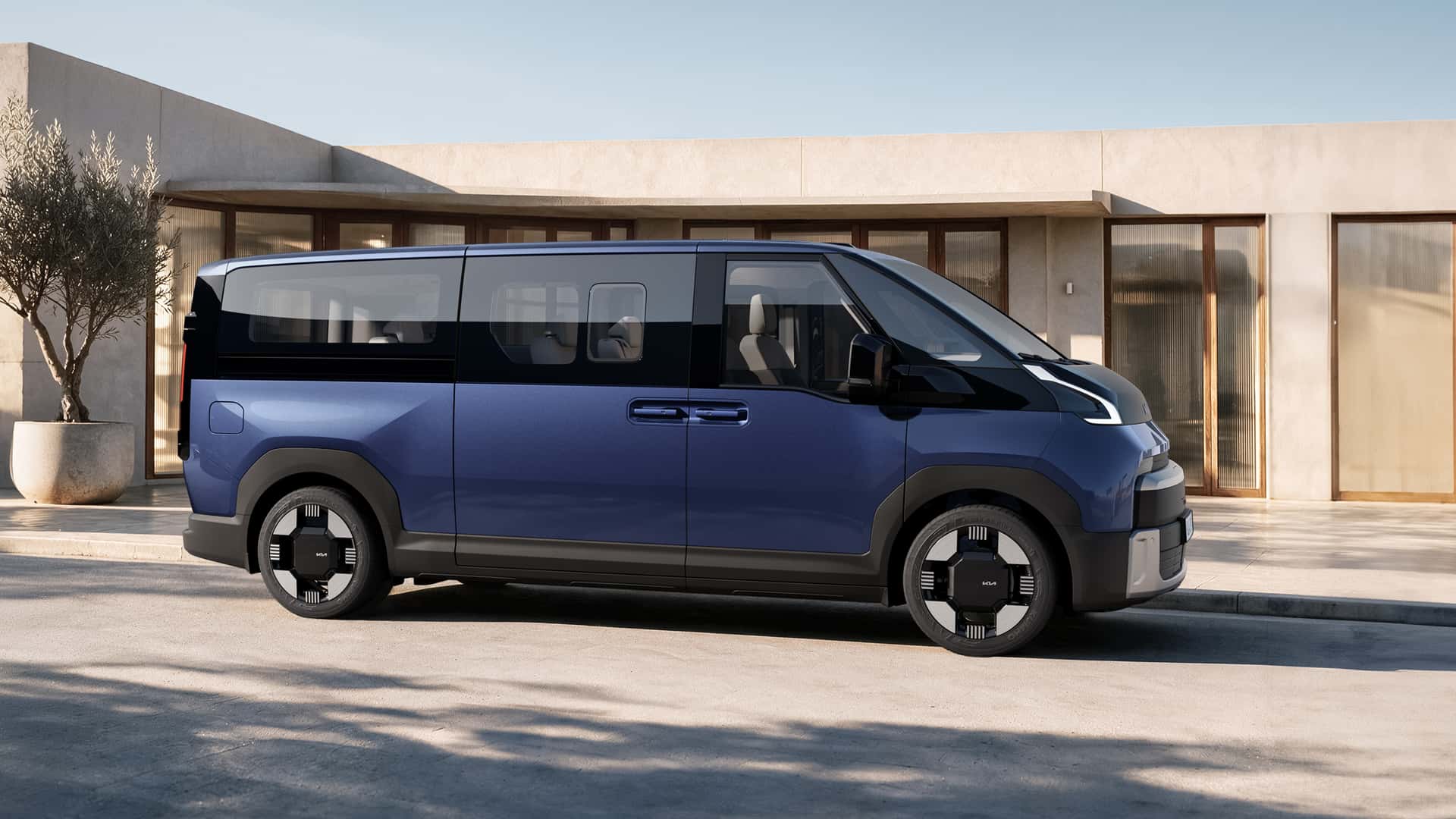
The PV7 family is divided into two distinct structural categories: the utilitarian Cargo line and the people-hauling Passenger line. Each model is engineered to address vastly different sectors of the commercial and fleet transport industries.
The PV7 Cargo is offered in multiple body styles, including Compact, Long, and High Roof variants. The High Roof configuration naturally yields the maximum interior volume, offering up to 86 square feet of cargo space, dwarfing the standard Long model’s floor area. Despite the difference in height, payload capacities remain exceptionally competitive. The standard Compact variant boasts a maximum payload capacity of 2,646 pounds, while the extended Long model handles up to 2,568 pounds. Furthermore, the Long variant features a low loading height of just 550 millimeters, meticulously designed to accommodate up to three full-sized Euro pallets side by side.
Cargo operators can also select from two distinct tailgate configurations: a traditional upward-lifting single piece or a functional barn-door setup featuring dual swing-open doors. To enhance daily workflow efficiency, Kia offers a load-through bulkhead and a sophisticated "Smart Walkaway" function. This technology automatically secures and closes the side sliding doors as the driver walks away from the vehicle carrying the key fob. Fleet managers can also remotely verify whether the rear tailgate is securely closed via connected vehicle applications. Seating within the Cargo variants is strictly limited to two or three occupants, prioritizing maximum volumetric efficiency for goods rather than personnel.
Conversely, the PV7 Passenger model is designed specifically as a high-capacity people mover. Depending on regional regulations, the Passenger configuration provides seating for seven or nine occupants in most global markets, with high-density seating layouts accommodating up to 11 passengers in the domestic South Korean market. This makes the vehicle an ideal candidate for corporate shuttle services, airport transfers, hotel fleets, and high-capacity family transportation. Rear-seat passengers benefit from dedicated climate control zones, 100-watt USB-C charging ports for mobile devices, and Kia’s proprietary Long-Rail Easy Remove Seats, which allow fleet operators to quickly reconfigure cabin layouts based on daily passenger or luggage requirements.
Market Launch and Regional Availability
Kia has confirmed that both the Cargo and Passenger iterations of the PV7 are scheduled to launch officially in South Korea and European markets in 2027. The strategic focus on these regions aligns with aggressive local decarbonization mandates, low-emission zones in major urban centers, and a rapidly expanding commercial EV charging infrastructure.
However, industry analysts have noted a significant geographic omission in Kia’s rollout strategy: the North American market. Current projections indicate that the PV7 will not be introduced to the United States or Canada. Industry observers point out that this exclusion represents a missed opportunity for the North American commercial sector, where fleet operators are actively seeking alternatives to legacy internal combustion vans and struggling with a limited selection of competitive electric workhorses. The inclusion of the PV7 could have provided a robust challenge to existing options like the Mercedes-Benz eSprinter and helped accelerate the broader adoption of commercial electrification across North American logistics networks.
Broader Economic and Industrial Implications
The commercial van sector represents one of the most critical frontiers for corporate fleet electrification. Unlike passenger vehicles, commercial vans operate on strict economic formulas where total cost of ownership, vehicle uptime, payload versatility, and rapid turnaround times dictate purchasing decisions.
By expanding its PBV lineup with the high-capacity PV7, Kia is signaling its ambition to transition from a traditional automotive manufacturer into a comprehensive mobility solutions provider. The combination of high-voltage 800-volt charging architecture, flexible modular interiors, and targeted driving dynamics tailored for heavy loads demonstrates a mature understanding of commercial fleet requirements.
As urban centers across Europe and Asia continue to tighten environmental regulations on diesel-powered commercial transport, vehicles like the Kia PV7 will play a pivotal role in maintaining supply chain continuity while drastically reducing urban carbon footprints. Whether the vehicle’s success in overseas markets will eventually prompt Kia to reconsider its North American export strategy remains an open question for industry watchers as the 2027 launch date approaches.