The Art of Synergy: Why Home Cinema Component Matching is Paramount for Sonic Perfection

Home cinema, when meticulously crafted, transcends mere entertainment to become a deeply immersive, almost transcendent experience. The allure of a colossal screen, the plush comfort of one’s own sanctuary, and the freedom to indulge in personal rituals – be it the company of a beloved pet, a preferred beverage, or simply the joy of wearing one’s most comfortable attire – all contribute to a feeling akin to the sentiment expressed by the Goo Goo Dolls: "the closest to heaven that I’ll ever be." It is this profound magic that fuels the passion of home cinema enthusiasts and the dedicated teams at publications like What Hi-Fi?, who tirelessly evaluate the latest hardware to help others achieve this unparalleled audiovisual bliss.
However, the path to this magical realm is often more intricate than commonly perceived. The enchanting effect is inextricably linked to the quality and, crucially, the synergistic compatibility of the chosen hardware. Achieving what technical editors like Ketan Bharadia would deem "a proper home cinema" – a setup featuring a multi-speaker surround sound system, a high-performance projector, a capable AV receiver (AVR), and a reliable source component – demands more than simply assembling a collection of individually five-star rated products. A pervasive misconception, even among some seasoned forum participants, suggests that home cinema audio operates on a fundamentally different paradigm than hi-fi sound, implying that a collection of top-tier components will inherently yield a superior result. The reality, however, underscores the enduring and critical importance of component matching.
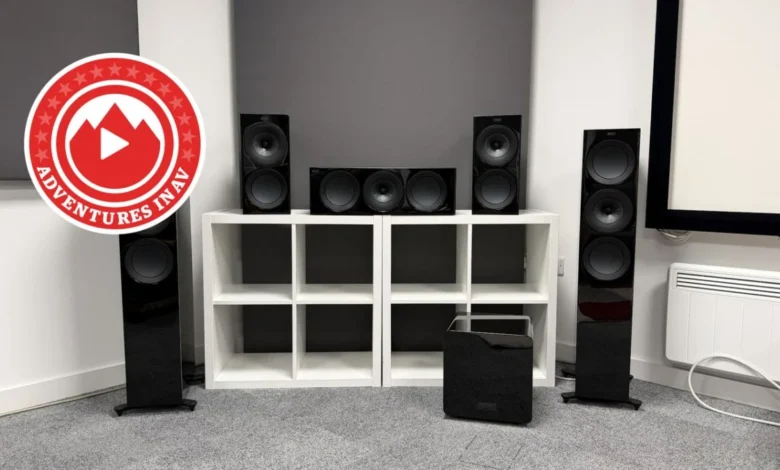
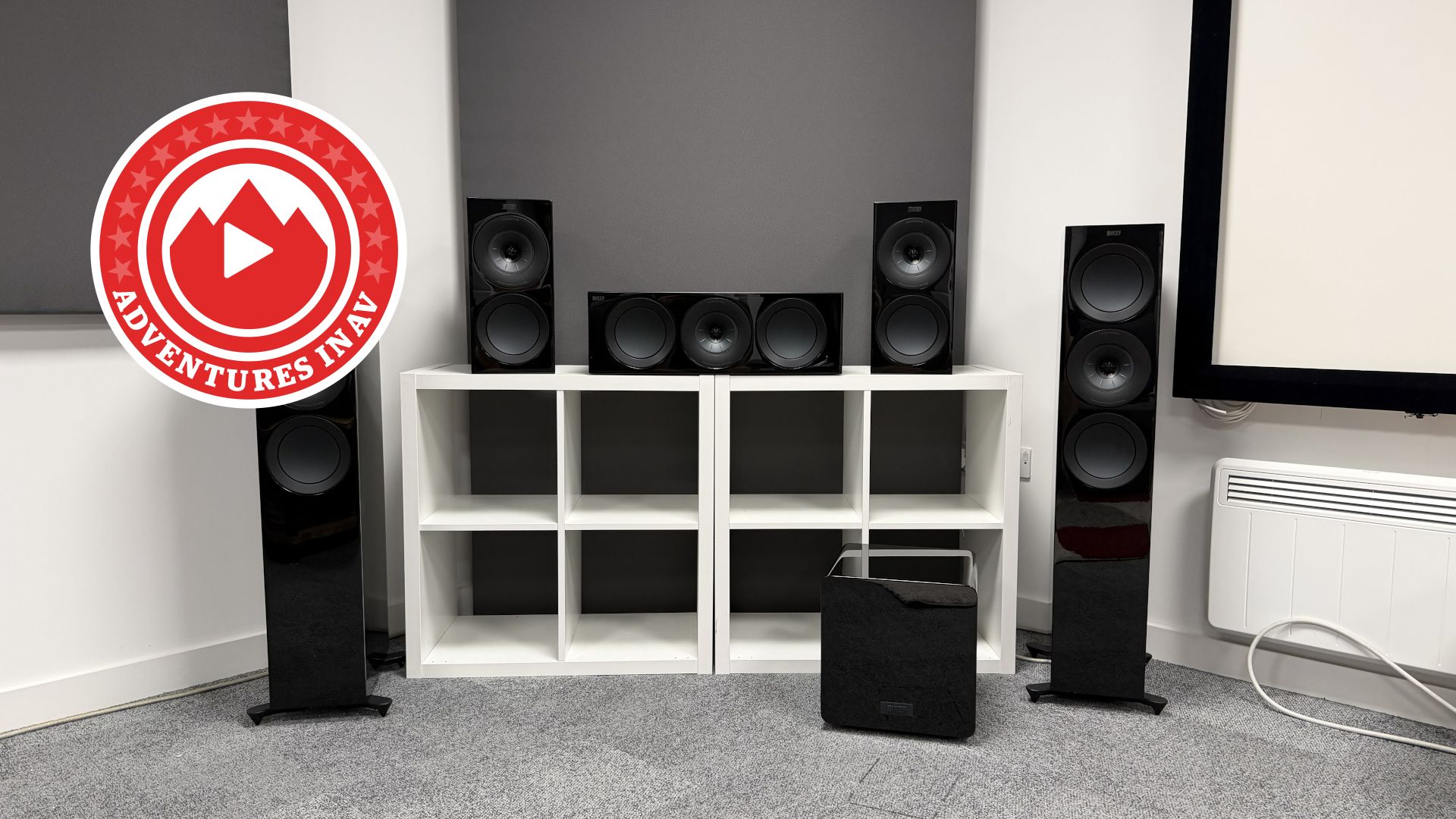
Recent evaluations by the What Hi-Fi? team, specifically concerning the KEF R Meta speaker package and the Denon AVC-A1H AV receiver, have vividly illustrated this principle. Initial listening sessions with the KEF R Meta speakers, when paired with the reference Marantz Cinema 30 AVR, yielded demonstrably excellent results. This combination, as anticipated from two highly accomplished pieces of audio equipment, produced an expansive, cohesive, and remarkably controlled soundstage, effectively creating a captivatingly immersive home cinema experience.
The Sonic Landscape of Dune: Part One
A rigorous test scene from the 4K Blu-ray of Dune: Part One provided a compelling showcase for the Marantz Cinema 30 and KEF R Meta synergy. The system exhibited masterful command over the entire frequency spectrum. Subtle dynamic nuances, woven beneath the film’s percussive score, were rendered with impressive clarity. The directional cues, as ornithopters swooped from the right, across the soundstage, and then behind the viewer, were conveyed with a palpable sense of realism and precision. This demonstrated the inherent quality of both the KEF speakers and the Marantz AVR, individually excelling in their respective domains.
The Emergence of a Subtle Discrepancy
However, as the testing progressed, particularly when transitioning to a dedicated F1 test disc and during subsequent stereo music playback, a subtle sonic characteristic began to emerge. Senior staff writer Lewis Empson, known for his discerning ear, exhibited a familiar expression – one that signals an underlying, albeit minor, performance anomaly. This subtle unease soon became shared among the team. In near unison, the question arose: "Does anyone else think this sounds just a touch too smooth?"
While the audio presentation remained undeniably refined and effortlessly composed – a testament to the high-fidelity nature of the components – the pairing appeared to lean fractionally towards an excess of smoothness. This was not indicative of a lack of quality; quite the opposite. Rather, it highlighted a situation where a minor imprecision in the overall sonic balance, while perhaps imperceptible to a casual listener, was noticeable to experienced reviewers. There were moments where a greater degree of perceived "bite" and urgency would have enhanced the listening experience.
This observation was not unexpected. Tom Parsons, What Hi-Fi?‘s TV and AV editor, who was leading the review of the KEF speaker package, had independently characterized the speakers’ sonic signature as "smooth and refined." This description, while accurate and often a desirable trait, mirrored the characterization of the Marantz Cinema 30 AVR found at the top of its own review: "smooth, refined, and always in control."
The Nuance of Sonic Personalities
The congruence in the sonic profiles of the Marantz Cinema 30 and the KEF R Meta speakers, while contributing to a beautifully cohesive presentation, inadvertently pushed the overall balance slightly further towards an emphasis on refinement than might be ideal for certain content. It is crucial to understand that this pairing was not fundamentally flawed; it demonstrably worked. The issue lay in the confluence of two components possessing remarkably similar sonic personalities. This similarity, in effect, slightly softened the impact and sense of attack in the audio reproduction.
The Denon AVC-A1H: A Dynamic Counterpoint
The introduction of the Denon AVC-A1H AV receiver into the testing environment provided a compelling contrast. During its evaluation, the Denon exhibited a more dynamic and assertive character, which proved to be a remarkably effective complement to the KEF speaker package. The Denon injected a palpable sense of energy and attack, enhancing the sonic experience without disrupting the natural balance of the KEFs.
The immediate impact was discernible from the opening notes of Led Zeppelin’s iconic "Whole Lotta Love." The F1 scene, when powered by the Denon, felt significantly more electrifying. The Denon injected a more pronounced "bite" into the intricate guitar work of Jimmy Page, adding a new layer of visceral engagement.
Subsequently, the thunderous arrival of John Bonham’s legendary drum line delivered the gut-churning impact expected from a drummer widely acclaimed for his "hard-hitting" style. This visceral impact was further amplified by the added heft and dynamism the Denon brought to the on-screen racing action, transforming the auditory experience from merely impressive to truly exhilarating.
The "Salty Food" Analogy: A Culinary Lesson in Audio Synergy
It is imperative to reiterate that this analysis does not constitute a criticism of the Marantz Cinema 30. The Marantz/KEF combination, in isolation, represents an outstanding system, delivering a spacious, balanced, and highly accomplished sound. The observation pertains specifically to the synergistic effect within this particular system. The refinement of the Cinema 30, when paired with the inherently smooth presentation of the KEF R7 Meta front speakers, tipped the sonic balance too far towards a relaxed, perhaps overly subdued, output.
Conversely, swapping in a more assertive AVR, or pairing the Marantz with speakers possessing a more overtly energetic sonic signature, would undoubtedly shift this balance in a different direction. Lewis Empson eloquently summarized this concept using a culinary analogy: "Even if you like salty food, if you add several salty ingredients, it’s not going to taste good." This simple yet profound analogy perfectly encapsulates the principle of component matching in audio systems.
The Broader Implications for Home Cinema Enthusiasts
The findings from this testing underscore a fundamental truth for anyone embarking on the journey of building a home cinema: the synergy between components is as vital as the individual quality of each element. When assembling a home cinema system, enthusiasts must look beyond individual specifications and five-star reviews to consider how each piece will interact with and complement the others.
This principle extends beyond the realm of professional reviewers. For the discerning consumer, understanding the sonic "personality" of different brands and models is crucial. For instance, brands known for a slightly warmer, more relaxed sound might pair exceptionally well with speakers that exhibit a more forward, analytical character, and vice versa. The goal is not to achieve a uniform sonic signature across all components, but rather to create a balanced and harmonious whole that maximizes the strengths of each individual piece while mitigating any potential weaknesses.
A Timeline of Home Cinema Evolution and Component Integration
The evolution of home cinema technology has been a rapid and dynamic process. From the early days of stereo sound systems adapted for movie playback to the sophisticated multi-channel immersive audio formats of today, the pursuit of realism has been relentless.
- Early Days (1970s-1980s): The concept of enhanced home audio for films began with stereo soundbars and early surround sound processors like Dolby Surround. Component matching was rudimentary, often relying on matching amplifiers to speakers based on power output.
- The Rise of Dolby Digital and DTS (1990s): The advent of digital surround sound formats brought a new level of complexity. The need for discrete channels and higher fidelity audio necessitated more capable AVRs and dedicated speaker systems. Matching became more about impedance, sensitivity, and overall tonal balance.
- The HD Era and Immersive Audio (2000s-Present): High-definition video formats (Blu-ray) and the introduction of immersive audio codecs like Dolby Atmos and DTS:X have further elevated the stakes. Modern home cinema systems often involve seven or more channels of amplification, specialized height speakers, and sophisticated room correction software. This era has seen component matching become an art form, where the subtle sonic characteristics of high-end AVRs and speakers can make a significant difference in the final listening experience.
The KEF R Meta speakers, for example, represent the latest iteration of a brand with a long-standing reputation for refined, acoustically advanced loudspeaker design. Their Uni-Q driver array, a signature technology, is designed to provide a wide dispersion pattern and excellent time-alignment, contributing to their smooth and coherent sound. The Denon AVC-A1H, on the other hand, is a flagship AVR from a manufacturer renowned for its robust amplification and dynamic, engaging sound characteristics.
The decision to pair these components was a logical starting point, given their individual accolades. However, the What Hi-Fi? testing process is designed to go beyond individual product performance and delve into the crucial aspect of system integration. The experience with the Marantz Cinema 30 and KEF R Meta speakers, followed by the introduction of the Denon AVC-A1H, served as a practical demonstration of how different sonic personalities can either harmonize or, in some instances, create an unintended sonic compromise.
Official Statements and Industry Perspectives
While specific "official statements" from KEF or Denon regarding this particular pairing scenario are unlikely, the broader industry consensus strongly supports the principle of component matching. Manufacturers of high-end audio equipment consistently emphasize the importance of system synergy. Product designers often aim for a specific sonic signature for their products, understanding that these products will be integrated into a wide variety of systems.
A spokesperson for a leading AV receiver manufacturer, speaking anonymously, commented, "We design our receivers to be as versatile as possible, offering ample power and sophisticated processing. However, we also recognize that the final sound is a product of the entire chain. Our goal is to provide a neutral and powerful foundation, allowing the inherent characteristics of the speakers and source components to shine through. Ultimately, the listener’s preference and the specific room acoustics play a significant role, but a well-matched system will always provide a more satisfying experience."
Similarly, a representative from a prominent loudspeaker manufacturer stated, "Our speakers are engineered to reveal the nuances of the audio signal. We strive for accuracy and musicality. When paired with a capable and well-balanced AV receiver, our speakers can deliver an exceptional home cinema experience. However, if a receiver’s own sonic character is overly dominant or clashes with the speaker’s design, it can lead to an imbalanced presentation."
Broader Impact and Implications for Consumers
The implications of this rigorous testing are far-reaching for consumers. It serves as a crucial reminder that investing in high-end components does not automatically guarantee optimal performance. A deeper understanding of how different audio components interact is essential for making informed purchasing decisions.
For those building a new home cinema or upgrading an existing one, the following considerations are paramount:
- Understand Your Preferences: Do you prefer a warm, relaxed sound, or a more dynamic, upfront presentation? This will influence your choice of both speakers and AVR.
- Research Component Synergies: Look for reviews that discuss how specific components perform when paired together. Publications like What Hi-Fi? often highlight these synergistic relationships.
- Consider Room Acoustics: The size and characteristics of your listening room will significantly impact the perceived sound. Room correction software in AVRs can help, but it cannot fully compensate for fundamental sonic mismatches.
- Audition Whenever Possible: If feasible, auditioning components together in a similar environment to your own is the most effective way to gauge their compatibility.
The pursuit of the perfect home cinema experience is a journey that rewards careful consideration and an appreciation for the intricate interplay of technology. While individual components may achieve stellar ratings on their own, it is their collective harmony, their ability to work as a cohesive unit, that ultimately unlocks the true magic of cinematic sound. Even when enjoying a solitary cinematic adventure, the hardware involved is, in essence, a highly coordinated team.
Related posts: