Tesla Expands Autonomous Ride-Hailing Footprint to Dallas and Houston as the Race for Robotaxi Dominance Intensifies

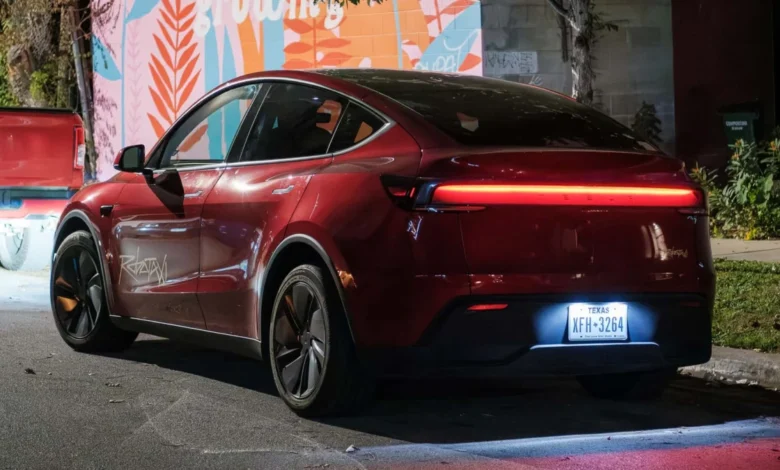
Tesla has officially launched its robotaxi ride-hailing service in Dallas and Houston, marking a significant expansion of its autonomous transport network within the state of Texas. This move represents the latest phase in the company’s ambitious plan to transition from a traditional electric vehicle manufacturer into a leader in artificial intelligence and autonomous mobility. The expansion follows the initial rollout of Tesla’s ride-hailing pilot program in Austin, where the company is currently headquartered, and signals a broader push to capture the urban transport market in some of the most populous metropolitan areas in the United States.
In a brief video published on its official X account, Tesla showcased a driverless Model Y navigating city streets without a safety monitor in the front passenger seat. While the promotional material suggests a fully autonomous, unsupervised experience, questions remain regarding the day-to-day operational protocols in these new markets. Specifically, it is not yet fully confirmed whether the service available to the public in Dallas and Houston will operate entirely without human safety monitors in the vehicle at all times, or if the company is still in a phase of hybrid testing where supervisors remain present in some capacity.
The Geography of Expansion: Geofencing and Fleet Scale
Despite the high-profile nature of the announcement, the current operational footprint of Tesla’s robotaxi service in Dallas and Houston is notably modest. According to data provided by a third-party robotaxi tracker, the service is currently restricted to small, geofenced sections of both cities. In Dallas, the service area covers approximately 31 square miles, while in Houston, the footprint is even smaller, spanning just 25 square miles.
Perhaps more striking is the reported vehicle count. Data suggests that Tesla’s current presence in these cities is limited to a single Model Y in each location. This "micro-fleet" approach suggests that Tesla is currently in a "soft launch" or validation phase, prioritizing data collection and edge-case mapping over high-volume passenger throughput. For comparison, the city of Houston encompasses more than 665 square miles, meaning Tesla’s current service covers less than 4% of the city’s total land area.
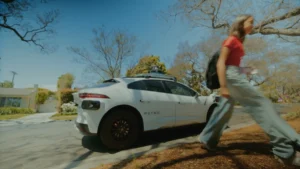
This cautious rollout strategy mirrors the initial steps taken by competitors, though Tesla’s scale in these specific cities is currently dwarfed by established players like Waymo. Earlier this year, Waymo, the autonomous driving subsidiary of Alphabet, also established operations in Dallas and Houston. In Houston, Waymo operates a single vehicle within a 23-square-mile geofenced area, nearly identical to Tesla’s footprint. However, in Dallas, Waymo has a more robust presence, utilizing 16 Jaguar I-Pace electric SUVs across a 48-square-mile area.
A Chronology of Tesla’s Autonomous Ambitions
Tesla’s journey toward a functional robotaxi network has been a central pillar of CEO Elon Musk’s long-term vision for the company. The timeline of this development reveals a shift from software-assisted driving to a full-scale service model:
- October 2016: Tesla announced that all vehicles being produced would have the hardware necessary for Full Self-Driving (FSD), though the software was still in its infancy.
- April 2019: During Tesla’s "Autonomy Day," Musk predicted that Tesla would have over a million robotaxis on the road by 2020, a timeline that proved overly optimistic but set the stage for the company’s current trajectory.
- 2023: Tesla launched its first robotaxi pilot in Austin, Texas. Initially, these Model Y crossovers utilized human safety monitors in the front passenger seat to intervene if the software encountered a situation it could not resolve.
- Late 2023 – Early 2024: Tesla began removing human safety monitors in its Austin testing, betting on the efficacy of its "unsupervised" FSD software. Simultaneously, the company launched a supervised ride-hailing service for employees in the San Francisco Bay Area.
- October 2024: Tesla held its "We, Robot" event at the Warner Bros. Discovery studio in California, unveiling the "Cybercab," a dedicated two-seater robotaxi without a steering wheel or pedals, intended to be the flagship of the future fleet.
- Current Expansion: The launch in Dallas and Houston represents the first major geographic expansion of the service beyond its initial testing hubs.
The Technology Debate: Camera-Only Vision vs. Lidar
One of the most significant points of contention in the autonomous vehicle industry is Tesla’s reliance on a "vision-only" approach. Unlike Waymo, Zoox, or Cruise—which utilize a suite of sensors including Lidar (Light Detection and Ranging), radar, and cameras—Tesla’s system relies exclusively on optical cameras and neural networks.
Tesla argues that human drivers navigate using only vision and biological "neural nets" (the brain), and therefore, a sufficiently advanced artificial intelligence should be able to do the same. This approach significantly reduces the cost of the hardware, potentially allowing Tesla to scale its fleet more rapidly than competitors whose sensor suites can cost tens of thousands of dollars per vehicle. However, critics and some safety experts argue that Lidar provides a critical layer of redundancy, particularly in low-visibility conditions or complex urban environments where depth perception is paramount.
The expansion into Dallas and Houston will serve as a critical test for Tesla’s Hardware 4 and FSD (Supervised) software in new environments. Texas cities are known for high-speed frontage roads, complex highway interchanges, and unique weather patterns—such as Houston’s torrential rains—all of which will challenge the camera-centric system.
Human Intervention and the "Remote Operator" Controversy
A recent investigative report from Wired has added a layer of complexity to the narrative of "fully autonomous" driving. The report cited letters sent by various autonomous vehicle developers to U.S. Senator Ed Markey, a Democrat from Massachusetts. These documents revealed that Tesla’s robotaxis are, in some instances, driven remotely by human operators.
This revelation distinguishes Tesla from six other major autonomous vehicle (AV) developers who informed the senator that their remote operators do not "drive" the cars in the traditional sense. In the case of companies like Waymo, remote assistants provide high-level "pathing" advice or confirmation when a vehicle is stuck (e.g., behind a double-parked truck), but the vehicle’s software remains responsible for the actual steering, braking, and acceleration. Tesla’s admission that remote operators may actually take control of the vehicle raises questions about the current maturity of its FSD software and the level of human labor required to maintain the "driverless" appearance.
The Competitive Landscape: The Battle for the Uber App
The robotaxi market is rapidly becoming a crowded field, with traditional ride-hailing platforms like Uber pivoting toward autonomous partnerships. While Tesla is building its own proprietary "Tesla Network" app, other manufacturers are opting for a collaborative approach:
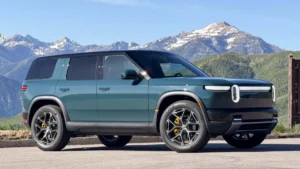
- Rivian and Uber: Rivian recently secured a deal to provide up to 50,000 R2 vehicles for autonomous use on the Uber platform.
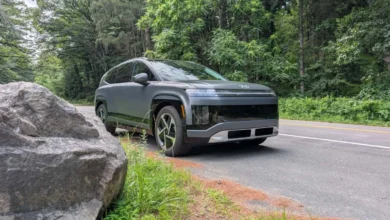
- Hyundai and Motional: The Hyundai Ioniq 5 Robotaxi has already seen deployment in cities like Las Vegas through partnerships with Uber and Motional.
- Verne: In Europe, the first commercial robotaxi service is set to hit the Uber app soon, utilizing specialized vehicles designed for urban mobility.
Tesla’s strategy remains asset-heavy and vertically integrated. By manufacturing the vehicles, developing the software, and operating the ride-hailing platform, Tesla aims to capture the entire value chain. However, this also means Tesla bears all the regulatory and operational risks that competitors might offload to partners like Uber.
Regulatory and Social Implications
Texas has emerged as a preferred testing ground for autonomous vehicles due to its business-friendly regulatory environment. Unlike California, which has seen significant pushback from local officials and residents over robotaxi safety incidents, Texas law generally prevents municipalities from banning autonomous vehicles, provided they comply with state-level safety standards.
However, the expansion of robotaxis into major Texas hubs brings broader societal implications:
- Safety and Liability: As Tesla removes safety drivers, the liability for accidents shifts more clearly onto the manufacturer. Federal regulators, including the National Highway Traffic Safety Administration (NHTSA), continue to monitor Tesla’s FSD software following a series of high-profile collisions.
- Urban Congestion: While robotaxis promise to reduce the need for private car ownership, critics worry that a surge in "deadhead" miles—miles driven by empty autonomous vehicles cruising for passengers—could actually increase urban traffic congestion.
- Labor Impact: The long-term success of the Tesla Network could significantly disrupt the gig economy, specifically the hundreds of thousands of drivers who currently rely on platforms like Uber and Lyft for income.
Future Outlook: Scaling Toward 2026
The current rollout in Dallas and Houston is a foundational step toward Tesla’s goal of high-volume autonomous transport. During the "We, Robot" event, Musk indicated that Tesla hopes to begin production of the dedicated Cybercab before 2027. Until then, the company will continue to use the Model Y and Model 3 as the workhorses of its burgeoning taxi fleet.
As Tesla gathers more data from the streets of Dallas and Houston, the industry will be watching to see if the company can maintain safety standards while scaling its vehicle count. If Tesla can successfully navigate the complexities of these Texas metros with its vision-only system, it will lend significant weight to its claim that specialized, expensive sensors are unnecessary for the future of transport. For now, the residents of Dallas and Houston are witnessing the very early, experimental stages of a technology that aims to fundamentally rewrite the rules of the road.
Related posts: