Congressional Scrutiny Intensifies Over Chinese Ownership Stakes in Automakers Threatening U.S. Sales for Volvo, Polestar, and Mercedes-Benz

The global automotive landscape is facing a profound intersection of geopolitics, trade protectionism, and national security regulations, particularly within the United States market. As Washington tightens its regulatory framework regarding connected and autonomous vehicle technologies, automakers with complex international ownership structures and supply chains find themselves caught in the crossfire. A prime example of this regulatory friction is unfolding in South Carolina, where the Volvo EX90 and the Polestar 3 roll off the exact same assembly line. Despite sharing foundational hardware, software architectures, and parent company lineages, the two Swedish-branded vehicles received opposing regulatory judgments from the United States government regarding their eligibility for the American market.
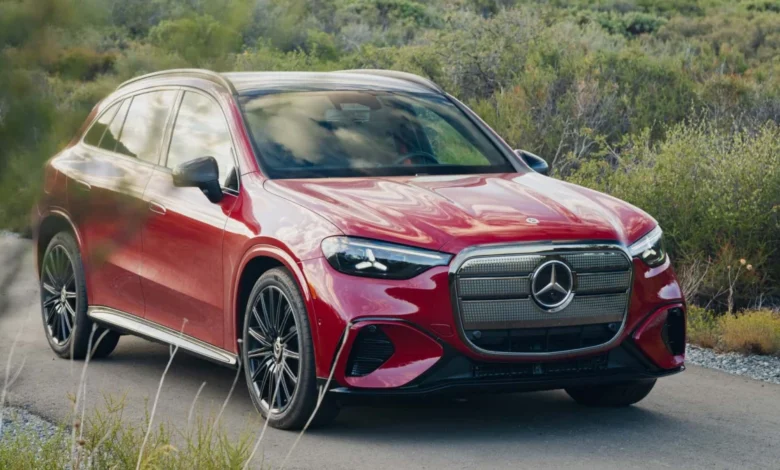
This bureaucratic divergence highlights the intricate and often unpredictable nature of modern trade enforcement. Compounding the situation, the United States Congress is now advancing legislation that could dramatically widen the scope of these restrictions. Lawmakers are currently negotiating a bipartisan bill that would explicitly target automakers possessing a Chinese ownership stake exceeding 15 percent. This prospective legislation threatens to create significant compliance hurdles not only for Geely-backed brands but also for industry heavyweights like Mercedes-Benz, which counts significant Chinese investment among its major stakeholders. As policymakers race to finalize the text before the conclusion of the legislative session, automotive executives, legal teams, and international trade ministers are scrambling to understand the long-term viability of their U.S. operations.
The Regulatory Framework: Software, Hardware, and National Security Concerns
The genesis of the current regulatory environment dates back to actions initiated by the U.S. Department of Commerce. In 2024 and 2025, federal agencies advanced comprehensive rules designed to safeguard American infrastructure and consumer data against perceived vulnerabilities originating from foreign adversaries, primarily China and Russia. The primary concern among national security officials is that modern connected vehicles—equipped with sophisticated telematics, advanced driver-assistance systems (ADAS), cellular connectivity, and external-facing sensors—could serve as conduits for massive data harvesting or even remote actuation by foreign entities.
To mitigate these risks, the Commerce Department established a phased implementation timeline. Restrictions targeting specific Chinese- and Russian-linked vehicle software are slated to take effect for the 2027 model year. These rules govern the operating systems, telematics control units, and navigation software that allow vehicles to communicate with external networks. Following the software prohibitions, hardware restrictions are scheduled to be implemented in 2030. These subsequent rules will apply broadly to both internal combustion engine vehicles and electric vehicles, regardless of where the final assembly takes place. Consequently, even cars manufactured domestically on U.S. soil are subject to scrutiny if their component supply chains or corporate ownership structures trigger statutory thresholds.
The Curious Case of Volvo and Polestar: Shared Lines, Divergent Fates
The operational reality of modern automotive conglomerates makes these regulations particularly difficult to navigate. Volvo Cars and Polestar both trace their roots to Sweden and both operate under the ultimate corporate umbrella of the Chinese automotive giant Zhejiang Geely Holding Group. Furthermore, both brands utilize overlapping manufacturing footprints, most notably at Volvo’s assembly plant in Ridgeville, South Carolina, where vehicles like the Volvo EX90 and Polestar 3 are produced side-by-side.
Despite these operational similarities, their interactions with the U.S. government yielded vastly different outcomes. Because Geely holds a majority controlling stake in Volvo Cars—owning roughly 79 percent of the company—Volvo was required to formally petition the Department of Commerce for specific authorization to continue importing and selling its connected vehicles in the United States past the upcoming deadlines. Following extensive engagement, which included diplomatic backing and coordination from the Swedish government and trade officials, the Commerce Department granted Volvo the necessary exemption. Volvo representatives confirmed that while the exemption allows them to maintain market access, the brand must still comply with rigorous oversight and meet the same overarching software security baselines mandated for all manufacturers.
Conversely, Polestar encountered a roadblock. Also controlled largely by Geely—with founder Li Shufu reporting a beneficial ownership of approximately 60.5 percent of shares according to a late-2026 Securities and Exchange Commission filing—Polestar applied for similar authorization to safeguard its model lineup from 2027 onward. The U.S. government ultimately denied the request.
The denial has sparked confusion within corporate boardrooms and dealership networks alike. Polestar executives informed their dealer network that they had queried the Department of Commerce regarding the rationale behind the rejection, noting the paradoxical nature of banning a vehicle that shares its software architecture and manufacturing line with an approved model. Reports indicate that diplomatic assistance strategies differed between the two brands, with Swedish trade officials noting that Polestar did not seek the same level of governmental intervention as Volvo. Ultimately, Polestar elected not to formally appeal the adverse decision, leaving its long-term U.S. product pipeline clouded with uncertainty.
Expanding the Scope: The Proposed Connected Vehicle Security Act
While the Department of Commerce rules establish administrative pathways for exemptions, the legislative branch is moving to codify and significantly stiffen these restrictions. Members of Congress are currently negotiating the parameters of the Connected Vehicle Security Act. As reported by financial and legal news outlets, this proposed legislation seeks to write existing executive branch restrictions into permanent federal statute, introducing a hard ceiling on foreign ownership.
Under the terms being discussed in late-stage congressional negotiations, any automaker with a cumulative Chinese ownership stake exceeding 15 percent would be prohibited from selling vehicles in the United States, regardless of whether those vehicles are assembled domestically. This specific threshold immediately brought legacy German luxury manufacturer Mercedes-Benz into the legislative spotlight.

Mercedes-Benz features significant capital investment from Chinese entities. Specifically, the state-owned Beijing Automotive Group (BAIC Group) maintains a 9.98 percent stake in the German automaker, while Geely founder Li Shufu holds an additional 9.69 percent through a dedicated investment vehicle. Combined, these holdings account for approximately 19.67 percent of Mercedes-Benz stock—comfortably above the proposed 15 percent statutory limit.
The Mercedes-Benz Dilemma and Congressional Scrutiny
The prospect of a ban or severe sales restriction has forced Mercedes-Benz leadership to engage proactively with both investors and American lawmakers. During a recent media roundtable, Jason Hoff, CEO of Mercedes-Benz North America, addressed the company’s position on the matter, emphasizing the critical nature of the American market to the brand’s global strategy.
"The U.S. is an extremely important market for us, and we’re not going to do anything to jeopardize our success in the past and our success in the future," Hoff stated. When questioned regarding potential ownership restructuring or whether Chinese shareholders might be asked to divest portions of their holdings, Hoff declined to comment on internal shareholder discussions. However, he maintained a cooperative stance regarding the overarching intent of the legislation, affirming that Mercedes-Benz supports measures designed to protect American national security and is prepared to take whatever compliance steps are necessary should the bill pass into law.
Industry analysts point out that Mercedes-Benz occupies a fundamentally different corporate category than Volvo or Polestar. Unlike the Geely-controlled Swedish brands, Mercedes-Benz operates as a publicly traded, independent German entity where Chinese investors hold minority, non-controlling positions. Mercedes representatives have repeatedly stressed that its Chinese shareholders hold no seats on the corporate management board and exert no operational control over day-to-day business decisions or vehicle software development.
Recognizing these distinctions, bipartisan lawmakers are reportedly considering structural amendments or carve-outs to spare companies like Mercedes-Benz from unintended collateral damage. According to ongoing legislative reports, Congress is evaluating an exception that would exclude purely passive investments—specifically those lacking voting rights or operational board representation—from the calculation of the 15 percent ownership threshold.
Even with potential carve-outs under discussion, the legislative process demands rigorous transparency. House lawmakers have formally requested that Mercedes-Benz submit comprehensive documentation, respond to a detailed list of inquiries by December 1, and arrange direct consultations with top U.S. executives to clarify the exact nature and influence of its foreign capital sources.
Broader Economic and Geopolitical Implications
The legislative push to restrict automakers based on ownership thresholds and software provenance marks a definitive shift in American industrial policy. For decades, the automotive sector has relied on deeply integrated global supply chains, cross-border capital investments, and multinational manufacturing joint ventures to optimize efficiency and reduce consumer costs.
However, escalating geopolitical tensions between Washington and Beijing have permanently altered corporate calculus. The ongoing deliberations over the Connected Vehicle Security Act and the rigorous enforcement of Commerce Department connectivity rules demonstrate that national security considerations now supersede traditional free-market integration principles.
For automakers, the immediate implications are operational and strategic. Companies must carefully audit not only their physical component supply chains—tracing minerals, batteries, and microchips back to their origins—but also their shareholder registries and software ecosystems. The disparate treatment of Volvo and Polestar illustrates that regulatory compliance is no longer a simple box-checking exercise; it requires active diplomatic engagement, transparent corporate governance, and adaptability to shifting legal definitions.
As Congress works toward a finalized legislative text ahead of the upcoming presidential review deadline, the automotive industry watches closely. Whether the final bill includes nuanced exemptions for passive investors or enforces a strict interpretation of the 15 percent rule, the message from Washington is unequivocal: foreign capital influence in critical technology sectors will face unprecedented oversight, forcing global manufacturers to choose between their international financial partnerships and access to the lucrative American automotive market.