Silicon Valley Faces a Rude Awakening as Espionage and Honey-Trap Scandals Expose Tech Industry Vulnerabilities


The technological landscape of the 21st century has shifted drastically, moving Silicon Valley from a hub of commercial software innovation to the frontline of global geopolitical competition. As the fallout continues to reverberate across the global technology sector following the revelations surrounding Nvidia Chief Executive Jensen Huang and an alleged Chinese espionage honey-trap scandal, industry analysts, security experts, and government officials are forced to confront an uncomfortable truth. The most critical intellectual property, proprietary algorithms, advanced chip architectures, and export control workarounds no longer reside exclusively within heavily guarded government facilities. Instead, they sit on laptops, inside data centers, and in the minds of corporate executives who have historically operated with virtually zero counterintelligence awareness.
While memes and dark humor briefly dominated social media in the wake of the allegations, painting the situation as a sensationalist corporate soap opera, the underlying reality is profoundly serious. Nation-state actors and sophisticated foreign intelligence services have recognized that targeting the human element—specifically individuals within private enterprise who hold the keys to cutting-edge artificial intelligence and semiconductor infrastructure—is far more efficient than attempting to breach digital firewalls. This evolving threat vector has laid bare a systemic vulnerability in the modern tech ecosystem: an industry built on rapid innovation, open collaboration, and unchecked ambition that has neglected the foundational principles of national security and personal vetting.
The Genesis of the Crisis: The Jensen Huang and Alice Huang Allegations
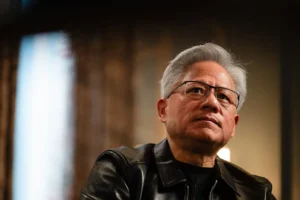
The catalyst for this sudden reckoning centers on explosive allegations involving Nvidia CEO Jensen Huang and Alice Huang, a former executive of a Singapore-based neocloud provider. According to investigative reports and international coverage, Alice Huang has been accused by authorities of operating as an asset for Chinese intelligence. The allegations further claim that she played a pivotal role in orchestrating a scheme that successfully smuggled billions of dollars worth of restricted, high-performance Nvidia microchips into China, bypassing strict U.S. export controls designed to curb Beijing’s military and technological advancement.
At the heart of the scandal is the accusation that Jensen Huang was drawn into a classic honey trap, a human intelligence operation where an individual is compromised through romantic or personal entanglement to extract sensitive information or influence critical decisions. While the precise details of the personal relationship and the extent of compromised data continue to be unraveled by federal investigators and corporate legal teams, the broader implications are unmistakable. The chief executive of the world’s most valuable artificial intelligence hardware company—a firm whose silicon fuels the global generative AI boom—became the direct target of a sophisticated foreign intelligence operation.
For an industry accustomed to evaluating threats through the lens of cybersecurity vulnerabilities, supply chain disruptions, and regulatory compliance, the realization that human relationships represent the most critical vector of attack has caused widespread shockwaves.
A Chronology of Rising Tensions and Geopolitical Tech Espionage
To understand how Silicon Valley reached this precarious juncture, it is necessary to examine the escalating convergence of geopolitics, artificial intelligence, and corporate espionage over recent years:
- The Semiconductor Bottleneck (2020–2022): As geopolitical tensions between the United States and China intensified, advanced semiconductors—particularly graphics processing units (GPUs) capable of training massive large language models—emerged as the ultimate strategic commodity. The U.S. Department of Commerce implemented sweeping export controls aimed at restricting China’s access to high-end chips.
- The Rise of Cloud Brokers and Proxy Entities (2022–2024): With direct shipments of advanced Nvidia hardware restricted, foreign intelligence networks adapted. They began establishing complex webs of shell companies, proxy firms, and neocloud providers in neutral jurisdictions—such as Southeast Asia and the Middle East—to divert restricted technology.
- Deepening Infiltration of Private Enterprise (2024–2025): Intelligence agencies recognized that circumventing export controls required more than paperwork and shell corporations; it required inside access to corporate roadmaps, allocation lists, and enforcement blind spots. High-ranking executives, board members, and operational leaders became prime targets for human intelligence operations.
- The Nvidia Revelations (Late 2026): Public disclosures and investigative journalism exposed the alleged honey trap involving Jensen Huang and Alice Huang, dragging the private sector into a domain previously reserved for defense contractors and government intelligence agencies.
- Industry-Wide Panic and Policy Shifts (Present): Major AI labs and hardware manufacturers, including OpenAI and other Silicon Valley titans, begin scrambling to issue counterintelligence warnings to employees, signaling a permanent shift in corporate security culture.
The Mechanics of Modern Honey Traps: Beyond Romance and Hollywood Tropes
Popular culture frequently depicts honey traps through the sensationalized lens of cinematic espionage—glamorous operatives using overt seduction to extract state secrets. However, security professionals emphasize that real-world intelligence operations are far more nuanced, patient, and psychological.
Aaron Brown, a former senior CIA officer and current founder of software company Lumbra, points out that friendship, professional camaraderie, and intellectual validation are often far more effective than romance.
"Nobody briefs founders on counterintelligence," Brown explains. "Historically, honey traps have been associated with politicians, the military, and national intelligence—the people behind clearances and a workforce trained to expect an approach. But now, many of the most valuable secrets sit inside companies building chips, models, and infrastructure. A spy wants what the CEO can touch: the roadmap, the export decisions, the customer list, who gets the technology. The CEO is the shortest path to all of it."
Attackers routinely embed themselves within the tech ecosystem by
adopting benign professional personas: venture capital investors, prospective enterprise clients, specialized consultants, or executive recruiters. These operatives do not necessarily require their targets to fall in love; rather, they cultivate a sense of trust, comfort, and psychological safety.
Perry Carpenter, a criminologist and chief deception strategist at security awareness firm KnowBe4, highlights the strategic rationale behind targeting individuals rather than networks.
"Why fight through a firewall when you can get close to the person who can open doors, influence decisions, or make requests nobody wants to question?" Carpenter asks.
Once a relationship is established and boundaries are subtly eroded, the nature of the interaction shifts. What begins as casual industry gossip or general strategic insight can gradually progress into requests for confidential corporate data, priority hardware allocations, or advance notice of regulatory filings. Furthermore, once an individual realizes they have shared sensitive information with an unauthorized party, the dynamic shifts from persuasion to coercion, opening the door to blackmail and extortion.
The Artificial Intelligence Multiplier: How Technology Fuels Deception
Ironically, the very technology that Silicon Valley champions—artificial intelligence—has drastically lowered the barriers to entry for foreign intelligence services seeking to infiltrate tech firms. In previous decades, mounting a successful honey trap or long-term human intelligence operation required extensive funding, months or years of meticulous background research, and the careful physical deployment of operatives.
Today, generative AI tools have revolutionized the tradecraft of espionage. Threat actors can instantaneously generate hyper-realistic digital personas, complete with fabricated social media histories, professional credentials, employment verification records, and institutional footprints. Furthermore, generative voice and video technology allow hostile actors to conduct convincing preliminary communications, maintain elaborate fictional backstories, and sustain psychological engagement across digital platforms with minimal overhead.
"AI can help sustain an entire fictional backstory," Carpenter notes. "The technology helps set the stage, but the deception ultimately plays out through human relationships."
This technological enablement has created a dangerous asymmetry. While Silicon Valley firms race to deploy artificial intelligence to automate enterprise workflows, optimize supply chains, and generate revenue, foreign intelligence services are utilizing those exact same capabilities to engineer social engineering campaigns tailored to individual executives and researchers.
Broader Industry Implications and the Perils of Executive Exceptionalism
The fallout from the Nvidia scandal has forced corporate boards across Silicon Valley to reevaluate their internal security protocols. For decades, tech culture has prioritized extreme transparency, rapid iteration, and a flat organizational hierarchy. Founders and chief executives have been encouraged to network aggressively, court international capital, and maintain open doors to global talent.
However, this cultural ethos has created severe institutional blind spots. A dangerous phenomenon known as "executive exceptionalism"—the pervasive belief that standard security policies, vetting procedures, and behavioral guardrails do not apply to those at the top of the corporate hierarchy—remains deeply entrenched in many technology firms.
Security experts warn that this cultural dynamic is compounded by corporate environments where employees feel intimidated or discouraged from questioning executive behavior. In companies where the CEO’s word is law, subordinates are unlikely to raise red flags if they observe an executive interacting with an unvetted individual, accepting suspicious business introductions, or making unusual exceptions to standard compliance protocols.
"One of the most dangerous security cultures is one where nobody feels comfortable questioning the CEO," Carpenter stresses.
Countermeasures: Shifting from Paranoia to Situational Awareness
As Silicon Valley grapples with this new geopolitical reality, security specialists argue that the solution is not an atmosphere of debilitating paranoia, but rather institutionalized situational awareness and structural hygiene. Founders and tech executives must learn to integrate counterintelligence principles into their daily operations without stifling business growth and entrepreneurial risk-taking.
Industry experts recommend several critical steps for mitigating human intelligence threats:
- Eliminating Executive Exceptionalism: Ensuring that security policies, travel advisories, and vetting standards apply equally to the C-suite and board members as they do to entry-level employees.
- Establishing Clear Personal Boundaries: Recognizing the deliberate blur between personal networking and professional obligations, particularly when dealing with unexpected overtures from individuals operating in peripheral tech hubs.
- Recognizing Behavioral Red Flags: Training staff to identify anomalous patterns, such as coincidental encounters that occur with suspicious frequency, obsessive curiosity regarding proprietary internal projects, and persistent demands for operational secrecy.
- Applying the "Loss of Job" Test: Implementing a simple gut-check mechanism for new professional relationships: evaluating whether a newly acquired "friend" or "advisor" would maintain their presence if the target were to suddenly lose their position within the company.
- Fostering Psychological Safety for Dissent: Building corporate cultures where employees feel empowered to voice concerns, challenge unusual executive directives, and report potential security anomalies without fear of professional retaliation.
As the artificial intelligence sector transitions from a commercial engine of economic growth into a critical pillar of national security, the cultural evolution of Silicon Valley is lagging dangerously behind the threats it faces. The events surrounding Nvidia serve as a stark reminder that in the modern era of geopolitical competition, the most sophisticated firewall in the world is utterly useless if the person holding the master key can be compromised by a well-crafted illusion.