Google Surprises Pixel Users With Early Rollout of Android 17 QPR2 Alongside November Feature Drop

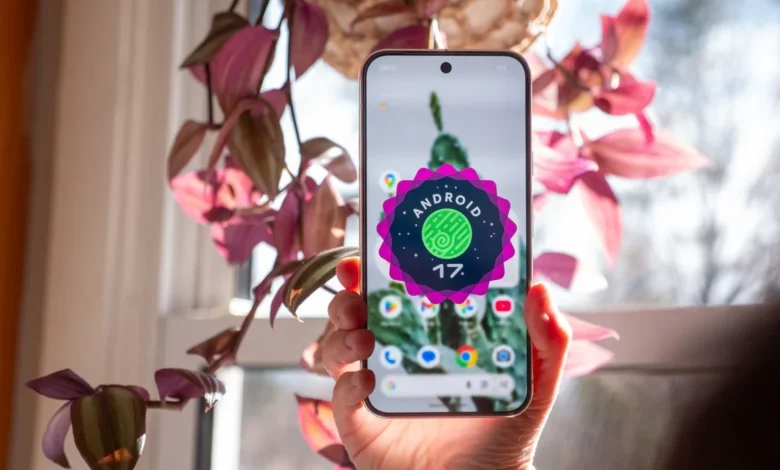
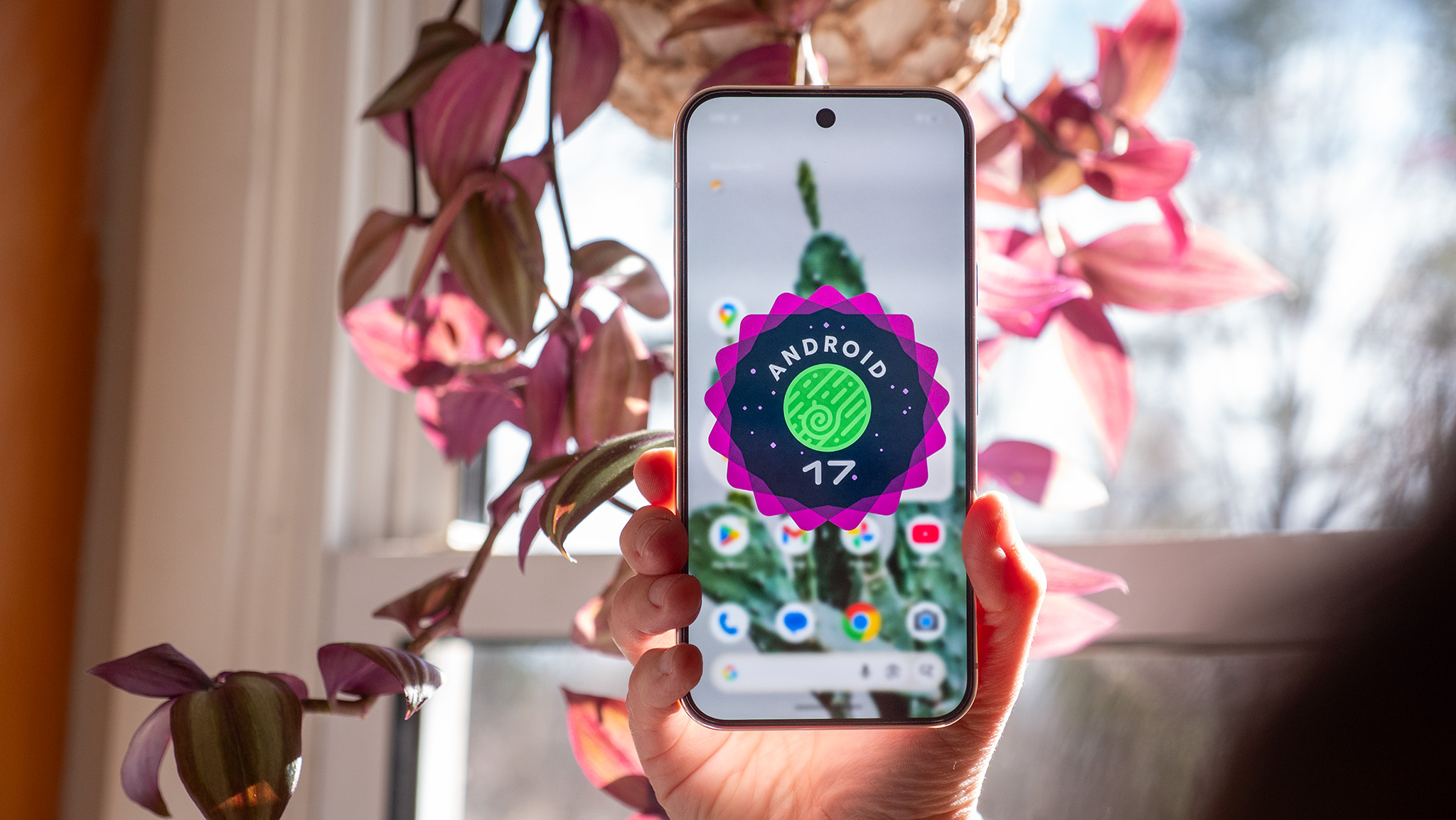
Google has officially launched Android 17 Quarterly Platform Release 2 (QPR2), delivering the stable over-the-air (OTA) update roughly a month ahead of schedule. Arriving in tandem with the November 2026 Google Pixel Feature Drop, this major software update is currently rolling out to an extensive array of supported Pixel hardware, ranging from the budget-friendly Pixel 6a to the newest flagship devices in Google’s ecosystem.
The early deployment follows a comprehensive beta testing phase that saw Google iterate through multiple pre-release builds to resolve kernel crashes, unexpected reboots, and persistent performance hitches. Highlighted extensively by Android experts and insiders such as Mishaal Rahman, the QPR2 update extends far beyond routine security patches and bug fixes. It introduces a broad spectrum of user-facing interface enhancements, granular permission controls, advanced Bluetooth audio capabilities, and power-user features that significantly redefine the daily software experience on supported mobile devices.
A Brief Chronology of the Android 17 Development Cycle
The path to Android 17 QPR2 began months prior with Google’s structured quarterly release framework. Following the initial rollout of the core Android 17 operating system earlier in the year, the Mountain View-based tech giant immediately transitioned development teams into the Quarterly Platform Release pipeline. The QPR cycle is designed to introduce notable feature enhancements and structural optimizations outside of the standard, yearly major OS upgrades.
Throughout late summer and early autumn, Google released successive beta builds, culminating in Android 17 QPR2 Beta 6, which focused heavily on system stability, kernel optimization, and eliminating unexpected reboots. Industry watchers anticipated a standard December release window, aligning with traditional quarterly drop schedules. However, Google accelerated its internal deployment pipeline, making the stable build available in November alongside the latest hardware feature drops. This unexpected acceleration marks a notable shift in Google’s software delivery strategy, shortening the gap between final beta validation and public availability for retail consumers.
Deep Customization: Redefining Color Palettes and Adaptive Wallpapers
Among the most visually striking modifications introduced in Android 17 QPR2 is a significantly expanded system customization suite. Historically, Android’s Material You dynamic thematic engine dictated system-wide color palettes based strictly on the user’s active wallpaper, sometimes limiting creative expression for users seeking bespoke aesthetic configurations.
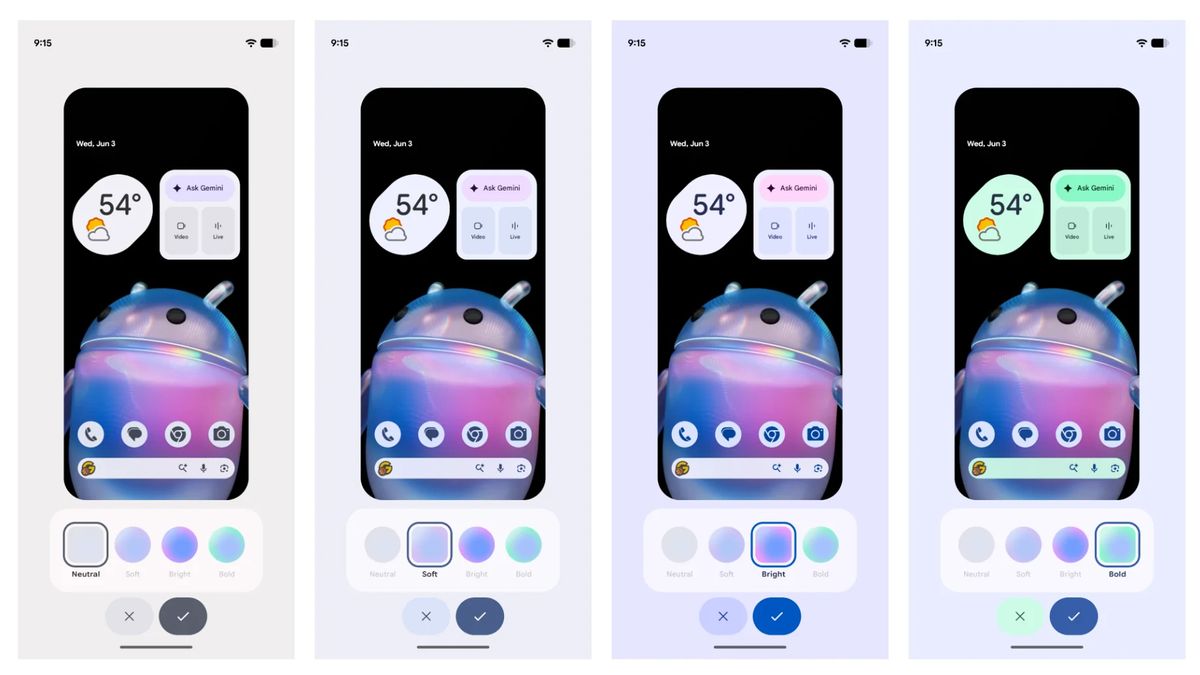
With QPR2, Google has introduced a granular color customization framework. Users are no longer restricted to automated preset color schemes; instead, the software features an advanced rainbow hue slider that enables precise, custom system color selection. Furthermore, the update incorporates four distinct intensity modifiers: Neutral, Soft, Bright, and Bold. These options allow users to scale the saturation and vibrancy of interface elements, notification shades, and supported third-party application accents to match their exact preferences.
In tandem with color controls, Google has implemented native support for adaptive light and dark wallpapers. Compatible wallpaper collections can now dynamically shift between distinct light and dark variants based on the system’s overarching theme status, ensuring seamless visual transitions throughout the day without requiring manual intervention from the user.
Enhanced Granular Control Over the Status Bar and Quick Settings
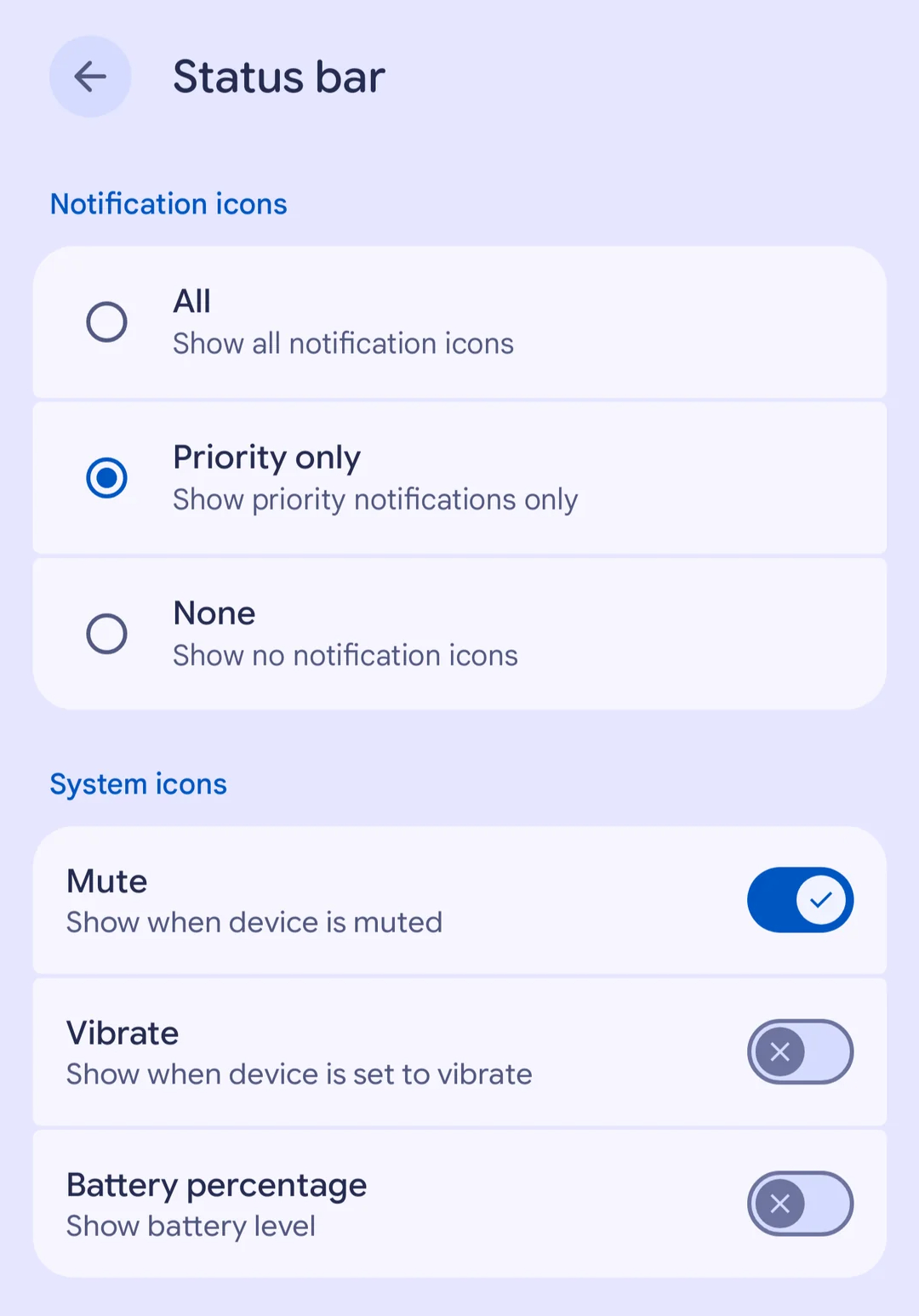
User interface utility receives a substantial upgrade in QPR2, specifically concerning the status bar and Quick Settings architecture. For years, Android users have navigated varying degrees of system icon clutter within the top status bar. Android 17 QPR2 addresses this by introducing a dedicated settings menu that governs notification icon visibility. Users can now choose to display all incoming notification icons, limit visibility strictly to priority alerts, or disable status bar notification icons altogether.
Additionally, the update introduces individual toggles to hide specific system status indicators. Users troubled by persistent iconography can selectively disable visibility for the battery percentage readout, mute status, and vibration indicators, resulting in a cleaner, minimalist display.
Brightness management has also been streamlined. In previous iterations of the operating system, certain legacy or third-party applications could enforce maximum screen brightness limits, overriding user inputs within the Quick Settings panel. QPR2 removes this restriction, empowering users to manually override app-specific brightness locks and dim their screens at will, regardless of the active application’s requirements.
Expanding Connectivity: Auracast Voice Broadcasts and Multitasking Improvements
On the hardware connectivity front, Android 17 QPR2 introduces substantial upgrades to Bluetooth LE Audio through the integration of a native Voice Broadcast feature. This capability enables users to broadcast their voice directly using the smartphone’s internal microphone or a connected wired headset. Nearby listeners equipped with compatible Auracast-enabled headphones, hearing aids, or other Android devices can tune into the live broadcast stream. To maintain user privacy, the software supports password-protected private broadcast channels.
Discovery mechanisms for Auracast streams have also been modernized. Users can effortlessly discover and join nearby audio broadcasts via Quick Settings tiles, QR code scanning, and NFC tap-to-join protocols. Furthermore, active broadcasts integrate smoothly with system-level Live Caption and translation utilities, broadening accessibility for diverse listening environments.
For owners of foldable devices, QPR2 refines software ergonomics by introducing a dedicated interaction handle at the top of active app windows. This UI element simplifies window management, allowing users to transition fluidly between full-screen applications, split-screen multi-window layouts, and floating bubble configurations.
Tightened Security, Privacy Logging, and Linux Terminal Integration
Security and privacy remain foundational pillars of the Android 17 architecture, and QPR2 introduces several targeted safeguards. When sideloading applications from external sources, users are presented with a refined installation dialog that clarifies whether granted permissions are temporary or permanent.
To mitigate risks associated with social engineering and unauthorized device tampering, the operating system now restricts high-risk actions—such as enabling Developer Options—while an active voice call is underway with an unknown contact. Similarly, the system requires explicit user confirmation prior to executing underlying call-forwarding command codes.
Transparency regarding on-device artificial intelligence has also improved. A new Private Compute Core logging tool provides users with clear visibility into data shared with local AI processing workloads.
Power users and developers will find notable enhancements within the integrated Linux Terminal application. QPR2 introduces native guest-to-host file sharing capabilities. The standard Android file manager can now directly interact with the Linux virtual machine environment, allowing users to effortlessly browse, edit, and transfer files between the host operating system and the Linux guest container.
Broader Implications and Ecosystem Outlook
The early release of Android 17 QPR2 highlights Google’s ongoing commitment to tightening its software development lifecycles and delivering high-value feature additions directly to Pixel hardware ahead of schedule. While features such as the advanced color customization engine, status bar controls, and Auracast voice broadcasting debut as exclusive components of the Pixel ecosystem, historical precedent suggests that foundational elements of the QPR codebase will eventually be incorporated into the broader Android Open Source Project (AOSP). Consequently, these capabilities are expected to filter down to smartphones manufactured by third-party OEMs in subsequent software iterations.
For current Pixel owners operating devices from the Pixel 6a onward, accessing the stable QPR2 build is straightforward. Users currently enrolled in the Android Beta Program must manually opt out of the program prior to installing the update to ensure they receive the stable over-the-air (OTA) package without triggering a factory data reset. Non-Pixel consumers will need to wait for their respective device manufacturers to integrate the QPR2 source code into their custom user interfaces over the coming months.
Related posts: