Nvidia CEO Jensen Huang Retained Crisis PR Firm Heller Inc. Months Before Acknowledging Foreign Intelligence Scrutiny and Affair

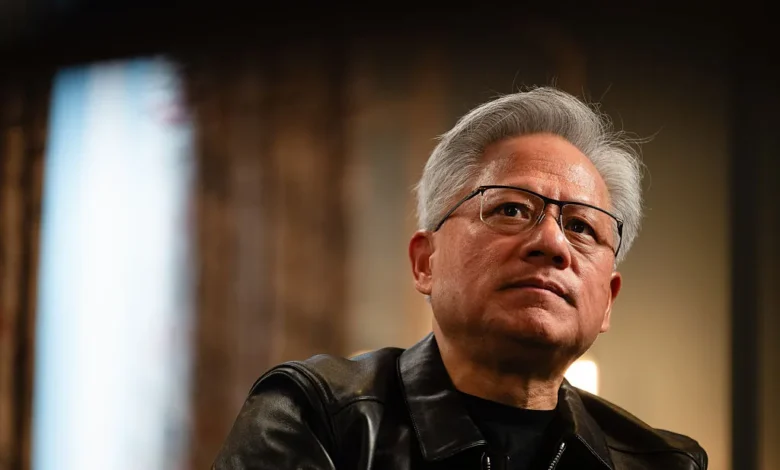
Nvidia Chief Executive Officer Jensen Huang secretly retained Heller Inc., a high-profile crisis communications firm renowned for managing severe personal scandals and sexual misconduct allegations, more than a year before publicly disclosing an extramarital affair. The relationship with the firm, founded by crisis management specialist Risa Heller, began quietly as the technology executive and his corporate handlers braced for potential fallout from a sprawling geopolitical and corporate security investigation.
The retention of Heller Inc. highlights a calculated effort by one of the tech industry’s most influential leaders to shield his personal life and the corporate governance of Nvidia from impending scrutiny. While public attention on Nvidia has historically centered on its market dominance in artificial intelligence hardware and its soaring stock valuation, the intersection of executive privacy, national security, and international espionage has now thrust the semiconductor giant into uncharted territory.
Origins of the Crisis Communications Strategy
According to investigative reports, Nvidia’s internal communications team was explicitly instructed to copy Heller Inc. on all incoming media inquiries concerning Jensen Huang. This directive was issued shortly after an investigative report published in October 2025 by The New York Times examined whether Nvidia hardware was bypassing strict United States export controls aimed at restricting advanced artificial intelligence chips from reaching Chinese entities.
Risa Heller and her firm have built a formidable reputation over decades, steering high-profile figures through intense public relations storms. Heller’s roster of historical clients includes figures entangled in significant political and cultural controversies, such as former U.S. Representative Anthony Weiner, celebrity chef Mario Batali, and former New Yorker writer Jeffrey Toobin. By bringing in a firm with deep experience in deflecting and managing reputational crises involving personal misconduct, Nvidia’s inner circle demonstrated an early awareness of the vulnerabilities surrounding their chief executive.
The Geopolitical Trigger: Megaspeed and Export Controls
The public unraveling of these events traces back to the October 2025 New York Times expose. The publication detailed the operations of Megaspeed, a relatively obscure, Singapore-based data center enterprise with profound operational ties to mainland China. Despite operating in the shadows of the broader tech sector, Megaspeed had managed to acquire nearly $2 billion worth of advanced Nvidia processors, triggering immediate alarms among U.S. regulatory bodies tasked with enforcing technology embargoes.
Within the investigative coverage, journalists highlighted the role of Alice Huang, the chief executive officer of Megaspeed. The report featured descriptions and photographic evidence placing Alice Huang directly alongside Jensen Huang at a high-profile gathering of Nvidia customers and partners held in Taipei, Taiwan. Although the business transactions between Nvidia and Megaspeed were already drawing the scrutiny of trade regulators, the personal connection between the two executives would soon eclipse the purely commercial implications of the hardware shipments.
Timeline of Disclosures and Investigations
The sequence of events leading up to the public confirmation of the scandal reflects a carefully managed, albeit reactive, corporate communications strategy:

- October 2025: The New York Times publishes an investigation into Megaspeed’s $2 billion acquisition of Nvidia chips, highlighting the relationship between Jensen Huang and Megaspeed CEO Alice Huang. Concurrently, Nvidia directs internal communications to involve Heller Inc. on all press matters relating to the CEO.
- Late 2025 to Late 2026: Throughout the intervening months, Heller Inc. quietly advises Nvidia and its executive leadership on personal and corporate messaging, while external rumors regarding foreign intelligence interests swirl within diplomatic and intelligence circles.
- November 8, 2026: Nvidia officially issues a statement on behalf of Jensen Huang, in which the CEO publicly acknowledges an extramarital affair with a former Megaspeed executive, omitting the explicit naming of Alice Huang.
- November 9, 2026: The Nvidia Board of Directors announces an independent investigation into the matter. The board formally cites growing concerns and intelligence reports suggesting that Jensen Huang had become the target of a targeted foreign intelligence operation orchestrated by Chinese state actors.
Official Responses and Board Action
In a formal statement released over the weekend, Nvidia confirmed that its board of directors had initiated an independent review to ascertain the full scope of the relationship and determine whether any proprietary corporate information, export-restricted data, or strategic trade secrets were compromised.
"The board of directors takes all matters concerning corporate security and executive oversight with the utmost seriousness," an Nvidia spokesperson noted in the wake of the announcement. "An independent investigation is currently underway, led by external legal counsel, to evaluate the circumstances surrounding these reports and to ensure that company protocols and national security compliance measures were strictly maintained."
Jensen Huang issued a concurrent personal statement addressing the affair, expressing regret over the personal indiscretion while cooperating with the ongoing independent review. Neither Risa Heller nor representatives for Nvidia’s corporate communications department provided immediate comments when pressed for additional details regarding the precise terms of the crisis firm’s engagement.
Broader Implications for Nvidia and Corporate Governance
The unfolding scandal presents a multi-layered crisis for Nvidia, a company that sits at the absolute epicenter of the global artificial intelligence boom. As the primary supplier of the advanced graphics processing units (GPUs) required to train massive large language models, Nvidia’s market capitalization and geopolitical significance cannot be overstated. Any vulnerability at the leadership level—particularly one intersecting with foreign intelligence operations and international trade restrictions—carries profound ramifications.
From a corporate governance perspective, the revelation that a top-tier crisis communications firm was retained more than a year before public disclosures raises questions regarding transparency and risk management. Shareholders and market analysts are left to evaluate whether Nvidia’s board was fully apprised of the potential exposure stemming from the CEO’s personal relationships well in advance of the media spotlight.
Furthermore, the national security dimension cannot be ignored. U.S. authorities have steadily tightened the regulatory noose around advanced computing exports to China, viewing semiconductor technology as a critical national security asset. If a foreign intelligence service successfully leveraged a personal relationship to gain insight into Nvidia’s supply chain, customer allocations, or export compliance workarounds, it would represent a catastrophic security failure for one of America’s most strategically vital technology corporations.
As the independent board investigation proceeds, the technology sector will be watching closely to see how Nvidia navigates the delicate balance between protecting its visionary leader and maintaining the absolute trust of regulators, investors, and international allies.
Related posts: