Tesla Cybertruck Production to Conclude Next Year, Marking a Historic Electric Vehicle Market Retreat


Tesla has confirmed plans to wind down production of the Cybertruck next year, bringing an abrupt conclusion to the vehicle’s market run just over three years after initial customer deliveries began. The decision, disclosed by Chief Executive Officer Elon Musk, marks a definitive close to one of the most polarizing and heavily scrutinized product launches in modern automotive history. The stainless-steel electric pickup truck, initially unveiled to global fanfare in November 2019, will exit the production lines significantly earlier than industry standards for a brand-new vehicle platform, joining the ranks of infamous automotive commercial missteps.
The announcement crystallizes a prolonged period of declining sales, persistent manufacturing hurdles, and shifting corporate priorities within Tesla. As the company reallocates engineering resources and factory floors toward autonomous ride-hailing initiatives, the premature end of the Cybertruck program offers a case study in the challenges of bringing radical, non-traditional automotive designs to a conservative and utility-driven market segment.
A Timeline of Broken Promises and Delayed Deliveries
The trajectory of the Cybertruck was defined by an extended gap between initial promises and manufacturing realities. When Elon Musk introduced the vehicle on a stage in Hawthorne, California, in late 2019, he pitched a disruptive product that would fundamentally alter the pickup truck landscape. At the time, Tesla promised a starting price of $39,000 for the rear-wheel-drive variant, with single- and dual-motor models slated for production by late 2021, and a tri-motor flagship scheduled for 2022.
Those timelines quickly dissolved. Production bottlenecks, supply chain disruptions, and the complex engineering requirements of the vehicle’s exoskeleton and ultra-hard stainless-steel body panels delayed the first customer deliveries until late 2023—nearly two years behind schedule.
When vehicles finally reached consumers, the financial parameters bore little resemblance to the 2019 presentation. The initial wave of deliveries consisted exclusively of the high-end "Foundation Series" tri-motor variant, priced at a staggering $120,000—triple the original base-model promise and roughly $50,000 higher than the early target for the tri-motor configuration. Subsequent lower-priced trims arrived later than anticipated, carried significantly higher price tags than originally advertised, and ultimately saw their production curtailed or canceled entirely. By the time order books for the entry-level variants were closed, the lowest-priced Cybertruck available exceeded $80,000.
Performance metrics also fell short of initial declarations. While early marketing materials teased a driving range of up to 500 miles on a single charge, the vehicle’s maximum EPA-estimated range reached only 325 miles. A planned bed-mounted range extender battery pack, designed to push capacity to 470 miles, was quietly canceled before ever reaching production.
Broader Struggles in the Electric Truck Segment
The difficulties faced by Tesla were mirrored across the broader electric truck industry, illustrating systemic hurdles in converting traditional truck buyers to battery-powered alternatives. Established automakers and startups alike discovered that building electric utility vehicles at price points competitive with internal combustion engines was exceptionally difficult.
Ford Motor Company entered the market with high ambitions for the F-150 Lightning, projecting annual production capacities of up to 150,000 units. However, reality intervened as high production costs, battery supply constraints, and range anxieties kept real-world sales well below projections, peaking at roughly 33,000 units annually. Ford executives later acknowledged strategic missteps in scaling the vehicle too aggressively ahead of consumer demand.

Similarly, General Motors invested heavily in its Ultium platform, establishing Factory Zero in Michigan to build next-generation electric pickups and SUVs. Sluggish market uptake forced GM to repeatedly adjust production targets, idle the facility for extended periods, and ultimately postpone subsequent generations of electric truck models amid a broader industry slowdown. Rivian, while carving out a dedicated customer base with its R1T, also grappled with high production costs and luxury-segment pricing boundaries.
Despite these industry-wide headwinds, the Cybertruck’s performance diverged sharply from its executive projections. Musk had previously stated that the vehicle possessed the potential to achieve sales volumes between 250,000 and 500,000 units annually. Instead, industry estimates from Cox Automotive indicate that Tesla delivered approximately 38,965 Cybertrucks during its first full year of sales in 2024, followed by a steep contraction in 2025.
Manufacturing Challenges and Brand Friction
Beyond pricing and specification gaps, the Cybertruck faced mounting obstacles related to build quality, durability, and public perception. Independent testing and consumer reports frequently highlighted mechanical issues, software glitches, and vulnerabilities in structural components under heavy utility use. The polarizing geometric design, while successful in generating initial viral attention, struggled to resonate with commercial and vocational fleet buyers who prioritize traditional utility, ease of repair, and standardized bed dimensions.
Concurrently, public polarization surrounding Elon Musk’s public profile and political commentary introduced brand friction. Market analysts noted that the demographic most inclined toward early adoption of electric vehicles—frequently residing in urban and suburban coastal markets—overlapped awkwardly with the cultural positioning of the Cybertruck, alienating potential buyers who might have otherwise considered the brand.
Strategic Shift Toward Autonomous Mobility
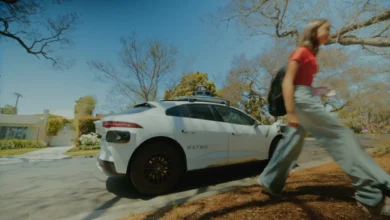
The decision to terminate Cybertruck production is closely tied to Tesla’s broader strategic pivot away from consumer passenger vehicles and toward autonomous ride-hailing fleets. Capital and engineering talent are increasingly being funneled into the development of the "Cybercab" and unsupervised Full Self-Driving (FSD) software.
As Tesla transitions its manufacturing footprint to prioritize unboxed vehicle assembly lines optimized for autonomous pods, legacy vehicle programs with lower-than-projected margins have been systematically re-evaluated. By winding down the Cybertruck, Tesla can reclaim valuable factory space at its Texas facility to support the commercialization of its next-generation autonomy platform.
Implications for the Automotive Industry
The rise and fall of the Tesla Cybertruck will likely serve as a reference point in business and automotive curricula for decades. It demonstrates the dangers of over-promising on technological breakthroughs, ignoring established consumer requirements in utility segments, and tying product viability to volatile executive branding.
While the vehicle succeeded in sparking public conversation and compelling competitors to accelerate their long-range EV development programs, its commercial outcome demonstrates that novelty alone cannot sustain a major vehicle line in a capital-intensive industry. As production winds down next year, the automotive market moves past one of its most eccentric experiments, leaving manufacturers to focus on practical economics, scalable manufacturing, and proven consumer demand.