Chasing Totality: How Renowned Astrophotographer Kiko Fairbairn Captured the August 2026 Solar Eclipse Over Northern Spain

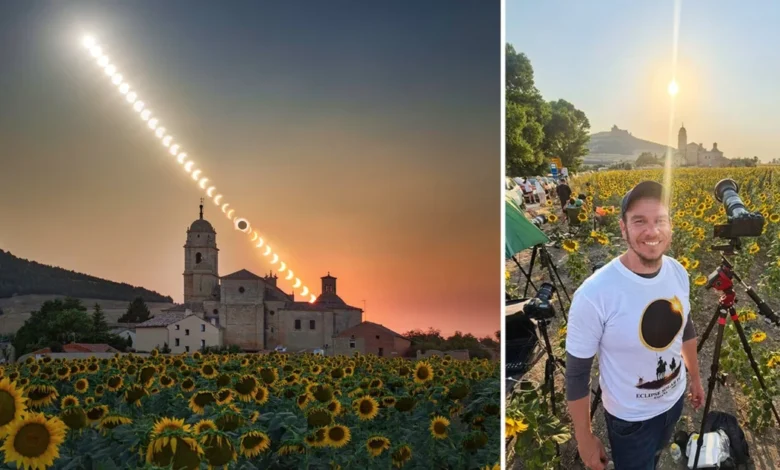
The intersection of celestial mechanics and terrestrial geography offers few spectacles as arresting as a total solar eclipse. On August 12, 2026, the path of totality swept across northern Spain, drawing astronomers, scientists, and visual artists from every corner of the globe. Among them was acclaimed Brazilian astrophotographer Kiko Fairbairn, whose meticulous year-long preparation culminated in a breathtaking series of images captured against the historic backdrop of Burgos and Castrojeriz. Blending rigorous scientific understanding with artistic composition, Fairbairn’s project provides a compelling case study in the modern practice of eclipse photography, demonstrating the delicate balance between technical automation and the raw, unscripted emotion of witnessing a cosmic alignment firsthand.
The Genesis of a Vision: Planning and Reconnaissance
Planning for an astronomical event of this magnitude requires precision that begins months, and often years, in advance. Although Fairbairn had previously photographed an annular solar eclipse in Brazil, a total solar eclipse presents an entirely different set of optical and operational challenges. The geometry of the event demands exact positioning; even a shift of a few hundred meters can throw off a carefully plotted foreground composition against the solar path.
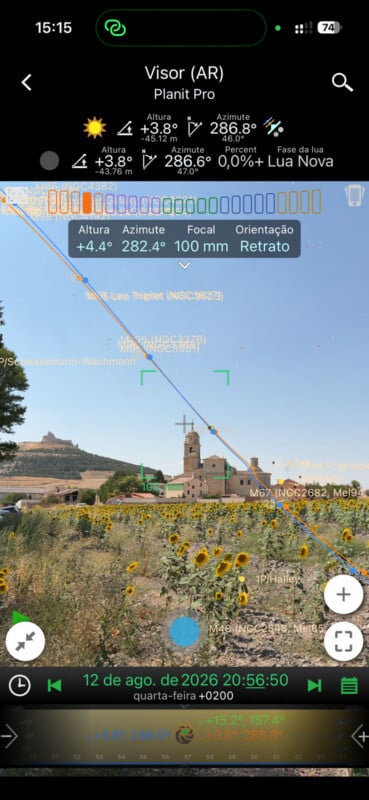
For over a year, Fairbairn utilized advanced augmented reality astronomy applications and topographical mapping tools to visualize how the moon’s shadow would traverse various landscapes. However, digital planning tools can only dictate so much from thousands of miles away. Upon arriving in northern Spain days before the event, Fairbairn initiated a rigorous ground-level scouting campaign across the province of Burgos.
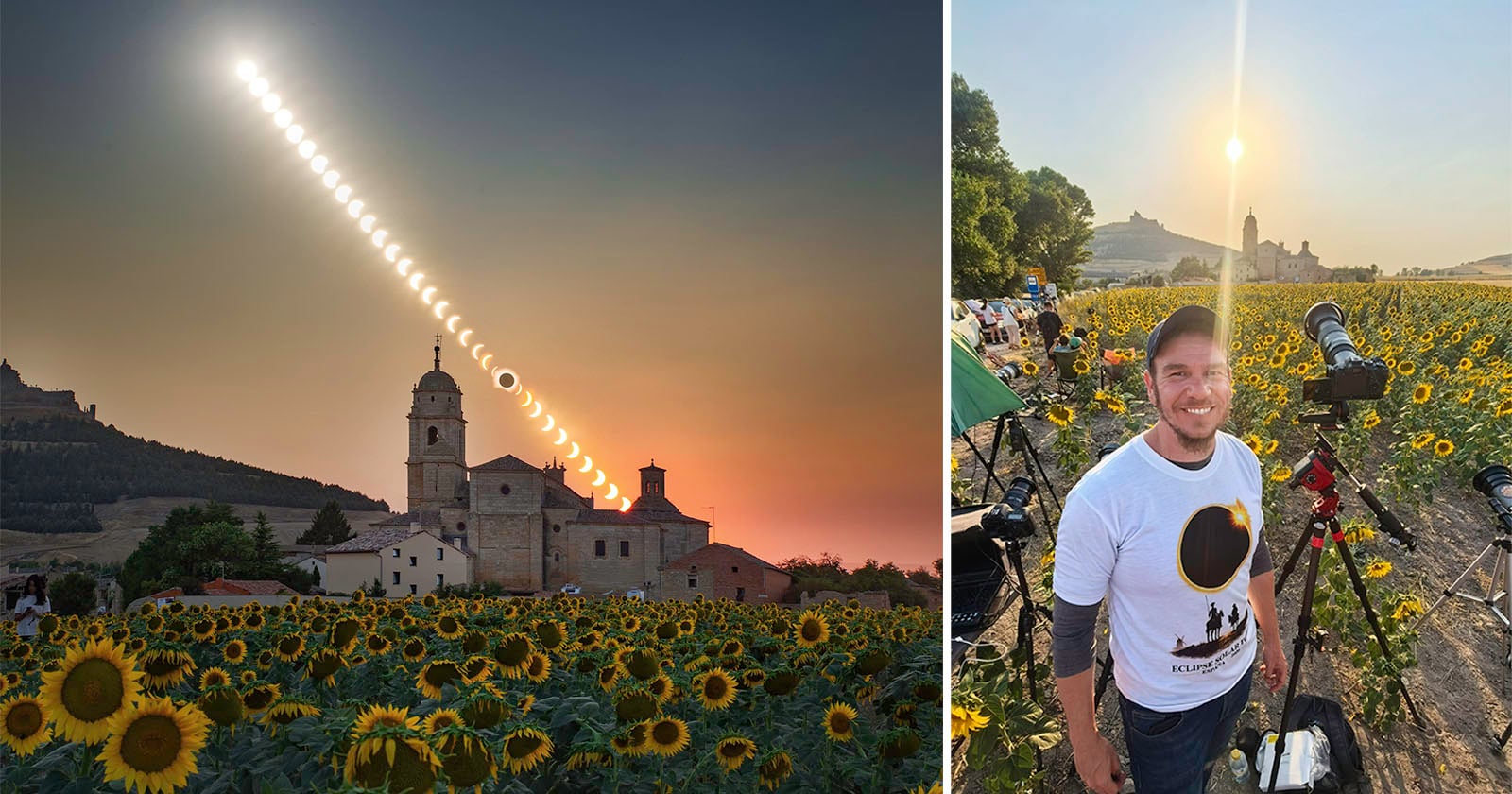
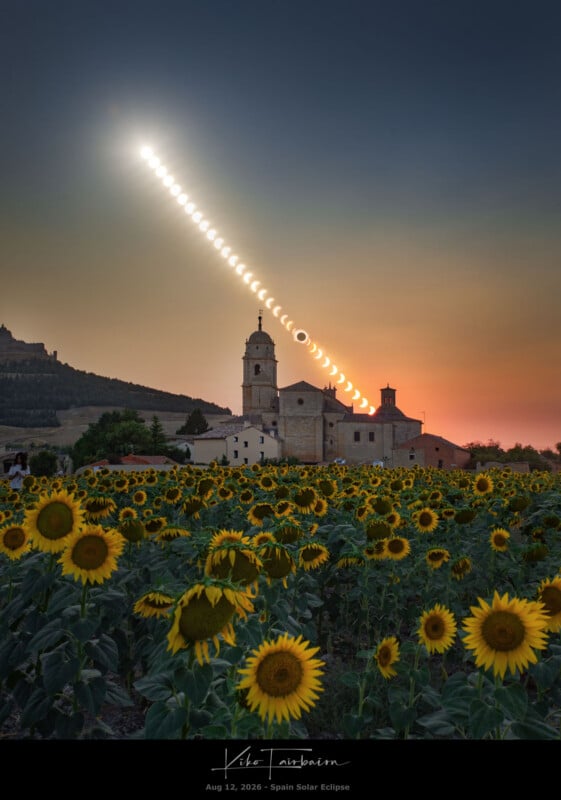
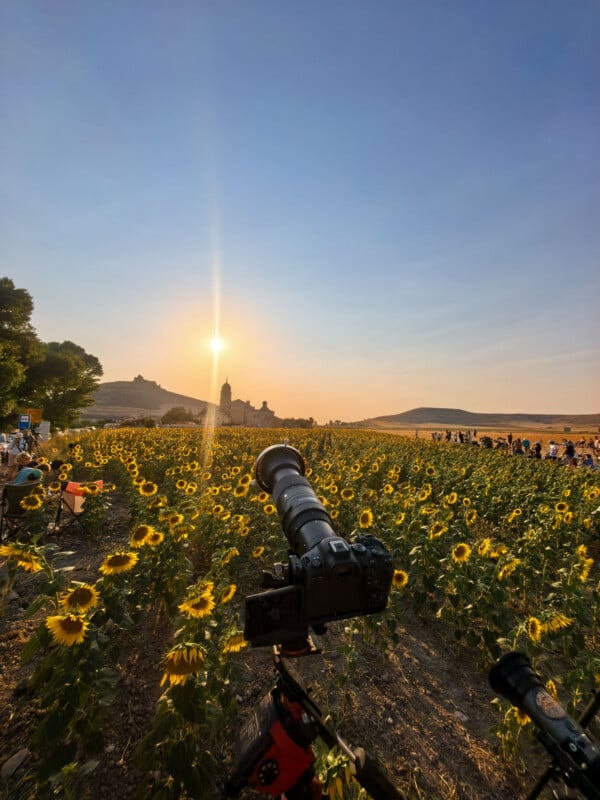
His search ultimately led him to a sprawling, vibrant field of sunflowers situated near the historic town of Castrojeriz, framed by an ancient stone church and distant medieval castle ruins. The location offered a powerful thematic resonance: sunflowers, whose heliotropic nature aligns their visual identity with the sun, provided an organic terrestrial mirror to the celestial drama unfolding overhead. After testing various focal lengths—briefly considering a wider 16-35mm lens before settling on a 24-70mm lens locked at 38mm—Fairbairn established a layered composition that integrated foreground flora, mid-ground architecture, and the diagonal arc of the eclipse sequence.
A Dual-Camera Methodology and Technical Execution
Managing the fast-paced and rapidly shifting light conditions of totality requires robust equipment redundancy. Fairbairn adopted a multi-camera strategy designed to separate the rigorous demands of deep-sky solar imaging from the narrative storytelling of landscape photography.
For his primary astronomical capture—focused exclusively on close-up sequences of the sun, the solar corona, and prominences—Fairbairn deployed a Canon EOS R6 Mark III mounted on a specialized star tracker equipped with a dedicated solar filter. He paired this body with a 150-600mm telephoto zoom lens and a 2x teleconverter. By automating this system to continuously record the sun’s progression, Fairbairn freed himself to concentrate entirely on his second, more complex mission: capturing the wider landscape.
For the terrestrial sequence, Fairbairn relied on a trusted workhorse: the Canon EOS 5D Mark III DSLR. Operating within a tightly controlled workflow, he captured bracketed exposures comprising a base frame, a shadow-detail frame two stops brighter, and a highlight-preservation frame two stops darker. Using an aggressive bracketing strategy (such as shutter speeds of 1/50, 1/200, and 1/800s) allowed him to retain a substantial exposure safety margin as ambient light levels plummeted during totality. Powered by a dummy battery connected to an external power bank and protected by a Haida ND 3.0 filter, the static landscape setup executed nearly 300 frames without manual intervention, eliminating the need to constantly adjust settings while the eclipse reached its climax.
The Precious Moments of Totality and the Human Element
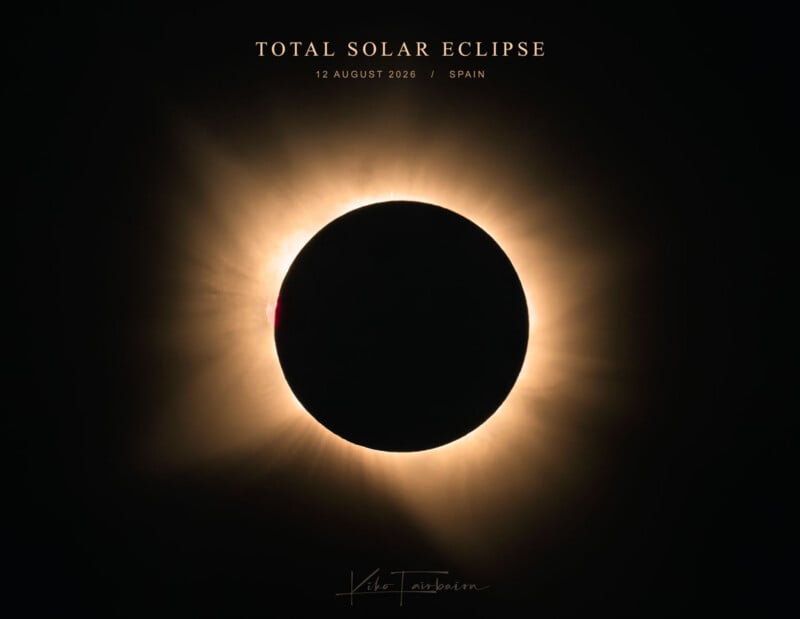
Total solar eclipses are notoriously brief. In the Castrojeriz region, Fairbairn was granted precisely 1 minute and 46 seconds (106 seconds) of totality. For many visual artists, the intense pressure to secure operational success can lead to tunnel vision, causing them to spend the entirety of the rare event staring at camera viewfinders rather than experiencing the phenomenon with their own eyes.
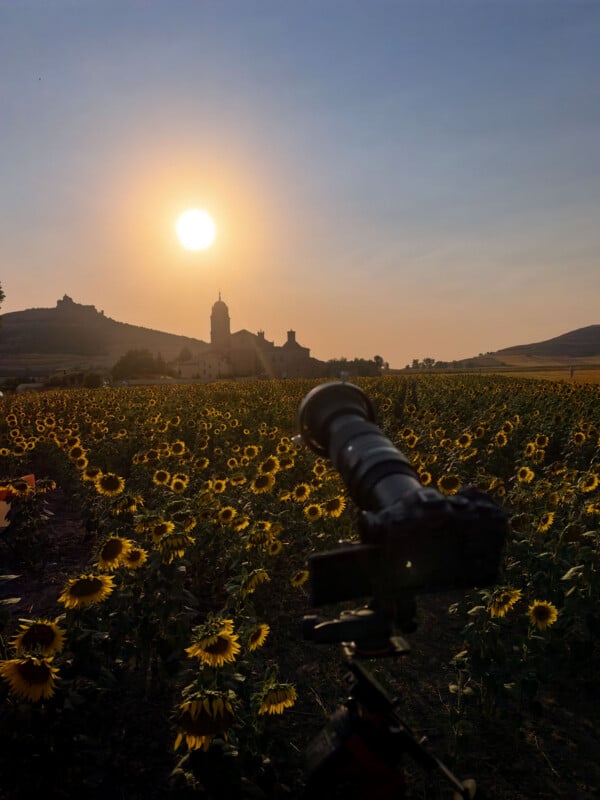
Mindful of this psychological trap, Fairbairn structured his shoot to run autonomously during the critical window, allowing him to step back. Accompanied by his sister—who documented the behind-the-scenes reality of the expedition—and a close-knit group of fellow Brazilian astrophotographers, Fairbairn deliberately paused his technical monitoring to look directly up at the sky.
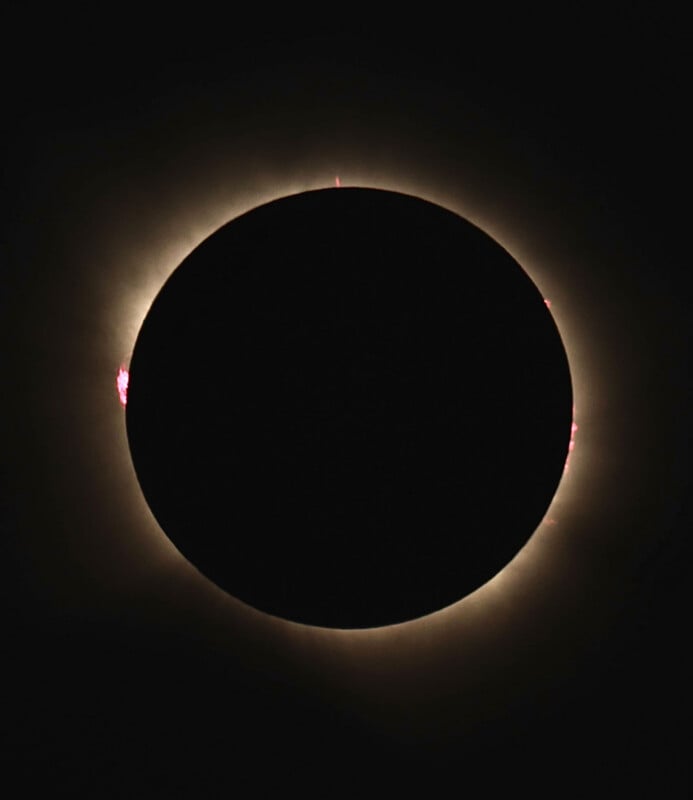
The emotional impact of that transition from technician to observer is profound. Witnesses to totality frequently report an instinctive sense of shock as the ambient temperature drops, wildlife falls silent, and the solar corona blooms into view around the silhouetted lunar disk. This alignment occurs due to a remarkable cosmic coincidence: although the Sun is approximately 400 times larger than the Moon, it is also roughly 400 times farther away from Earth, causing both bodies to appear nearly identical in angular size from our planetary vantage point. When the Moon covers the brilliant photosphere with absolute precision, the hidden corona is revealed—a surreal manifestation of orbital mechanics that continues to captivate humanity.
Broader Impact and the Legacy of Scientific Artistry
Kiko Fairbairn’s work occupies a unique space where rigorous scientific data collection intersects with emotive visual storytelling. With a career spanning over 15 years, Fairbairn has established himself as a prominent voice in modern astrophotography. His deep-sky and landscape panoramas have been featured by leading global institutions and publications, including NASA, National Geographic, the BBC, and Scientific American. Notably, he was awarded the prestigious Sir Patrick Moore Prize at the Astronomy Photographer of the Year competition in 2019, cementing his reputation within the international astronomical community.
Beyond his photographic portfolio, Fairbairn is an active educator, having delivered talks at TED events, schools, and observatories to bridge the gap between scientific literacy and visual arts. His experiences in Spain—navigating the collective anxieties of weather uncertainties, equipment calibration, and the fleeting nature of totality—underscore the collaborative spirit inherent in modern astrophotography expeditions.
Ultimately, while the resulting composite images of the 2026 solar eclipse standing sentinel over the sunflowers of Castrojeriz serve as a technical triumph, Fairbairn emphasizes that the true value of such endeavors lies in the shared human experience. The meticulous planning, the hardware configurations, and the mathematical precision all serve a singular purpose: to anchor human consciousness to a fleeting moment of cosmic wonder, ensuring that the ephemeral dance of Earth, Moon, and Sun is preserved both in pixels and in memory.