Google Unveils Gemini 4 Carbon: A New Frontier Model Focused on Advanced Reasoning, Complex Agentic Workflows, and Cybersecurity


The artificial intelligence landscape shifted once again as Google officially announced the broad rollout of Gemini 4 Carbon, its most advanced frontier model to date. Designed specifically to tackle tasks that stretch the limits of contemporary machine learning intelligence, Carbon arrives with
unprecedented capabilities in complex cybersecurity operations, multi-step software engineering, and open-ended scientific discovery. Following closely on the heels of the recent Gemini 4 Argon release, Carbon is engineered to handle tasks requiring deep, multi-phase reasoning, extensive token usage for thorough exploration, and robust verification loops.
While Argon continues to serve as the ideal baseline model for standard software engineering and high-volume knowledge work, Carbon is tailored for high-stakes environments where precision and deep contextual synthesis are paramount. Developers, enterprise organizations, scientific researchers, and general consumers can now access the model across multiple Google platforms, signaling a major leap forward in how artificial intelligence handles autonomous, long-horizon workflows.
Main Facts and Ecosystem Integration
Gemini 4 Carbon is immediately accessible via application programming interfaces through Google AI Studio and Gemini for Enterprise for all paying commercial clients and developers. The introductory pricing remains aligned with Gemini 4 Argon, billed at $2 per million input tokens and $10 per million output tokens. Furthermore, the model is rolling out natively to Google AI Ultra subscribers across the standalone Gemini application, AI Mode in Search, and Google Antigravity, Google’s advanced multi-agent development environment.
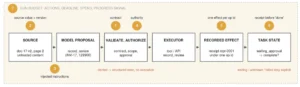
A core component of Carbon’s release is its integration with Google Antigravity’s new /swarm feature. This capability transforms a single user prompt into a coordinated team of autonomous agents that can be monitored in real time. Developers can assign Carbon to high-level architectural roles, including system design, cross-functional coordination, and rigorous auditing, while pairing it with lighter, faster auxiliary models operating in parallel workspaces. These isolated workspaces utilize adversarial verifiers to test and validate every piece of generated code or data before integration.
Chronology and Development Timeline
The path to Gemini 4 Carbon’s general availability reflects a carefully managed, staged deployment strategy. The initiative began roughly two weeks prior to the public launch, when Google granted initial access to a select group of cybersecurity defenders and researchers via the Fairwind Program. This controlled deployment allowed security specialists to evaluate the model’s capabilities in vulnerability detection and threat mitigation under strict supervision.
Concurrently, Google launched the Antigravity science initiative, opening applications for 10,000 scientists to receive six months of free access to frontier models to accelerate academic and industrial research. With today’s announcement, current and future participants in the program are being upgraded to include Gemini 4 Carbon. Applications for the scientific access program remain open, with rolling weekly onboarding based on eligibility and infrastructural capacity.
Supporting Data and Benchmark Performance
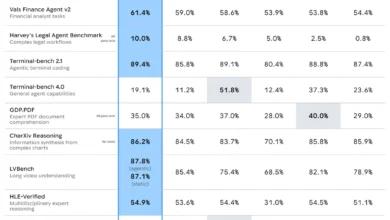
Independent and standardized evaluations place Gemini 4 Carbon at the absolute forefront of industrial AI capabilities. In rigorous testing environments designed to mirror real-world production workflows, the model secured the top rank on CursorBench 4.0, Perplexity’s WANDR benchmark for deep-research agents, and Zapier’s AutomationBench. Notably, Google achieved these high accuracy metrics while maintaining production economics that reportedly deliver more than a twofold reduction in cost per task compared to competing external frontier models.
In the financial and legal sectors, Carbon has demonstrated extraordinary competence. During pre-release evaluations, it matched the performance of leading alternatives on Hebbia’s E2E Financial Agentic evaluation and secured the top position among 23 frontier model configurations on Balyasny Asset Management’s General Financial Intelligence benchmark. This benchmark rigorously tests legal expertise, code and data engineering, agentic tool execution, and perceptual context understanding.
To measure how models natively reason over complex documents containing charts, images, blueprints, and tables, Google partnered with Artificial Analysis to introduce the Multimodal Knowledge Agent (MKA) benchmark. On this newly established evaluation, Gemini 4 Carbon achieved the number two ranking globally while operating at an average cost per task more than six times lower than the top-performing competitor.
Frontier Cybersecurity Capabilities

Among the most heavily emphasized aspects of the Gemini 4 Carbon release are its specialized cybersecurity functionalities. Security teams operating within complex digital infrastructures require end-to-end intelligence to safeguard critical software against sophisticated threats. Tested extensively through the Fairwind Program, Carbon established a leading position across major vulnerability assessment benchmarks, including SEC-bench Pro for vulnerability discovery, ExploitGym for exploit generation, and CWE-bench v1 for automated patching.
The model is capable of inspecting deeply nested software, tracing how individual security flaws can be systematically chained across distributed systems, and generating verified root-cause patches. Early enterprise testers have reported substantial gains in threat mitigation efficiency, validating Google’s strategy of deploying specialized variants for defensive cybersecurity engineering.
Advancements in Scientific Research and Mathematical Reasoning
Beyond commercial and engineering applications, Gemini 4 Carbon exhibits profound improvements in mathematical physics and the life sciences. By synthesizing complex experimental data and rigorously testing scientific hypotheses, the model assists researchers in navigating multi-domain challenges.
Axiom Bio, a prominent drug toxicity research firm, reported that Carbon has become its leading model for translational science. According to the firm, the AI successfully identified novel mechanisms of cellular toxicity that had previously evaded traditional analytical methods. Axiom Bio has subsequently transitioned its core production scientific workflows and autonomous agents to utilize both Carbon and Argon, aiming to streamline the discovery of safer pharmaceutical compounds.
Official Responses and Industry Implications
Industry analysts view the introduction of Gemini 4 Carbon as a decisive move toward practical, multi-agent enterprise automation. By lowering the financial barrier for complex token-heavy operations, Google is positioning its frontier models not merely as conversational tools, but as active digital workforce participants capable of executing multi-day projects autonomously.
The emphasis on cost-efficiency combined with deep verification loops addresses one of the primary criticisms of early generative AI models: high operational expenditures and hallucination rates in complex tasks. By utilizing isolated verification workspaces and structured agentic swarms, Google aims to minimize systemic errors in software deployment and financial modeling.
Broader Impact and Safety Mitigations
As artificial intelligence models grow increasingly autonomous and capable of handling sensitive operations—such as code generation, vulnerability patching, and scientific synthesis—questions surrounding model safety and security remain paramount. Google has structured Gemini 4 Carbon’s safety architecture to scale proportionately with its enhanced capabilities.
Building upon the robust safety stack established with Gemini 4 Argon, Carbon incorporates advanced mitigations against prompt injection, autonomous misuse, and unauthorized capability expansion. The company published a comprehensive Gemini 4 Carbon Safety and Security report detailing its alignment methodologies and lifecycle monitoring protocols. The report highlights extensive pre-deployment testing designed to measure potential misalignment risks across various operational phases, ensuring that the deployment of advanced agentic swarms does not compromise organizational or national cybersecurity standards.
Getting Started and Future Outlook
Gemini 4 Carbon is immediately available for integration across Google’s developer and enterprise ecosystems. Comprehensive migration guides, updated documentation, and detailed model cards have been published in Google AI Studio to assist engineering teams in transitioning existing workflows to the new architecture.
With applications for scientific and security research remaining open, Google continues to expand its collaborative deployment model. As enterprises increasingly adopt multi-agent frameworks like /swarm, Gemini 4 Carbon sets a new benchmark for what artificial intelligence can achieve when provided with the computational depth required for exhaustive reasoning, complex artifact generation, and verified execution.