IQUNIX MQ80 Review: A Stylish Low-Profile Mechanical Keyboard That Misses the Mark on Value

The evolution of the mechanical keyboard market over the past decade represents one of the most intriguing shifts in consumer electronics. Long before the global lockdowns of 2020 sparked a mainstream obsession with customized typing experiences, niche manufacturers were already refining the acoustics, materials, and ergonomics of desktop inputs. Among these early innovators was IQUNIX, a brand that built its reputation by championing premium materials like PBT keycaps and robust aluminum chassis elements at a time when mass-market plastic boards dominated office spaces and gaming setups.
As the mechanical keyboard landscape expanded, so too did the ambitions of its foundational players. Brands that once focused exclusively on traditional mechanical switches have had to adapt to rapid technological disruptions, most notably the commercialization of Hall Effect magnetic switches capable of adjustable actuation and rapid trigger functionality. While IQUNIX has successfully navigated this modern trend with offerings like its EZ series, the company’s latest release, the IQUNIX MQ80, charts a distinctly different course. Rather than chasing the magnetic switch craze, the MQ80 distills years of design expertise into a compact, low-profile, all-aluminum package optimized for traditional typing and gaming preferences. However, entering a mature and fiercely competitive market with a high price point and distinct design compromises leaves this premium peripheral in a challenging commercial position.
Design Philosophy and Build Quality: The All-Aluminum Advantage
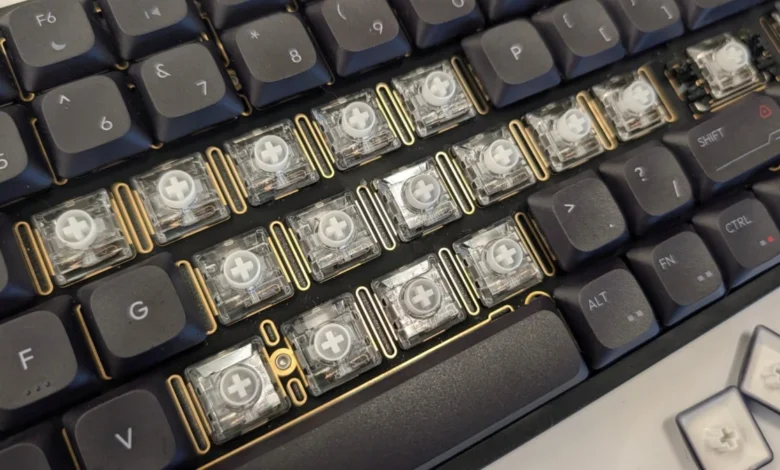
At first glance, the IQUNIX MQ80 commands attention through its sheer material quality. Eschewing the lightweight plastics common in entry-level and mid-tier keyboards, the MQ80 utilizes a CNC-machined aluminum chassis that provides exceptional structural rigidity. This choice of materials not only eliminates flex during intense gaming sessions or heavy typing workloads but also contributes significantly to the acoustic profile of the device.
Low-profile keyboards have historically struggled to achieve the deep, satisfying "thock" associated with high-end, thick-cased mechanical keyboards. Because the internal cavity is inherently shallow, sound dampening is notoriously difficult to engineer. IQUNIX has leveraged its manufacturing experience to compress its acoustic engineering lessons into the MQ80’s slim profile, resulting in some of the most refined keystrokes available in the low-profile category. Every press feels consistent, stable, and cushioned without feeling mushy, reflecting meticulous internal gasket mounting and dampening foam integration.
Aesthetics have always been a cornerstone of the IQUNIX brand identity, often earning the company comparisons to the "Apple of the mechanical keyboard world." The MQ80 continues this tradition with clean lines, understated branding, and a sophisticated color palette that integrates seamlessly into both minimalist workstation environments and high-end RGB-lit gaming battle stations. The keycaps, crafted from durable PBT plastic, resist the unsightly oil shine that plagues cheaper ABS alternatives over extended use.
Navigating the Modern Peripheral Landscape: Magnetic vs. Traditional Switches
The launch of the MQ80 occurs against a backdrop of intense technological segmentation within the PC gaming peripheral market. Over the last two years, Hall Effect (HE) magnetic switches have rapidly transitioned from a competitive esports novelty to an expected feature in flagship gaming keyboards. By utilizing magnets instead of traditional metal leaf contacts to register keystrokes, HE keyboards offer infinite customization of actuation points—often down to fractions of a millimeter—alongside rapid trigger capabilities that reset keys the moment the user lifts their finger.
For competitive FPS players, magnetic switches have largely become the gold standard. Consequently, manufacturers releasing new keyboards must carefully justify why a consumer should invest in a traditional mechanical switch layout. IQUNIX clearly recognizes this market split. While its EZ series caters directly to the Hall Effect demographic, the MQ80 is unapologetically aimed at purists who prioritize raw typing feel, acoustics, and tactile feedback over adjustable actuation points.
This strategic division allows the MQ80 to excel in tactile comfort, but it fundamentally narrows its target audience. Consumers who view their keyboard as a dual-purpose tool for both extended typing and high-level competitive gaming may find the absence of magnetic switches difficult to overlook, particularly at the premium price points commanded by all-aluminum builds.
Ergonomics and Portability Challenges
While the desk presence of the IQUNIX MQ80 is undeniably striking, its practical usability reveals certain compromises, particularly regarding portability. Low-profile keyboards are frequently marketed toward mobile professionals and hybrid workers who require a slim device that can easily slide into a backpack alongside a laptop.
The MQ80, however, largely defies this use case. Due to its solid aluminum construction, the keyboard carries a substantial heft. While this weight is a primary driver of its exceptional build quality and desk stability—preventing it from sliding around during aggressive typing sessions—it makes daily commuting a chore. Users looking for a lightweight travel companion will likely find the MQ80 too heavy and dense for regular transport.
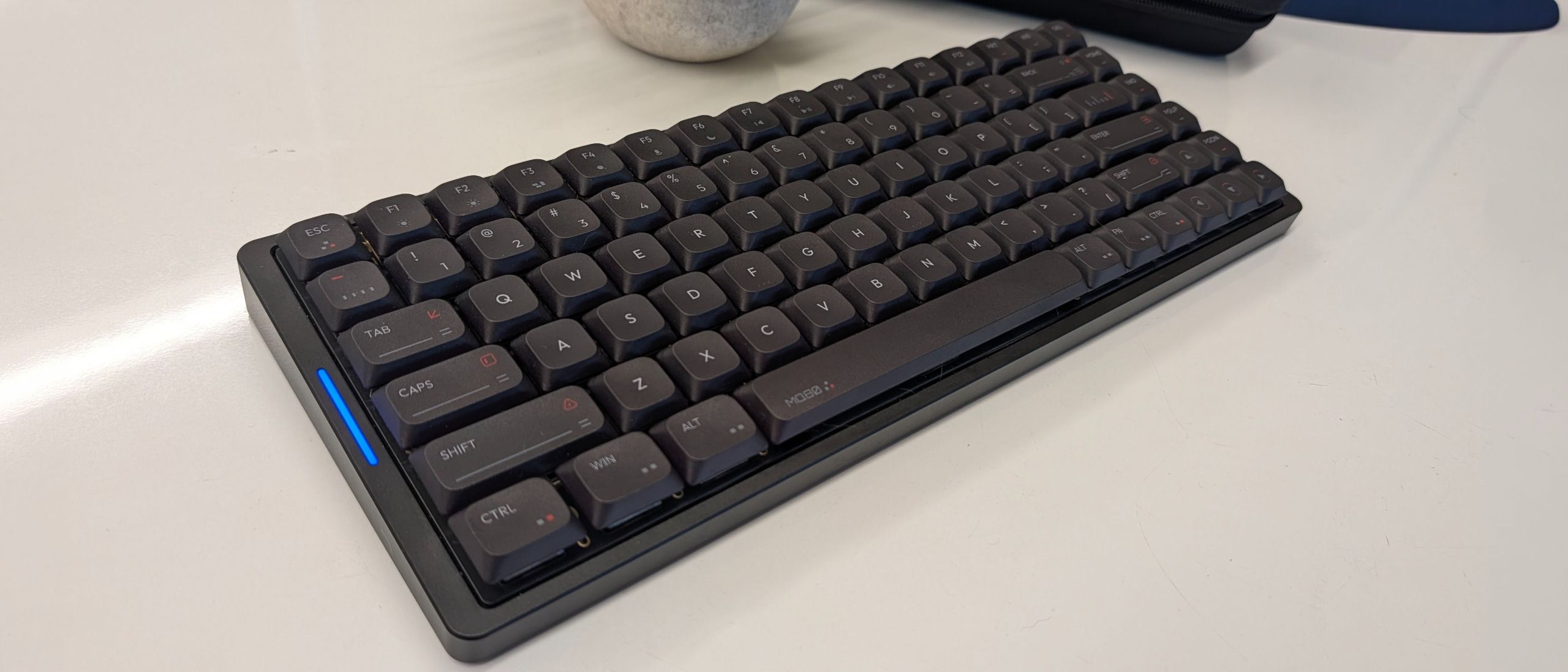
Furthermore, the low-profile typing angle requires a period of adaptation for users transitioning from standard-profile mechanical keyboards. Although low-profile layouts are often lauded for reducing wrist strain by eliminating the need for a thick wrist rest, the specific height and pitch of the MQ80 demand proper ergonomic positioning to prevent fatigue during marathon typing sessions.
Market Positioning and Competitive Pressures
The most significant hurdle facing the IQUNIX MQ80 is not its performance or build quality, but rather the intensity of the current market. The mechanical keyboard community has matured dramatically, with competitors ranging from boutique custom keyboard designers to massive multinational tech conglomerates offering feature-rich alternatives at aggressive price points.
When IQUNIX established its market share years ago, premium materials and enthusiast-grade keycaps were rare luxuries that justified a high price tag. Today, hot-swappable sockets, premium gasket mounts, aluminum cases, and PBT keycaps have trickled down to mid-range products costing a fraction of flagship prices.
Because the MQ80 enters the market as a luxury peripheral, it faces rigorous scrutiny. Reviewers and consumers alike now expect instantaneous value—features that make a product an unhesitating purchase upon announcement. While the MQ80 is undeniably well-made and aesthetically pleasing, it lacks a killer feature that sets it apart from the competition in a definitive way. Without magnetic switches to capture the esports crowd, or a disruptive price tag to tempt budget-conscious enthusiasts, the MQ80 occupies a difficult middle ground.
Broader Industry Implications and Future Outlook
The trajectory of products like the IQUNIX MQ80 offers valuable insight into the broader trajectory of the PC peripheral industry. As innovation slows down in traditional mechanical switch design, manufacturers are increasingly forced to compete on marginal gains: acoustic tuning, aesthetic micro-adjustments, and material refinement.
For consumers, this maturity is largely a positive development. The baseline quality of mechanical keyboards has never been higher, meaning that even mid-range options provide an exceptional typing experience that would have been considered custom-tier a decade ago. However, this democratization of quality places immense pressure on legacy enthusiast brands. To maintain profitability and relevance, companies must either push the boundaries of new technology—such as advanced wireless latency reduction or novel switch mechanisms—or rely heavily on lifestyle branding and design exclusivity.
IQUNIX’s dual-track approach—offering Hall Effect options in its EZ lineup while reserving traditional mechanical layouts for the MQ series—demonstrates a pragmatic understanding of this divided consumer base. Yet, the commercial success of the MQ80 will likely depend heavily on promotional pricing strategies.
Final Verdict and Purchasing Recommendations
The IQUNIX MQ80 stands as a testament to the company’s manufacturing prowess and dedication to refined aesthetics. Its all-aluminum chassis, sophisticated acoustic dampening, and premium PBT keycaps deliver an exceptional typing experience that satisfies the senses. For users who explicitly reject magnetic switches in favor of traditional mechanical reliability and luxury build quality, the MQ80 offers much to admire.
However, market realities dictate a cautious approach for prospective buyers. Given the fierce competition in the low-profile and aluminum keyboard segments, coupled with the lack of high-end features like adjustable actuation, the MQ80 struggles to justify its initial launch price as an immediate, must-have purchase.
Industry analysts and peripheral experts generally recommend a strategic waiting period for products of this nature. For consumers enamored by its sleek profile and solid aluminum construction, holding out for a seasonal sale or promotional discount transforms the IQUNIX MQ80 from a questionable luxury into a worthwhile investment for any desktop setup.
Related posts: