Tesla Secures $30 Billion in New Credit Lines Amid Declining Profits and Soaring Capital Expenditures

Tesla has formally established $30 billion in new revolving lines of credit, according to a regulatory filing released today. This substantial financial maneuver arrives at a critical juncture for the pioneer of electric vehicles, as the company navigates a landscape defined by compressed profit margins, soaring capital expenditures, and shifting strategic priorities. While the automaker continues to sit on a substantial cash reserve, the decision to secure massive multi-year credit facilities underscores the escalating cost of financing futuristic ventures—ranging from autonomous robotaxis to humanoid robotics—at a time when core automotive profitability has cooled from its historic highs.
The newly disclosed financing structure, arranged through banking giants Citi and Wells Fargo, features terms spanning one to five years. This package drastically eclipses and completely replaces Tesla’s previous $5 billion credit facility, which remained entirely undrawn. Although corporate representatives have indicated that the company does not anticipate immediately drawing upon these new credit lines throughout the remainder of the calendar year, the sheer scale of the liquidity injection highlights a defensive positioning strategy. With capital requirements projected to remain exceptionally high moving into the upcoming fiscal periods, leadership is proactively shoring up the corporate balance sheet to guard against potential cash flow volatility.
A Decade of Hypergrowth Meets a 2024 Inflection Point
To understand the gravity of Tesla’s current financial adjustments, one must examine the trajectory of the preceding decade and a half. From its inception through the early 2020s, Tesla experienced an almost unbroken streak of scaling success. Year-over-year sales and revenues marched upward at a staggering pace, fueled by a seemingly boundless global appetite for electric vehicles. During this prolonged expansion phase, the company’s heavy spending on manufacturing plants, supply chains, and research and development was readily justified by compounding returns and dominant market share.
This era of hypergrowth met a decisive wall in 2024. After recording a robust 38% delivery growth rate in the prior year, Tesla encountered a profound market shift, culminating in a 1% decline in annual deliveries throughout 2024. This deceleration marked a structural maturation—and subsequent stagnation—in core EV demand, forcing the automaker to transition from an unfettered growth model to a more defensive posture focused on pricing adjustments, incentives, and cost containment.
Concurrently, corporate profitability experienced severe compression. In subsequent quarters, financial reports revealed razor-thin net incomes, occasionally bolstered by complex one-time accounting benefits, regulatory credit sales, and warranty adjustments rather than pure, organic operating margins.
The Escalating Burden of Capital Expenditures
The downward pressure on net income has not been driven solely by fluctuating vehicle delivery volumes. A primary catalyst for the margin squeeze is Tesla’s aggressive acceleration of capital expenditures (CapEx), channeled heavily into speculative, long-horizon technological initiatives.
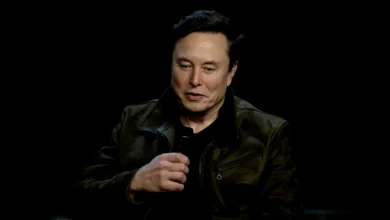
In recent quarters, Tesla’s CapEx more than doubled, driven by CEO Elon Musk’s pivot toward autonomy, artificial intelligence, and robotics. Among these capital-intensive pursuits are the development of steering-wheel-less robotaxis (such as the Cybercab), next-generation platform architecture, speculative performance vehicles like the delayed Roadster update, and infrastructural investments aimed at supporting large-scale artificial intelligence compute clusters.
Financial projections indicate that this spending is far from abating. Tesla has guided for total capital expenditures to reach approximately $25 billion for the full fiscal year, marking a dramatic leap from the $8.5 billion recorded in the previous year. Wall Street financial analysts anticipate that this elevated CapEx baseline will persist well into the following fiscal year, as the company attempts to operationalize its ambitious technological roadmap.
Cash Flow Realities and Balance Sheet Mechanics
The convergence of shrinking operating profitability and ballooning CapEx has visibly strained Tesla’s financial machinery. In the most recent financial reporting period, the company slipped into negative free cash flow territory for the first time since the first quarter of 2024—a period previously characterized by a sharp, unexpected downturn in sales volume. Prior to that disruption, Tesla had maintained a reliable streak of positive quarterly free cash flow generation for years.
This shift carries distinct implications when evaluated against the company’s stated cash reserves. As of the close of the most recent quarter, Tesla reported holding roughly $43 billion in cash and cash equivalents. On paper, this figure appears formidable. However, the modern automotive industry is notoriously capital-intensive, requiring continuous, massive infusions of cash to maintain factory lines, service networks, and supply chains. When combined with the staggering financial burn rate required to sustain speculative artificial intelligence and robotics projects—domains where commercial monetization timelines remain uncertain—even a $43 billion cushion can face rapid depletion under sustained cash-negative conditions.
Consequently, taking out $30 billion in new credit lines provides a crucial financial buffer. At current operational run-rates, this credit pool represents roughly equivalent to a full quarter of total corporate revenues. More importantly, when measured against the company’s compressed net income—which has hovered in the hundreds of millions of dollars per quarter—the credit facility represents an immense structural backstop against unexpected macroeconomic headwinds or prolonged development delays.

Product Realization Challenges and Market Skepticism
Compounding the financial pressure is the prolonged timeline associated with Tesla’s heavily marketed product pipeline. Critics and financial analysts have pointed out that despite the doubling of capital expenditures, much of the company’s current product strategy relies on the revitalization or iteration of concepts introduced to the public years prior.
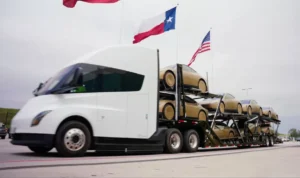
Throughout the autumn months, Tesla has attempted to generate commercial momentum by spotlighting various product milestones, though these efforts have encountered characteristic logistical hurdles and scheduling adjustments. The ongoing commercialization of the Tesla Semi has progressed at a deliberate pace, while autonomous offerings like the Cybercab continue to navigate regulatory and technical hurdles before achieving widespread commercial deployment. Meanwhile, enthusiast-focused concepts, such as the next-generation Roadster, have faced persistent demonstration delays due to weather and engineering refinements, drawing skepticism from market observers who question whether such projects serve as near-term revenue drivers or speculative distractions.
Broader Industry Implications and Future Outlook
Tesla’s strategic decision to secure a massive credit facility reflects a broader trend among major technology and automotive enterprises operating in an era of high interest rates and expensive capital. As the race toward artificial intelligence, autonomous transport, and advanced energy ecosystems intensifies, companies are increasingly forced to balance near-term profitability with long-term technological bets.
For Tesla, the coming quarters will serve as a critical proving ground. The company must demonstrate whether its monumental capital investments in autonomy and robotics can successfully transition from high-cost theoretical concepts into scalable, profit-generating commercial realities. Whether the newly secured $30 billion credit line will remain untouched as a precautionary safety net, or whether it will be actively deployed to finance the next chapter of the automaker’s evolution, remains one of the most closely watched storylines in global markets.