Apple Issues Critical Security Patch for CoreGraphics Vulnerability Exploited in Targeted Attacks

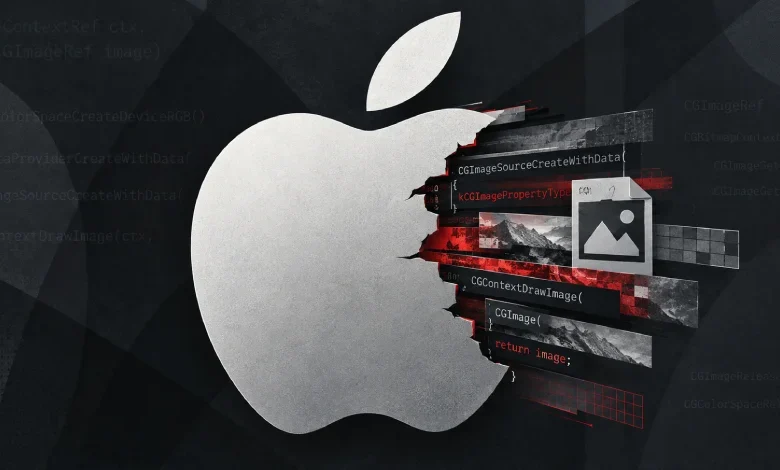
Apple has officially released a series of emergency security updates designed to remediate a high-severity vulnerability currently tracked under the identifier CVE-2026-86950. This security flaw, which impacts legacy versions of iOS, iPadOS, and macOS, has been identified by internal and external researchers as an out-of-bounds write vulnerability residing within the CoreGraphics framework. According to the company’s technical advisory, the vulnerability is significant because it has already been observed in the wild, being weaponized as a zero-day exploit in highly sophisticated, targeted digital intrusions against specific individuals.
The vulnerability, while localized to the CoreGraphics component—a framework responsible for rendering 2D graphics—is particularly dangerous due to its potential for arbitrary code execution. When a device processes a maliciously crafted image or file, the flaw allows an attacker to bypass standard security boundaries, potentially gaining unauthorized control over the device’s underlying operating system. Apple confirmed that the issue was mitigated by implementing improved bounds checking, effectively closing the loophole that allowed for the memory corruption.
The Anatomy of CVE-2026-86950
At its technical core, an out-of-bounds write vulnerability occurs when a software program writes data past the end, or before the beginning, of the intended buffer. In the case of CoreGraphics, the vulnerability allows an attacker to inject malicious code by providing a specially prepared file that forces the system to perform operations outside of the defined memory space.
This type of exploit is a classic, albeit highly effective, vector for initial access in advanced persistent threat (APT) campaigns. By manipulating how an iPhone or Mac interprets graphical data, an attacker can transition from a simple file interaction to full-scale code execution. Given the nature of CoreGraphics—which is invoked every time a user views a photo, visits a webpage, or opens an attachment—the attack surface for this vulnerability is remarkably broad. The discovery of this flaw is credited to the Meta Product Security team, whose researchers identified the anomalous behavior and reported it through responsible disclosure channels, allowing Apple to engineer a patch before the vulnerability could be leveraged on a wider scale.
Chronology of the Disclosure and Mitigation
The discovery and subsequent patching of CVE-2026-86950 represent the latest in a series of security escalations for the Cupertino-based tech giant. While Apple has remained tight-lipped regarding the specific timeline of the attacks, the company acknowledged that the flaw was being utilized in "extremely sophisticated" operations targeting individuals using versions of iOS prior to the current 27th generation.
The chronology of these events highlights a persistent tension between hardware manufacturers and malicious actors who specialize in mobile exploits.
- Early 2026: Researchers at Meta began investigating anomalous activity linked to image processing frameworks within Apple’s ecosystem.
- Mid-2026: Formal notification was provided to Apple’s security response team, triggering an internal investigation to confirm the scope of the vulnerability.
- Late September 2026: Apple finalized the security patch, pushing it to legacy devices that remain in circulation, while simultaneously issuing a public security advisory to inform enterprise and consumer users of the immediate necessity to update.
This timeline aligns with broader trends in cybersecurity where zero-day vulnerabilities are increasingly being sold on private markets to entities capable of orchestrating surgical, high-stakes surveillance.
Contextualizing Mobile Security Threats
To understand the gravity of CVE-2026-86950, one must look at the broader landscape of mobile operating system security. In February 2026, Apple was forced to address another major vulnerability, CVE-2026-20700, which involved a memory corruption issue within the dynamic linker (dyld). That vulnerability carried a CVSS score of 7.8, indicating a high level of severity and ease of exploitation.
The frequency of these disclosures does not necessarily indicate a decline in Apple’s coding standards, but rather reflects the increased focus by nation-state actors and private surveillance firms on mobile endpoints. As mobile devices become the primary computing platform for the vast majority of the population, they have become the "holy grail" for information gathering. When a device is compromised, it provides the attacker with access to real-time location data, encrypted messaging communications, microphone and camera access, and personal financial information.

Analyzing the Impact of Targeted Exploitation
Apple’s admission that this vulnerability was used in "targeted attacks" is a phrase that carries significant weight in the cybersecurity community. It suggests that this was not a "spray and pray" attack designed to infect millions of random devices. Instead, the usage of CVE-2026-86950 points to an intelligence-gathering operation.
Such attacks are typically characterized by:
- Low Volume: The number of victims is kept deliberately small to avoid triggering automated security detection systems.
- High Sophistication: The exploit is often paired with other vulnerabilities—a "chain"—to bypass sandboxing, kernel protections, and other hardware-level security features like Pointer Authentication Codes (PAC).
- Persistence: The goal is often to remain on the device indefinitely without the user ever realizing their privacy has been breached.
While Apple has not disclosed the identity of the targets or the specific actors behind the operation, the involvement of Meta’s security researchers suggests the attack may have been related to the manipulation of digital media or messaging services, areas where Meta’s internal security teams possess deep expertise.
Broader Implications for Digital Infrastructure
The existence of CVE-2026-86950 raises questions about the long-term maintenance of legacy hardware. As software platforms evolve, maintaining security integrity across older versions of an operating system becomes increasingly difficult. When a vulnerability like this is discovered, it poses a risk to the millions of users who, for various reasons, have not yet migrated to the newest hardware or the latest software release.
For enterprise environments, the implication is clear: the "patch gap"—the time between a vulnerability being discovered and the patch being applied—is the most critical window of risk. In the case of targeted, high-stakes espionage, even a 24-hour delay in applying a security update can be sufficient for an attacker to achieve their objectives.
Furthermore, this incident underscores the necessity of inter-industry cooperation. The fact that Meta, a competitor in the broader tech landscape, reported this vulnerability to Apple demonstrates a growing consensus among technology giants that shared intelligence is the only viable defense against sophisticated digital threats. Cybersecurity is no longer a siloed endeavor; it is a collective responsibility that requires constant vigilance and transparent communication between stakeholders.
Official Response and Future Security Outlook
In its formal communication, Apple emphasized that while the vulnerability may have been exploited, the company’s ongoing investment in "BlastDoor" and other kernel-level security protections continues to evolve to meet these challenges. However, the company remains cautious, refusing to provide details on the success rate of these specific attacks or the duration for which the exploit was active before its discovery.
As we look toward the future, the reliance on memory-safe programming languages and more robust compartmentalization of system components will likely become the primary focus for operating system developers. CVE-2026-86950 serves as a stark reminder that as long as complex, C-based frameworks like CoreGraphics remain at the heart of our operating systems, memory-related vulnerabilities will remain a primary target for exploitation.
For the end user, the path forward is straightforward: maintaining the highest security posture requires diligent adherence to update schedules. Users are encouraged to check their settings, ensure that automatic updates are enabled, and verify that their device is running the latest possible version of the operating system supported by their hardware.
As the industry moves into the next quarter of 2026, the focus will undoubtedly shift toward ensuring that these defensive patches are not only implemented but are also audited for side-channel impacts. The discovery of CVE-2026-86950 is a testament to the persistent nature of cyber threats, but it is also a reminder that the collaborative efforts of security researchers and platform vendors remain the strongest line of defense in an increasingly hostile digital environment. The investigation into the origins of these targeted attacks will likely continue, and the cybersecurity community remains on high alert for further variants of this exploit.
Related posts: