Century-Old World War I German Radio Cipher Decrypted for the First Time Using Advanced Artificial Intelligence

More than a century after it was transmitted across the volatile airwaves of the First World War, an encrypted German radio dispatch has reportedly been deciphered for the first time. The breakthrough, achieved by a software developer identified as Prinz, centers around the application of cutting-edge artificial intelligence—specifically GPT-Astra—to break a century-old cryptographic puzzle that had long baffled historians, amateur codebreakers, and military archivists alike.
According to the decoded translation, the intercepted message contains critical tactical intelligence regarding the movements of an English cruiser and an Allied naval squadron operating near the strategic waters of the Crimean Peninsula. This revelation offers a fascinating glimpse into the clandestine communications of the Imperial German Navy during a pivotal early phase of the global conflict, while simultaneously demonstrating the evolving utility of modern neural networks in historical research and cryptanalysis.
The Cryptographic Breakthrough
The process of unlocking the 108-year-old message relied on the computational power and pattern-recognition capabilities of advanced artificial intelligence. While traditional codebreaking methods often require massive teams of human cryptanalysts working for months or years to identify recurring frequencies, linguistic anomalies, and structural patterns in ciphertext, modern large-scale language models possess the ability to rapidly parse vast repositories of historical data, linguistic variants, and cryptographic frameworks.
Prinz utilized GPT-Astra to tackle the encrypted sequence, which had remained impenetrable since its transmission during the height of World War I. By feeding the model contextual parameters, known German naval terminology from the era, and structural constraints typical of Imperial military dispatches, the AI was able to identify the underlying cipher mechanics and output a coherent translation.
The resulting text revealed specific operational reporting: a detailed account tracking the positioning and trajectory of an English cruiser alongside a broader Allied naval squadron patrolling the Black Sea near the Crimean Peninsula. For naval historians, this provides a concrete data point connecting German interception logs with actual Allied fleet movements during a period when the Black Sea theater was a crucial secondary front characterized by naval raids, minelaying operations, and coastal bombardments.
Historical Context: The Naval War in the Black Sea and Crimea
To understand the significance of the decrypted message, one must examine the geopolitical and military landscape of the region circa 1914–1915. The Crimean Peninsula and the wider Black Sea basin represented a vital strategic theater involving the Russian Empire, the Ottoman Empire (which entered the war on the side of the Central Powers in late 1914), and Britain and France, whose naval assets occasionally operated in coordination with or in proximity to Russian forces.
During the early stages of World War I, wireless telegraphy was still a relatively young technology, yet it had already become the primary nervous system of modern military command and control. Navies were among the earliest adopters of radio communication because ships at sea required instantaneous updates to maintain formations, evade hostile squadrons, and coordinate attacks. However, the open nature of radio waves meant that any belligerent power with a sufficiently sensitive antenna could intercept transmissions.
To safeguard sensitive operational details, armies and navies relied on sophisticated cryptographic systems, typically combining substitution ciphers, transposition grids, and complex codebooks that were updated regularly. The Imperial German Navy, in particular, maintained rigorous cryptographic protocols to protect its surface raiders, U-boats, and auxiliary vessels operating in contested waters.
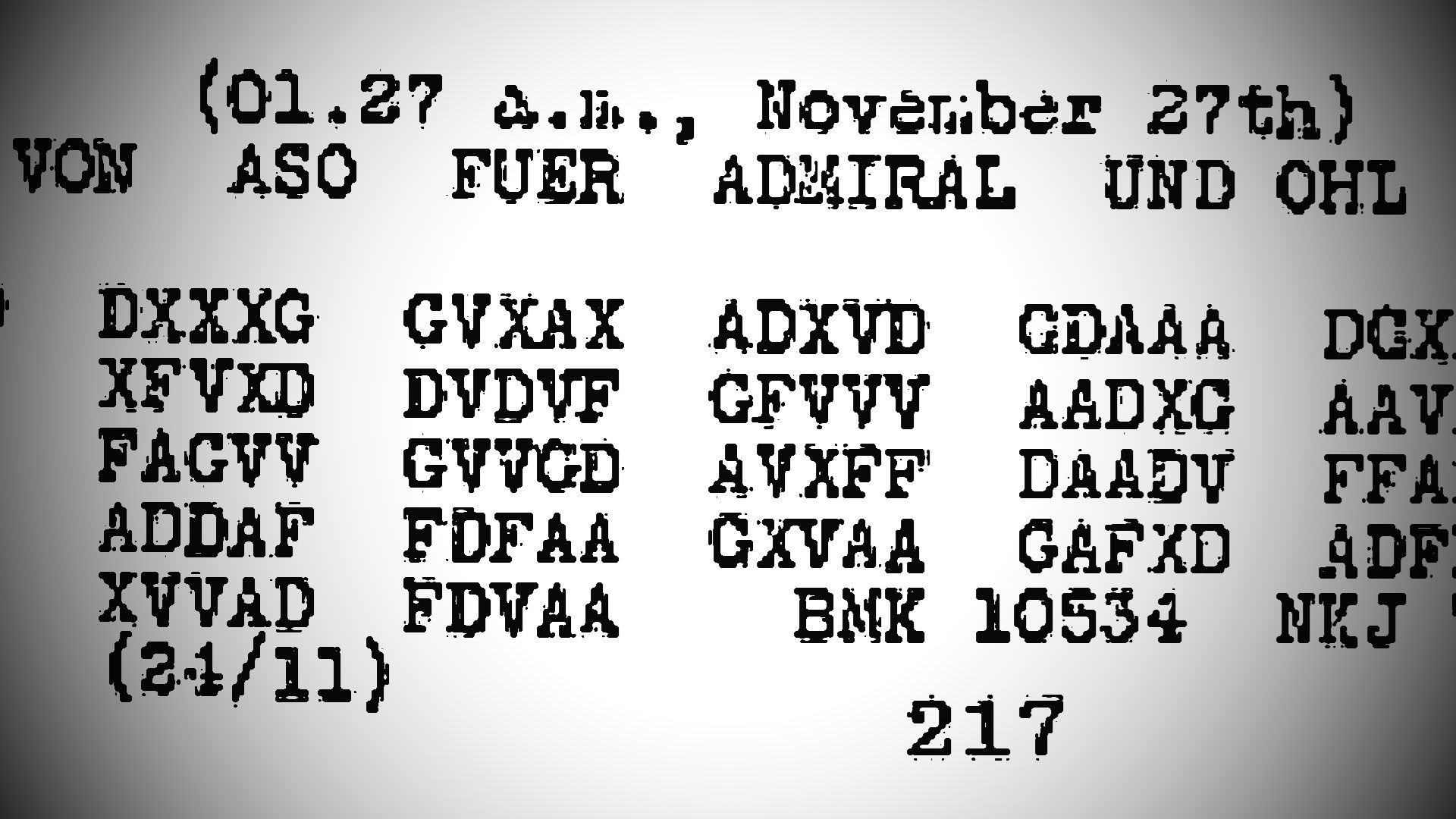
When German operators transmitted the dispatch intercepted by Allied listening posts over a century ago, they assumed the multilayered encryption would protect their tactical deployments from British and Russian intelligence. While Allied cryptographers at institutions like Room 40 in the British Admiralty successfully cracked several key German naval codes during the war, many intercepted messages remained archived, unread, or only partially understood due to the sheer volume of intercepted traffic and the destruction of records in the post-war decades.
Chronology of the Decryption Effort
The journey from a wartime radio transmission to a successfully translated modern text spans more than a century of technological and historical evolution.
- Late 1914 – 1918 (World War I): Imperial German naval units and coastal stations transmit numerous encrypted radio messages across European and maritime theaters. Allied interception stations log and archive these signals, while specialized codebreaking units attempt real-time decryption to gain tactical advantages.
- Post-War Decades (1920s–1990s): Millions of intercepted wartime documents, signal logs, and diplomatic cables are cataloged and stored in national archives. While major ciphers—such as the Zimmermann Telegram or various German naval codes—are eventually studied and published by historians, thousands of minor, fragmentary, or heavily encrypted transmissions remain unsolved due to missing codebooks and the lack of automated processing tools.
- The Digital Age (2000s–2010s): Archivists begin digitizing World War I signal logs, making them accessible to independent researchers, amateur historians, and digital archaeologists. Despite these efforts, complex ciphers continue to resist standard computing algorithms that lack contextual linguistic understanding.
- Modern Era (2024–Present): The emergence of highly advanced generative AI models equipped with expansive context windows and pattern-recognition capabilities changes the landscape of digital humanities. Developer Prinz applies GPT-Astra to the century-old ciphertext, successfully breaking the encryption and translating the historical dispatch detailing Allied ship movements near Crimea.
Technological Implications: AI as a Tool for Historical Discovery
The successful decoding of this World War I radio message highlights a broader trend: the integration of artificial intelligence into historical and archival research. For decades, historians have relied on manual transcription, traditional paleography, and standard computational tools to analyze historical texts. However, encrypted materials have traditionally required specialized cryptological expertise that falls outside the purview of many traditional humanities scholars.
By leveraging tools like GPT-Astra, researchers can now bridge the gap between historical data science and cryptanalysis. Modern language models are uniquely suited for this type of work because they are trained on massive multilingual datasets that include historical lexicons, military terminology, and structural patterns from various epochs. When presented with a historical cipher, an AI can test thousands of potential decryption hypotheses, cross-referencing linguistic anomalies against historical databases in seconds rather than months.
Experts note that this development could open the floodgates for the decryption of thousands of unsolved historical documents housed in archives around the world. From ancient undeciphered scripts to World War II intelligence backlogs, machine learning is rapidly becoming an indispensable asset for historians seeking to fill gaps in the historical record.
Broader Impact and Future Outlook
While the newly translated message does not rewrite the overarching narrative of World War I—the outcome of the conflict was ultimately decided by vast industrial mobilization, economic endurance, and large-scale military campaigns on the Western and Eastern Fronts—it provides invaluable granular data for naval historians. Knowing the exact timing, reported positions, and intelligence awareness of German forces regarding specific English cruisers and Allied squadrons allows researchers to reconstruct individual naval engagements with unprecedented precision.
Furthermore, this achievement serves as a proof-of-concept for the collaborative potential between human historical inquiry and artificial intelligence. As developers continue to refine models tailored for historical and specialized data analysis, the boundaries of what can be recovered from the archives of the past continue to expand.
As historians and data scientists turn their attention to other unsolved cryptographic mysteries resting in government and military archives, the legacy of World War I radio intelligence is experiencing an unexpected technological renaissance—proving that even after 108 years, secrets transmitted across the electromagnetic spectrum can still be brought back into the light.