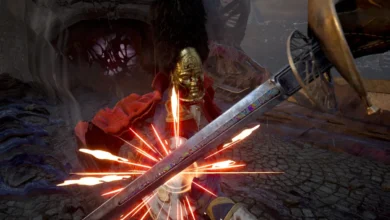
The Last of Us Game Director Bruce Straley Apologizes After Criticizing Triple-A Innovation and Mentioning Santa Monica Studio


The modern video game industry finds itself at a profound crossroads, caught between the soaring aspirations of artistic expression and the unforgiving economic realities of ballooning development budgets. This ongoing tension recently came to the forefront when acclaimed game director Bruce Straley—best known for his seminal work on Naughty Dog titles such as The Last of Us and Uncharted 2: Among Thieves—publicly criticized the state of innovation within the triple-A sector. His remarks, which specifically referenced Santa Monica Studio’s critically acclaimed Norse mythology series, quickly sparked widespread debate across the gaming community. Following a wave of online discourse and what he described as sensationalized media coverage, Straley issued a public apology to the development team, while simultaneously doubling down on his broader criticisms regarding corporate leadership and industry-wide stagnation.
The controversy originated from a comprehensive feature published in Edge magazine, where industry veterans and leaders gathered to discuss the economic and creative health of contemporary game development. During the interview, Straley praised the technical mastery and meticulous craftsmanship visible in modern blockbuster releases, specifically highlighting the sheer fidelity of Santa Monica Studio’s output. He marveled at how every individual pixel and frame reflected staggering amounts of human effort, skill, and engineering prowess.
However, Straley juxtaposed this technical brilliance with a critique of traditional game design loops and player engagement. He admitted that despite the breathtaking visual presentation, the actual mechanical experience of playing these titles often failed to evoke genuine excitement for him. He clarified that his critique was not directed personally at the developers at Santa Monica Studio, but rather served as a symptom of a systemic issue across the triple-A landscape. In his view, the immense financial risks associated with multi-hundred-million-dollar projects have largely stifled opportunities for publishers and studios to introduce fresh, disruptive, and genuinely innovative gameplay concepts.
As the interview excerpts circulated online, digital media outlets quickly amplified the commentary, prompting swift reactions across social media platforms. Recognizing that his specific citation of Santa Monica Studio was being weaponized for sensationalized headlines and driving unnecessary hostility toward the developers, Straley took to X (formerly Twitter) to address the situation directly.
In his public statement, the director expressed deep regret for inadvertently drawing the studio into an uninvited controversy. He noted that his original intention was to diagnose a widespread structural concern affecting the entire medium, but acknowledged that naming a specific title was a strategic misstep. He stressed that hardworking development teams do not need the added burden of targeted negative attention driven by out-of-context quotes, concluding his apology with an unequivocal acknowledgment of his error.
Broader Industry Trends and the Pursuit of Live-Service Models
While Straley walked back his specific naming conventions, he firmly maintained his core thesis regarding the systemic failures of upper management within major gaming corporations. In subsequent social media commentary, he expanded on the economic pressures currently strangling creative risk-taking in large-scale studios.
Straley explicitly criticized the industry-wide obsession with games-as-a-service (GaaS) models and the corporate mandate to artificially manufacture the next massive, long-term multiplayer phenomenon. He argued that executive leadership teams frequently chase established outliers—such as Fortnite, Roblox, or Overwatch—without possessing a fundamental understanding of their own brand identities or core audiences. According to Straley, attempting to forcefully replicate these lightning-in-a-bottle successes is not only a commercially unviable strategy for most publishers, but it also exposes a profound disconnect between corporate boards and the creative talent they employ.

The veteran director diagnosed the root cause of triple-A stagnation as a systemic deficit of courageous leadership, clear creative direction, and genuine conviction among financial decision-makers. In the high-stakes world of corporate gaming, financial stability is inextricably linked to risk aversion. Consequently, executives often prioritize safe, homogenized sequels and proven formulas over daring innovations. Straley asserted that if top-level executives truly understood and respected their respective intellectual properties, they would foster honest, inspiring dialogues with creators, ultimately steering the medium toward healthier avenues of innovation.
The Evolution of Bruce Straley’s Career
To understand the weight of Straley’s critique, one must examine his extensive tenure within the upper echelons of blockbuster game development. Having spent decades at Naughty Dog, Straley was instrumental in shaping the narrative and cinematic standards of the PlayStation brand. As the co-director of The Last of Us (2013) and Uncharted 4: A Thief’s End (2016), he operated at the absolute pinnacle of triple-A production, overseeing massive teams, intricate budgets, and cinematic pipelines that pushed hardware to its absolute limits.
Despite this success, the grueling physical and mental toll of modern blockbuster development—often referred to as crunch culture—prompted Straley to reevaluate his career trajectory. In 2017, he officially departed Naughty Dog and stepped away from the triple-A ecosystem entirely. For years, he observed the industry’s compounding economic pressures from the sidelines as budgets swelled past the $200 million mark and development cycles routinely exceeded five to seven years.
In 2021, Straley marked his return to the industry by founding Wildflower Interactive, a lean, independent studio focused on cultivating a healthier, more agile development environment. Eschewing the immense overhead and risk-averse corporate structures of major publishers, Wildflower Interactive set out to craft original, atmospheric single-player experiences. The studio’s debut project, a surreal single-player adventure titled Coven of the Chicken Foot, represents a stark departure from the photorealistic, cinematic blockbusters Straley was historically known for directing. This entrepreneurial pivot grants his recent critiques unique weight, positioning them not merely as external complaints, but as informed reflections from a creator who consciously chose to abandon the triple-A treadmill in search of creative freedom.
Economic Pressures and the Future of Blockbuster Gaming
Straley’s commentary arrives at a critical juncture for the global gaming market. Over the past several years, the triple-A sector has faced an unprecedented wave of structural challenges, including widespread studio closures, mass layoffs, and the cancellation of dozens of unannounced projects. Industry analysts point to a combination of post-pandemic market correction, skyrocketing development costs, and extended production timelines as the primary drivers of this instability.
When a single video game requires hundreds of millions of dollars to produce and a team of several hundred developers working across half a decade to complete, the margin for error narrows to nearly zero. Under these financial conditions, publishers can rarely afford for a title to be merely good; it must be a historic commercial phenomenon to recoup its initial investment. This high-stakes reality inherently discourages game directors from implementing radical mechanical innovations or untested narrative structures, favoring instead the iterative refinement of proven design formulas.
The tension between artistic ambition and corporate necessity remains one of the defining conflicts of modern entertainment. While technical achievements continue to reach unprecedented heights—as evidenced by the breathtaking fidelity of contemporary blockbuster releases—the underlying gameplay loops frequently face growing scrutiny from both veterans and consumers alike.
As independent developers increasingly champion lower-risk, highly creative projects outside the traditional publishing matrix, industry leaders are forced to reevaluate the long-term sustainability of the blockbuster business model. Whether the corporate tier of the gaming industry will heed warnings from veterans like Straley and foster environments conducive to true innovation remains an open question. For now, the ongoing dialogue highlights a collective desire across the community to find a healthier balance between technical mastery, commercial viability, and creative daring.
Related posts: