A Gentle Introduction to Model Distillation and the Escalating Industry Conflict

The most capable artificial intelligence models currently in existence—systems like OpenAI’s GPT-4, Anthropic’s Claude 3.5, and Google’s Gemini 1.5—represent the pinnacle of computational achievement. Yet, these models are paradoxically impractical for widespread, real-world deployment. With architectures comprising hundreds of billions of parameters, they demand massive, data-center-scale infrastructure, resulting in latency issues and exorbitant operational costs. This structural barrier has propelled model distillation into the spotlight as one of the most critical, yet contentious, techniques in the modern AI industry.
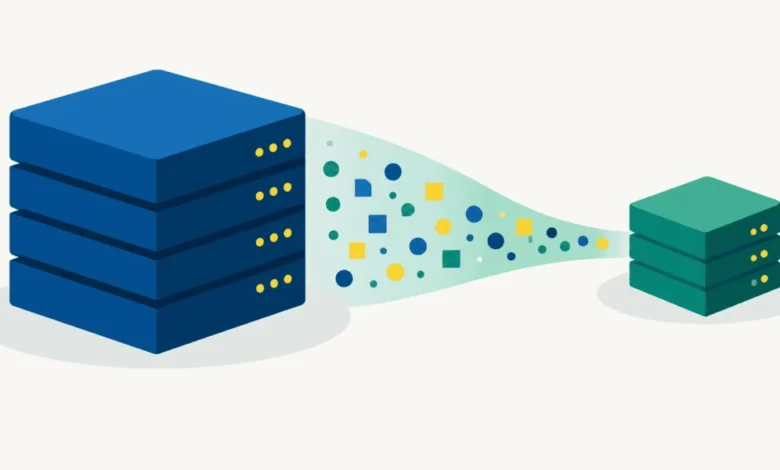
At its core, model distillation is an optimization strategy designed to transfer the intelligence of a massive "teacher" model to a significantly more compact "student" model. By leveraging the teacher’s nuanced output, the student can achieve a high level of performance while maintaining a fraction of the computational footprint. While the engineering principles behind this process are well-established, the rapid evolution of large language models (LLMs) has transformed distillation from a quiet academic pursuit into a geopolitical and corporate flashpoint, characterized by accusations of intellectual property theft and systematic data harvesting.
The Mechanics of Dark Knowledge
To grasp the significance of distillation, one must first understand how traditional neural networks learn. In conventional machine learning, models are typically trained on "hard labels"—binary, ground-truth data. For instance, a model classifying an image of a dog is taught that the label is "dog." However, this approach discards substantial relational information. It fails to capture that the model identifies certain features as "dog-like" while simultaneously acknowledging they are not "cat-like" or "car-like."
Geoffrey Hinton, the pioneer of the foundational distillation framework, identified this latent relational data as "dark knowledge." When a sophisticated teacher model processes data, it produces a probability distribution rather than a single label. It might assign an 85% probability to "dog," 13% to "cat," and 2% to "wolf." This distribution serves as a rich signal that informs the student model not just what the correct answer is, but the complex logic that leads to it. Through "temperature scaling"—a technique used to soften these probability distributions—the student is trained to emulate the teacher’s nuanced internal logic, resulting in a model that performs far better than one trained on hard labels alone.
The Evolution of Distillation in the LLM Era
The classical framework, successful in image and speech classification, requires adaptation for the sequential, token-based nature of LLMs. As vocabularies balloon toward 100,000 tokens, the industry has gravitated toward three primary methodologies:
- Synthetic Data Distillation: Currently the industry standard, this method involves using a large teacher model to generate massive datasets of high-quality, reasoned responses. A student model is then fine-tuned on this synthetic data. This approach is highly effective because it requires only API access to the teacher model, bypassing the need to access proprietary internal weights.
- Feature Distillation: This more invasive technique involves the student model learning to replicate the teacher’s intermediate layer activations. It requires full access to the teacher’s architecture, making it suitable primarily for internal R&D within the same organization.
- Logit-Based Distillation: This modern iteration of the classical approach matches the teacher’s full probability distributions at the token level. Like feature distillation, it necessitates white-box access to the teacher model, limiting its application to internal model development.
A Chronology of Conflict
By 2026, the lines between legitimate engineering and unauthorized harvesting had blurred. The following timeline illustrates the rapid escalation of tensions regarding distillation:
- Early 2026: AI labs begin reporting systematic, high-volume traffic patterns that suggest unauthorized distillation.
- April 2026: During legal proceedings against OpenAI, Elon Musk concedes under oath that xAI utilized OpenAI’s model outputs to train portions of its Grok system, framing it as an industry-standard practice.
- June 2026: Anthropic publishes evidence alleging that Alibaba’s Qwen laboratory engaged in a massive data-harvesting campaign, involving 25,000 fake accounts that generated 28.8 million interactions with Claude over 44 days.
- Mid-2026: OpenAI submits a formal memo to the U.S. House Select Committee on China, alleging that DeepSeek utilized obfuscated routing and third-party intermediaries to distill the capabilities of Western frontier models.
The Economic and Legal Stakes
The economic implications of these allegations are profound. When a company claims to have trained a highly capable model for a few million dollars, yet independent analysts like SemiAnalysis suggest the true R&D investment is in the billions, the discrepancy often points toward the externalization of research costs. If a firm can "harvest" the intelligence of a model that took years and hundreds of millions of dollars to build, they effectively bypass the most expensive stages of the AI development cycle.
However, the legal landscape remains largely unsettled. In the United States, AI outputs—the text generated by these models—do not currently enjoy broad copyright protection. Consequently, companies are forced to rely on Terms of Service (ToS) violations to pursue legal action. Because many of the accused parties are international entities, enforcing these terms is notoriously difficult. As a result, the industry is shifting toward technical countermeasures, including sophisticated anomaly detection to identify "bot-like" traffic, output watermarking, and the implementation of stricter rate limits for API users.
Broader Industry Implications
The tension between accessibility and protection is structural. AI labs rely on public APIs to generate revenue and build ecosystems, yet those same APIs serve as the primary vector for distillation. As AI systems become more agentic—capable of reasoning, tool use, and complex coding—the proprietary nature of these "reasoning chains" becomes more valuable and, consequently, more vulnerable.
The collaborative efforts between companies like OpenAI, Anthropic, and Google to share intelligence on distillation attacks mark a new phase in the AI arms race. These labs are essentially creating a collective defense mechanism against the unauthorized cloning of their intellectual property. Yet, for every defense, there is an evolving attack vector. As long as the distillation of large models provides a shortcut to state-of-the-art performance, the practice will continue to thrive in the gray market of AI development.
Conclusion: The Future of Distilled Knowledge
Model distillation is not going away; it is a vital component of the path toward efficient, specialized, and edge-deployable AI. The shift from classical methods to synthetic data generation has democratized the ability to create high-performing models, but it has also triggered a crisis of trust and security.
The industry currently faces a paradox: the more useful a model is to the public, the more susceptible it is to being distilled. Whether this leads to a "walled garden" approach, where access to frontier models is restricted to prevent harvesting, or to a new legal framework that clarifies the status of AI-generated intelligence, remains to be seen. For now, distillation remains both the engine of AI efficiency and the primary source of its most significant security headaches, serving as a reminder that in the world of high-stakes technology, the line between innovation and appropriation is becoming increasingly difficult to define.